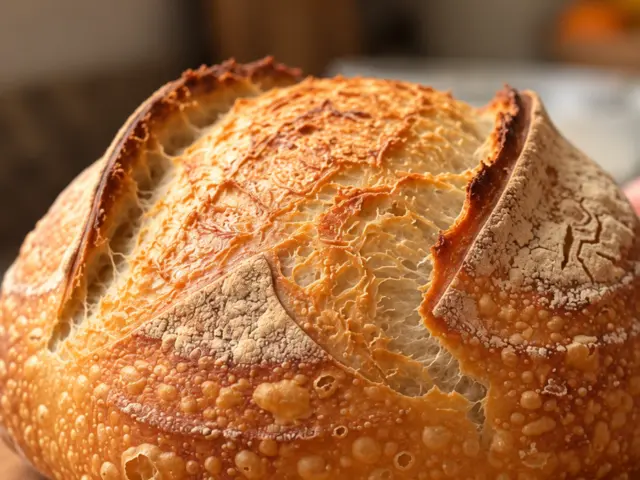
Open-Bake Two Sourdough Loaves at Once makes room for a larger loaf and a smaller loaf in the same oven session. Both bake directly on a hot stone with steam during the opening minutes, so you can use the oven space efficiently without a Dutch oven or a second baking round.
Why Bake Two Loaves Together?
Open baking gives you flexibility over loaf size and how you use the oven. A larger loaf can cover sandwiches and toast, while a smaller loaf is handy for a small household or for sharing. The important change from a covered-pot bake is supplying steam around both loaves at the beginning.
This recipe makes one dough and divides it into two different sizes. The larger loaf contains 300 g total flour and the smaller contains 150 g. They start baking together but do not have to finish together.
Ingredients
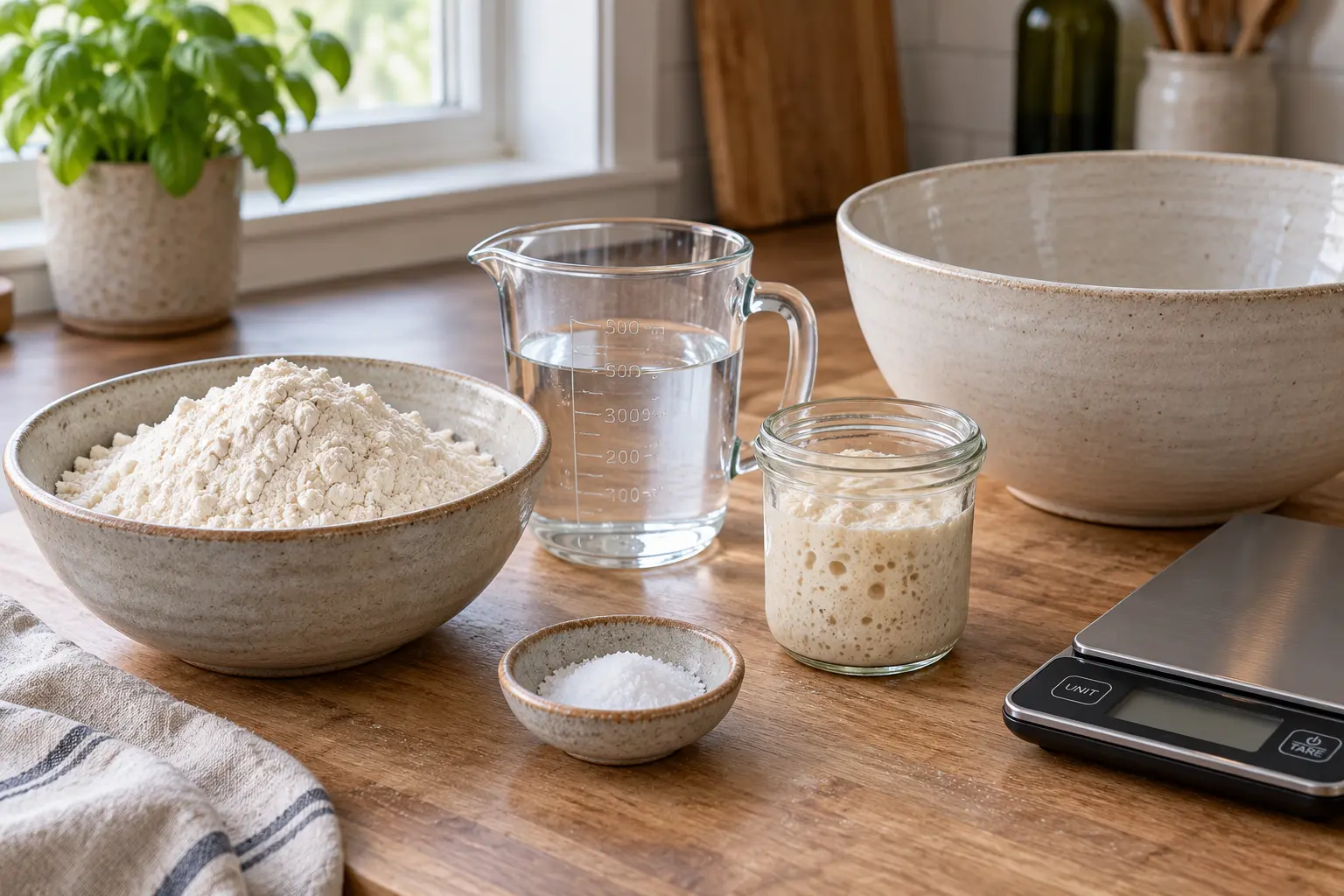
For the Combined Dough
- 405 g bread flour
- 270 g water
- 90 g active sourdough starter
- 9 g fine sea salt
For Steam
- 1/2 cup (120 ml) boiling water
The boiling water is for the steam pan only, not the dough. Have a little extra flour available for shaping and dusting the proofing cloths.
The Two Loaf Formulas
| Ingredient | Larger loaf | Smaller loaf |
|---|---|---|
| Added bread flour | 270 g | 135 g |
| Added water | 180 g | 90 g |
| 100% hydration starter | 60 g | 30 g |
| Salt | 6 g | 3 g |
| Total flour, including starter | 300 g | 150 g |
| Dough weight before handling losses | 516 g | 258 g |
The combined batch has 450 g total flour and 315 g total water, including the flour and water in the starter, for 70% hydration. The table explains each loaf’s share; mix the combined quantities above once rather than making another batch from the table.
Equipment and Oven Setup
- Digital kitchen scale
- Mixing bowl and cover
- Bench scraper
- Two cloth-lined proofing bowls or baskets in different sizes
- Baking stone large enough for both loaves
- Sturdy uncoated metal or cast-iron steam pan
- Peel or flat baking sheet for loading
- Heat-rated parchment or bread slings
- Bread lame, long oven mitts, long-spouted kettle, and instant-read thermometer
- Wire cooling rack
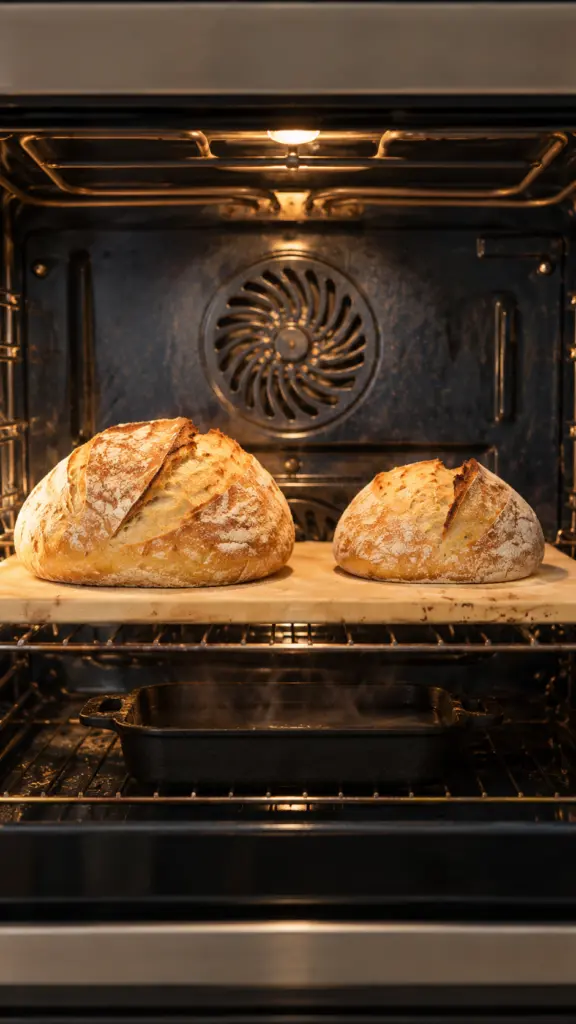
The loaves sit on a baking stone, with a separate metal pan below to produce steam. Keep space around the stone and avoid blocking oven vents. If your oven does not permit adding water to a hot pan, use its approved steam function and instructions instead.
Instructions: Mix and Ferment
-
Prepare the starter: Use active sourdough starter at 100% hydration, maintained with equal weights of flour and water. It should be bubbly and near its peak. The 90 g starter contributes 45 g flour and 45 g water to this combined batch.
-
Mix one dough: Stir the active sourdough starter into the 270 g water, then add the bread flour and fine sea salt. Mix thoroughly until no dry flour remains. Cover and rest for 30 minutes.
-
Develop the dough: With a damp hand, lift one side of the dough and fold it over the center. Rotate the bowl and repeat around all four sides. Cover and repeat two more sets at 30-minute intervals. The dough should become smoother and more elastic.
-
Finish bulk fermentation: Keep covered at about 75°F (24°C) until the dough has risen roughly 50–75%, feels aerated, and shows bubbles along the sides. This commonly takes 4–7 hours from the initial mix, including the rests and folds; follow the dough rather than a fixed clock.
Divide and Shape the Two Sizes
-
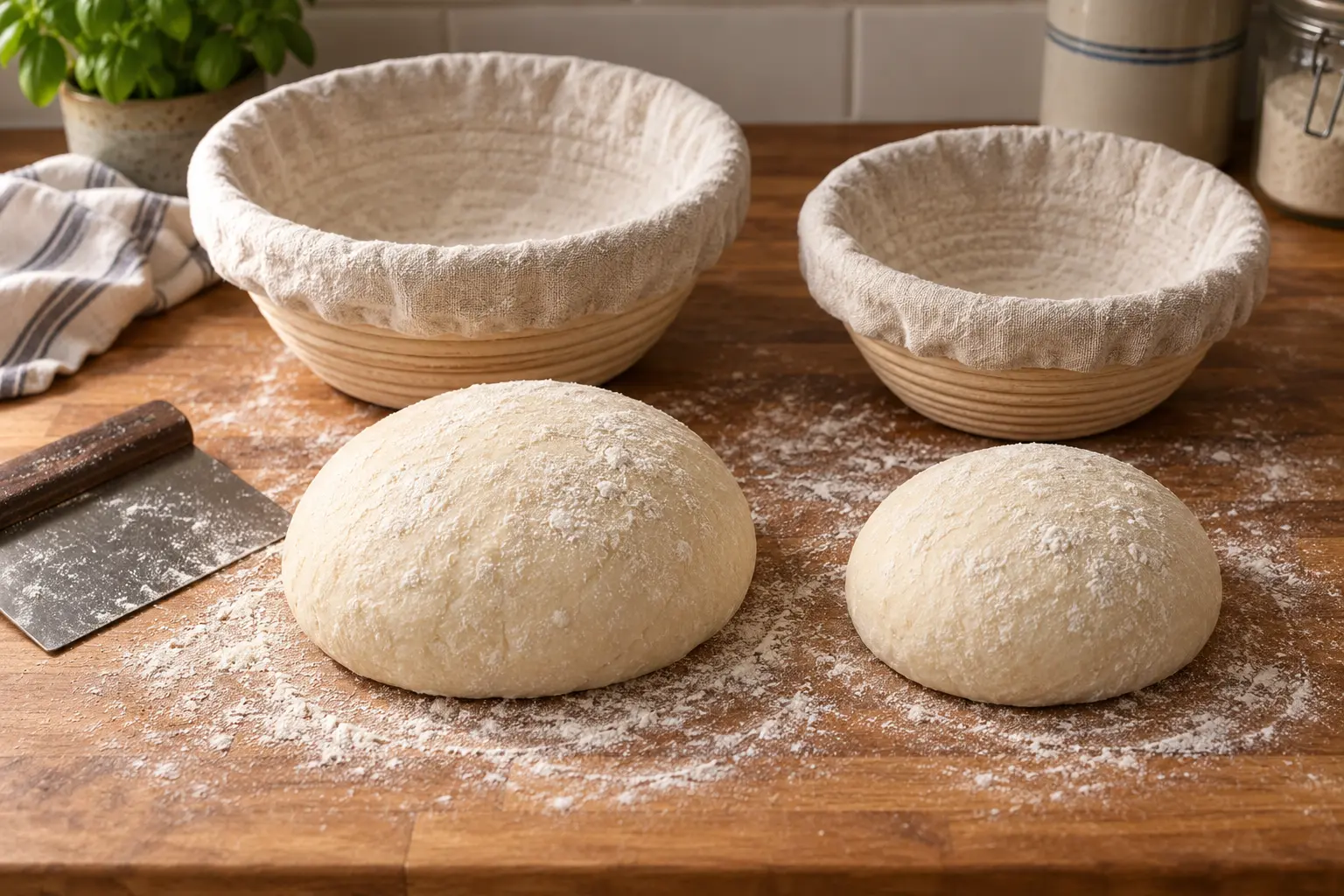
Divide 2:1 and preshape: Turn the dough onto a lightly floured worktop. Weigh it and divide into two portions: two-thirds for the larger loaf and one-third for the smaller. Before handling losses, the dough weighs 774 g, giving portions of 516 g and 258 g. Gently round both pieces, cover, and rest 20 minutes.
-
Shape and cold-proof: Shape each portion into a round with a lightly tensioned surface. Place seam-side up in separate well-floured cloth-lined bowls or baskets suited to the two sizes. Cover and refrigerate for 8–16 hours. Before baking, the loaves should look slightly expanded and feel aerated; if they remain tight and dense, let them finish proofing at room temperature while the oven heats.
Open-Bake with Steam
-
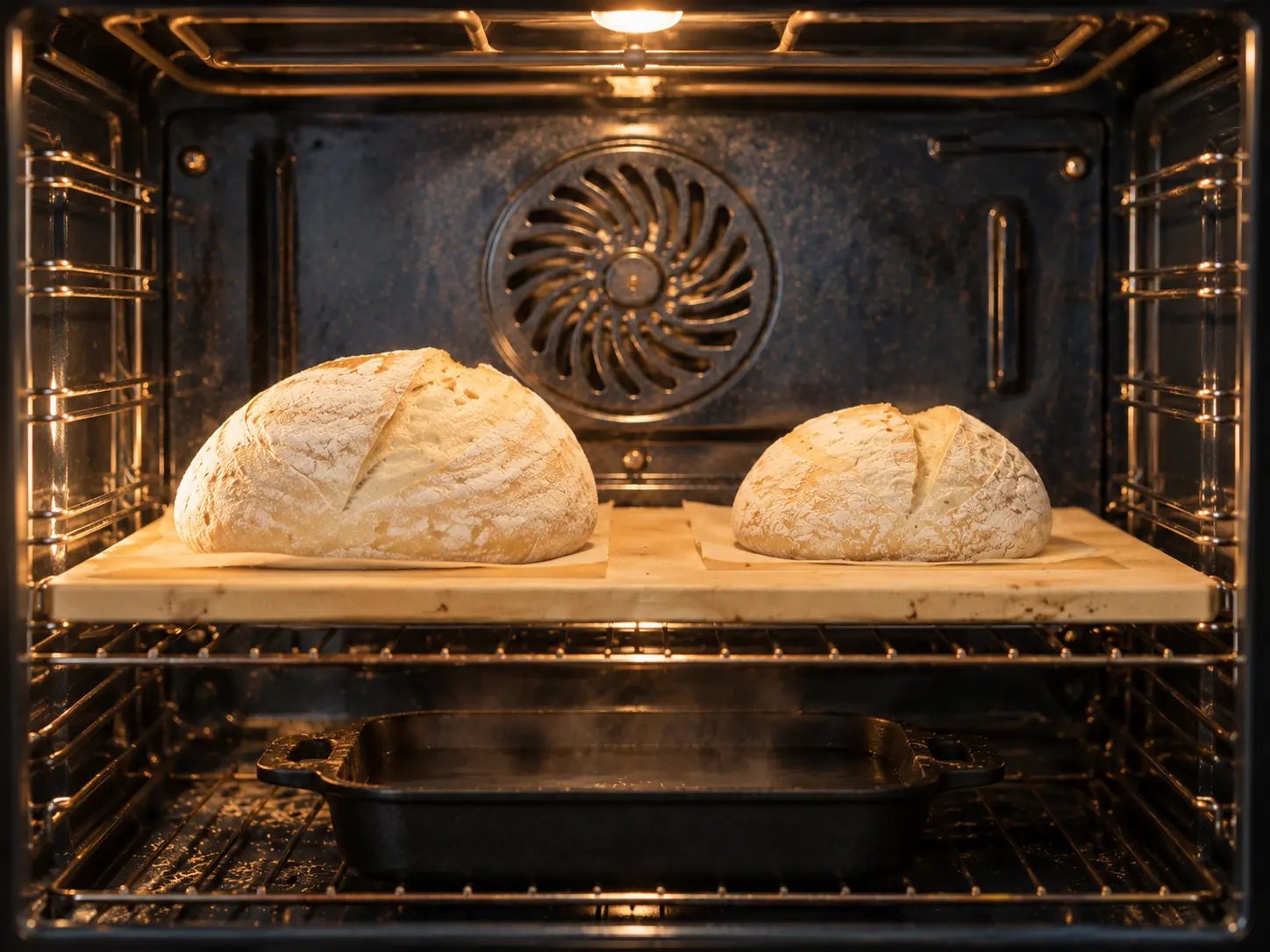
Prepare the open-bake setup: Put a baking stone large enough for both loaves on the middle rack, leaving airflow space around it. Set a sturdy uncoated metal or cast-iron steam pan on a lower rack, away from heating elements. Preheat to 450°F (230°C) for 45–60 minutes or as the stone manufacturer directs. Use conventional heat without the fan if available. Check that your oven permits this steam method; never use glass or ceramic as the steam pan.
-
Score and load both loaves: Turn each loaf onto a small piece of parchment rated for 450°F (230°C), or use a suitable bread sling. Score the tops about 1/4–1/2 inch deep. Slide both onto the hot stone using a peel or the back of a flat baking sheet, leaving at least 3 inches between them. Do not put a wooden board in the oven.
-
Add steam and bake: Wearing long oven mitts and keeping your face back, carefully pour the 1/2 cup (120 ml) boiling water into the hot metal steam pan from a long-spouted kettle. Keep water off the oven glass, floor, stone, and heating elements. Close the door promptly and bake both loaves at 450°F (230°C) for 15 minutes.
-
Vent and finish: Stand back, briefly open the door to release steam, and reduce to 425°F (220°C). Do not add more water. If the steam pan is empty, it may be removed carefully with oven mitts; if water remains, leave it in place until it is safe to handle. Continue baking in the drier oven, rotating the loaves if browning is uneven.
-
Check each loaf separately: Start checking the smaller loaf at 25 minutes total baking time; it will often finish in 25–32 minutes. Start checking the larger loaf at 35 minutes; it will often need 35–45 minutes total. Remove each when deeply golden and its center reaches about 205–210°F (96–99°C). These are starting ranges: loaf shape, proofing, stone, and oven affect the actual time. If a loaf is pale or underbaked, continue in short intervals.
-
Cool: Move each finished loaf to a wire rack as soon as it is ready. Cool the smaller loaf for at least 1 hour and the larger loaf for at least 90 minutes, ideally until the centers have cooled, before slicing. Leave the steam pan and any remaining water to cool safely.
Timing at a Glance
Plan around 30 minutes of active preparation, 4–7 hours for bulk fermentation including the initial rest and folds, a 20-minute bench rest, and an 8–16-hour cold proof. Oven preheating can overlap the end of proofing. Baking takes roughly 25–32 minutes for the smaller loaf and 35–45 minutes for the larger, followed by cooling. A typical schedule is about 20 hours overall, but the dough may need more or less time.
Tips for Two Well-Baked Loaves
- Total flour includes the flour in the starter. Keep the starter at 100% hydration for the measurements here to work.
- Weigh the entire dough before dividing and use a 2:1 ratio if a little remains on the bowl. This preserves the intended size difference.
- Preheat the stone thoroughly. A hot air reading alone does not mean a thick baking stone is fully heated.
- Give both loaves room to expand and keep the stone from blocking all airflow around the oven rack.
- Use steam during the opening stage, then vent it to encourage crust color. Avoid repeatedly opening the door during the first 15 minutes.
- Check the smaller loaf first and take it out when ready. It does not need to stay in for the larger loaf's full baking time.
- Use color and center temperature together, and cool before slicing for a crumb that is easier to cut cleanly.
Variations
- Two equal small loaves: divide the combined dough in half for two 387 g portions, each containing 225 g total flour. Check both individually and expect timing between the two size ranges.
- Two oval loaves: shape short ovals instead of rounds, with suitable proofing baskets and enough room on the stone.
- A little whole wheat: replace 45 g of the added bread flour with whole wheat flour. Keep the total flour unchanged and watch fermentation, which may move faster.
Serving Ideas
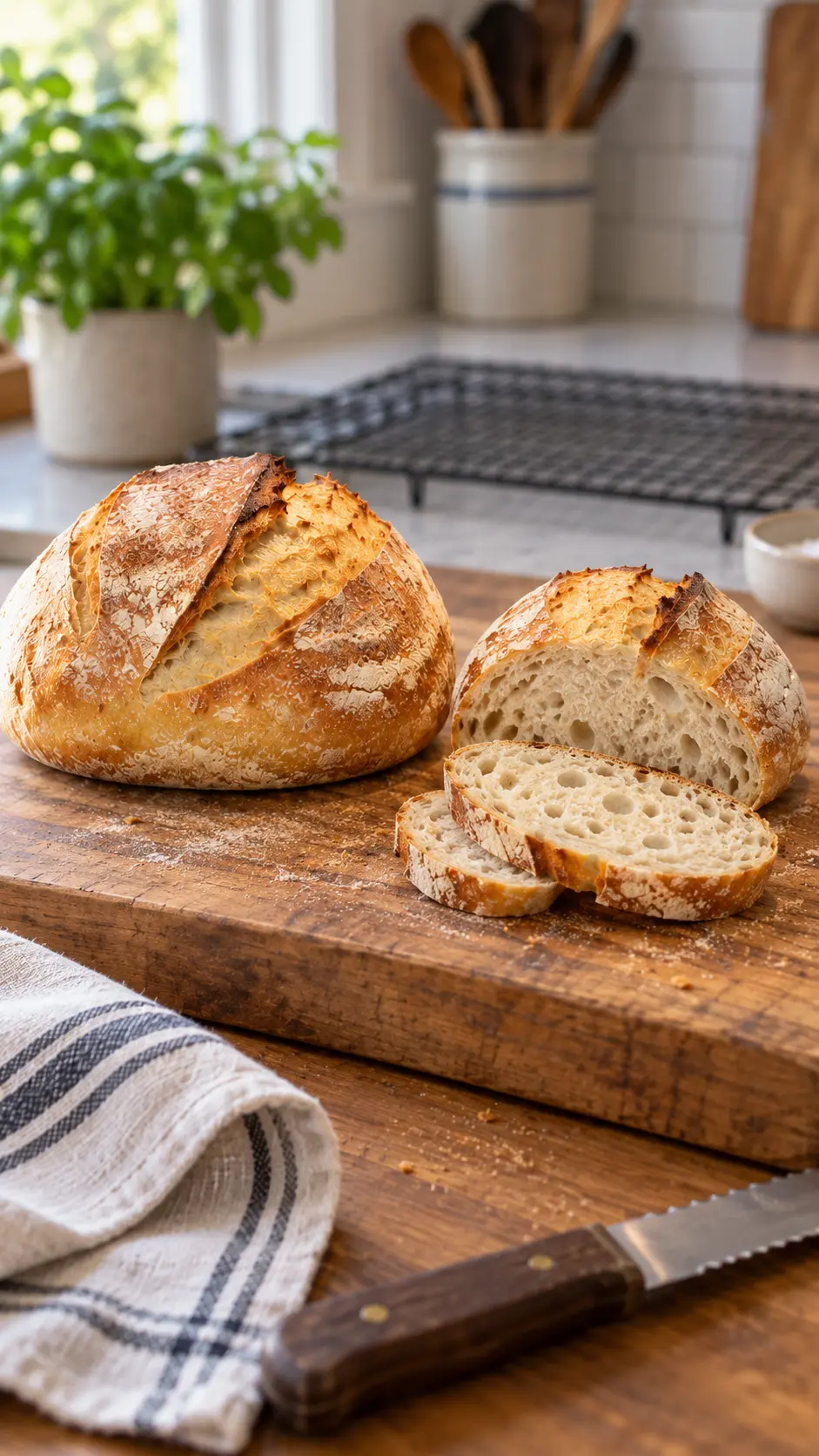
Keep the larger loaf for toast and sandwiches, and serve the smaller loaf with soup, cheese, or butter. Slice only after cooling so the soft, chewy center holds its shape.
Storage
Store fully cooled bread at room temperature in a bread box or loosely closed bag for up to 2 days. Slice and freeze in an airtight freezer bag for up to 2 months. The smaller loaf dries out sooner after cutting, so freeze unused slices promptly.
Reheating
Toast slices directly from frozen. To refresh a thawed loaf, warm it in a 350°F (175°C) oven for about 10–15 minutes, checking the smaller loaf sooner.
FAQ
Does 300 g total flour mean adding 300 g flour to the bowl?
No. The larger loaf contains 270 g added flour plus 30 g flour inside its 60 g starter portion. The smaller loaf contains 135 g added flour plus 15 g flour inside 30 g starter.
Can both sizes really bake at the same temperature?
Yes. Start them together with the same steam stage, then check and remove each loaf when it is done. The smaller loaf usually finishes first.
Why do open-baked loaves need steam?
Steam delays the surface setting during the first part of the bake, giving the loaves room to expand. Once that stage is over, a drier oven helps the crust color and crisp.
Should I use the fan setting?
Conventional heat is the starting point here because a fan can dry the surfaces quickly. If your oven only offers fan heat, follow its temperature-conversion guidance and check the loaves earlier.
Can I pour water directly onto the oven floor?
Use only the separate sturdy metal steam pan described in the method, and follow your oven manufacturer's guidance. Water should stay off oven glass, the floor, heating elements, and the baking stone.
What if the two loaves brown differently?
Rotate their positions after the initial steam stage if necessary. Move quickly, close the door, and continue checking each loaf on its own.
Why is the smaller loaf not half the width?
It has half the dough mass, not half of every dimension. Two similarly shaped loaves will look closer in width than their 2:1 weights suggest.
Conclusion
A shared hot baking surface, a short steam stage, and separate doneness checks make two-loaf open baking practical. Keep the smaller loaf's timing in view, let each loaf finish on its own schedule, and cool both before slicing.
Print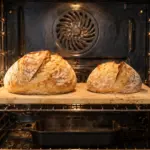
Open-Bake Two Sourdough Loaves at Once
- Prep Time: 30 minutes
- Cook Time: 45 minutes
- Total Time: 20 hours
- Yield: 2 loaves (1 larger and 1 small) 1x
- Category: Sourdough
- Method: Baking
Description
Two round sourdough loaves baked together on a stone with steam: one with 300 g total flour and one with 150 g, checked and removed at different times.
Ingredients
- 405 g bread flour
- 270 g water
- 90 g active sourdough starter
- 9 g fine sea salt
- 1/2 cup (120 ml) boiling water
Instructions
Step 1 Prepare the starter: Use active sourdough starter at 100% hydration, maintained with equal weights of flour and water. It should be bubbly and near its peak. The 90 g starter contributes 45 g flour and 45 g water to this combined batch.
Step 2 Mix one dough: Stir the active sourdough starter into the 270 g water, then add the bread flour and fine sea salt. Mix thoroughly until no dry flour remains. Cover and rest for 30 minutes.
Step 3 Develop the dough: With a damp hand, lift one side of the dough and fold it over the center. Rotate the bowl and repeat around all four sides. Cover and repeat two more sets at 30-minute intervals. The dough should become smoother and more elastic.
Step 4 Finish bulk fermentation: Keep covered at about 75°F (24°C) until the dough has risen roughly 50–75%, feels aerated, and shows bubbles along the sides. This commonly takes 4–7 hours from the initial mix, including the rests and folds; follow the dough rather than a fixed clock.
Step 5 Divide 2:1 and preshape: Turn the dough onto a lightly floured worktop. Weigh it and divide into two portions: two-thirds for the larger loaf and one-third for the smaller. Before handling losses, the dough weighs 774 g, giving portions of 516 g and 258 g. Gently round both pieces, cover, and rest 20 minutes.
Step 6 Shape and cold-proof: Shape each portion into a round with a lightly tensioned surface. Place seam-side up in separate well-floured cloth-lined bowls or baskets suited to the two sizes. Cover and refrigerate for 8–16 hours. Before baking, the loaves should look slightly expanded and feel aerated; if they remain tight and dense, let them finish proofing at room temperature while the oven heats.
Step 7 Prepare the open-bake setup: Put a baking stone large enough for both loaves on the middle rack, leaving airflow space around it. Set a sturdy uncoated metal or cast-iron steam pan on a lower rack, away from heating elements. Preheat to 450°F (230°C) for 45–60 minutes or as the stone manufacturer directs. Use conventional heat without the fan if available. Check that your oven permits this steam method; never use glass or ceramic as the steam pan.
Step 8 Score and load both loaves: Turn each loaf onto a small piece of parchment rated for 450°F (230°C), or use a suitable bread sling. Score the tops about 1/4–1/2 inch deep. Slide both onto the hot stone using a peel or the back of a flat baking sheet, leaving at least 3 inches between them. Do not put a wooden board in the oven.
Step 9 Add steam and bake: Wearing long oven mitts and keeping your face back, carefully pour the 1/2 cup (120 ml) boiling water into the hot metal steam pan from a long-spouted kettle. Keep water off the oven glass, floor, stone, and heating elements. Close the door promptly and bake both loaves at 450°F (230°C) for 15 minutes.
Step 10 Vent and finish: Stand back, briefly open the door to release steam, and reduce to 425°F (220°C). Do not add more water. If the steam pan is empty, it may be removed carefully with oven mitts; if water remains, leave it in place until it is safe to handle. Continue baking in the drier oven, rotating the loaves if browning is uneven.
Step 11 Check each loaf separately: Start checking the smaller loaf at 25 minutes total baking time; it will often finish in 25–32 minutes. Start checking the larger loaf at 35 minutes; it will often need 35–45 minutes total. Remove each when deeply golden and its center reaches about 205–210°F (96–99°C). These are starting ranges: loaf shape, proofing, stone, and oven affect the actual time. If a loaf is pale or underbaked, continue in short intervals.
Step 12 Cool: Move each finished loaf to a wire rack as soon as it is ready. Cool the smaller loaf for at least 1 hour and the larger loaf for at least 90 minutes, ideally until the centers have cooled, before slicing. Leave the steam pan and any remaining water to cool safely.
Notes
Use 100% hydration starter. Combined dough: 450 g total flour, 315 g total water, 9 g salt; divide 2:1 into approximately 516 g and 258 g. Steam water is separate from dough water. Smaller loaf: check at 25 minutes; larger loaf: check at 35 minutes. The 20-hour total is an estimate including fermentation, proofing, and cooling. Total flour includes the flour in the starter. Keep the starter at 100% hydration for the measurements here to work. Weigh the entire dough before dividing and use a 2:1 ratio if a little remains on the bowl. This preserves the intended size difference. Preheat the stone thoroughly. A hot air reading alone does not mean a thick baking stone is fully heated. Give both loaves room to expand and keep the stone from blocking all airflow around the oven rack. Use steam during the opening stage, then vent it to encourage crust color. Avoid repeatedly opening the door during the first 15 minutes. Check the smaller loaf first and take it out when ready. It does not need to stay in for the larger loaf's full baking time. Use color and center temperature together, and cool before slicing for a crumb that is easier to cut cleanly. Store fully cooled bread at room temperature in a bread box or loosely closed bag for up to 2 days. Slice and freeze in an airtight freezer bag for up to 2 months. The smaller loaf dries out sooner after cutting, so freeze unused slices promptly.