Easy Fold-and-Rest Sourdough Loaf turns bread flour, water, active starter, and sea salt into a golden rustic boule with a crisp crust and a chewy, airy crumb. A one-hour initial rest and four gentle folding rounds build strength without a stand mixer or a long kneading session.
Why This Fold-and-Rest Method Works
The first rest gives the flour time to absorb the water. Short folding rounds then organize and strengthen the dough while fermentation develops flavor. Most of the schedule is waiting time: you do not need to work the dough continuously.
This version uses four folding rounds and an overnight refrigerator proof. The one-hour rest is not the total rising time. Start with a lively starter and leave room in your schedule for the dough to move at its own pace.
Ingredients
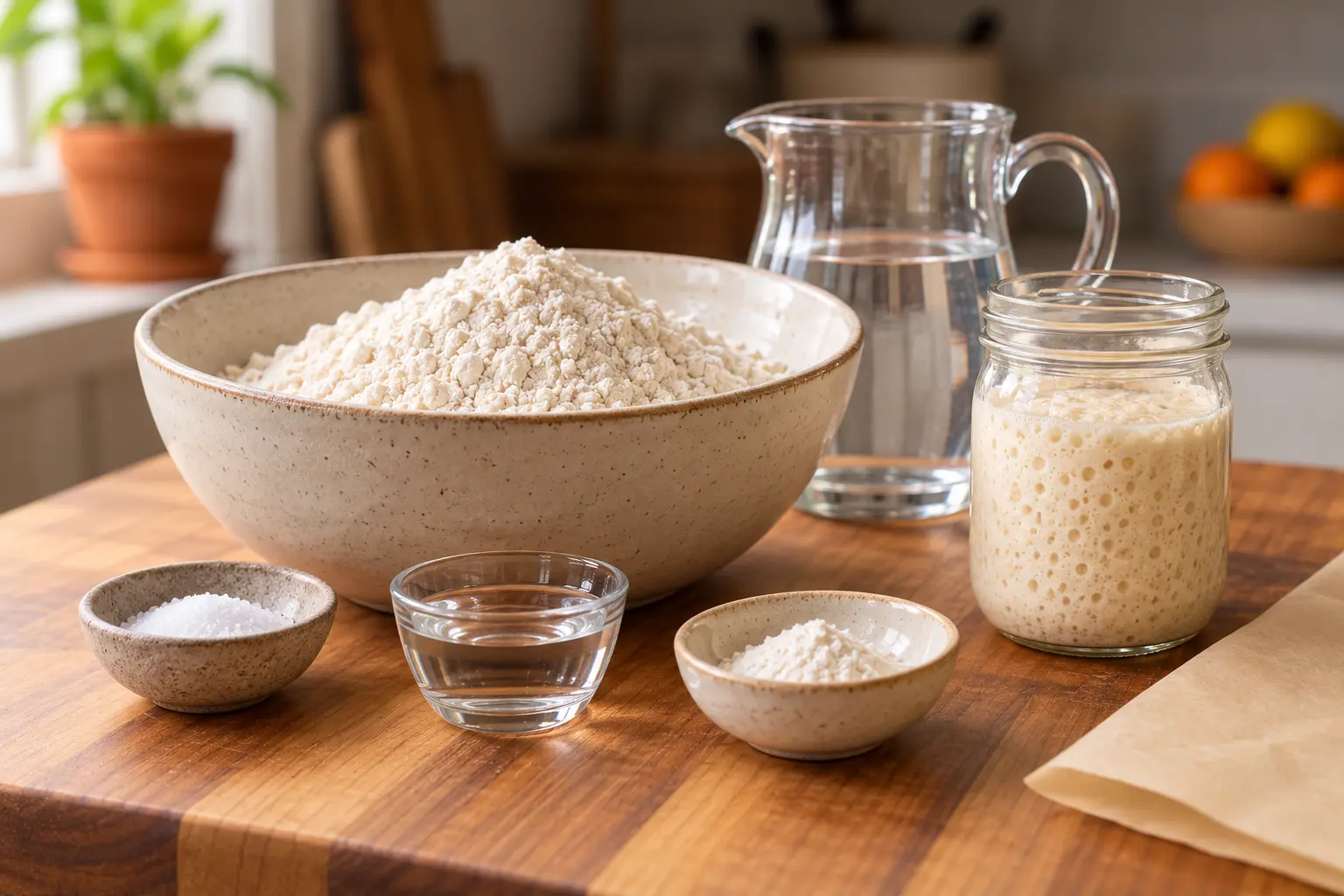
For the Dough
- 510 g bread flour
- 350 ml filtered water, room temperature
- 100 g bubbly active sourdough starter
- 12 g fine sea salt
For Adding the Salt
- 10–15 ml water for adding the salt
Optional for Shaping
- Rice flour for dusting (optional)
- Extra bread flour for the work surface (optional)
Have parchment paper ready for transferring the loaf; it is equipment rather than an edible ingredient. Use bread flour for the dough and rice flour only for dusting the basket. The method assumes a starter fed with equal weights of flour and water.
Equipment
- Digital kitchen scale
- Large mixing bowl and cover
- Bench scraper
- Round proofing basket or towel-lined bowl
- 5–6-quart Dutch oven rated for 450°F (230°C)
- Parchment paper rated for the baking temperature
- Bread lame or sharp knife
- Dry oven mitts and wire cooling rack
Instructions: Mix, Rest, and Fold
-
Mix and rest: Keep the filtered water room temperature rather than hot. In a large bowl, stir the bubbly active sourdough starter into the 350 ml water. Add the 510 g bread flour and mix until no dry flour remains. Cover and rest for 1 hour. This recipe assumes a 100%-hydration starter, fed with equal weights of flour and water. Bulk fermentation begins as soon as the starter meets the dough.
-
Add salt: Sprinkle over the 12 g fine sea salt. Add the separate 10–15 ml water for adding the salt, starting with 10 ml. Pinch and fold gently until the salt and water are incorporated. Cover and rest for 30 minutes.
-
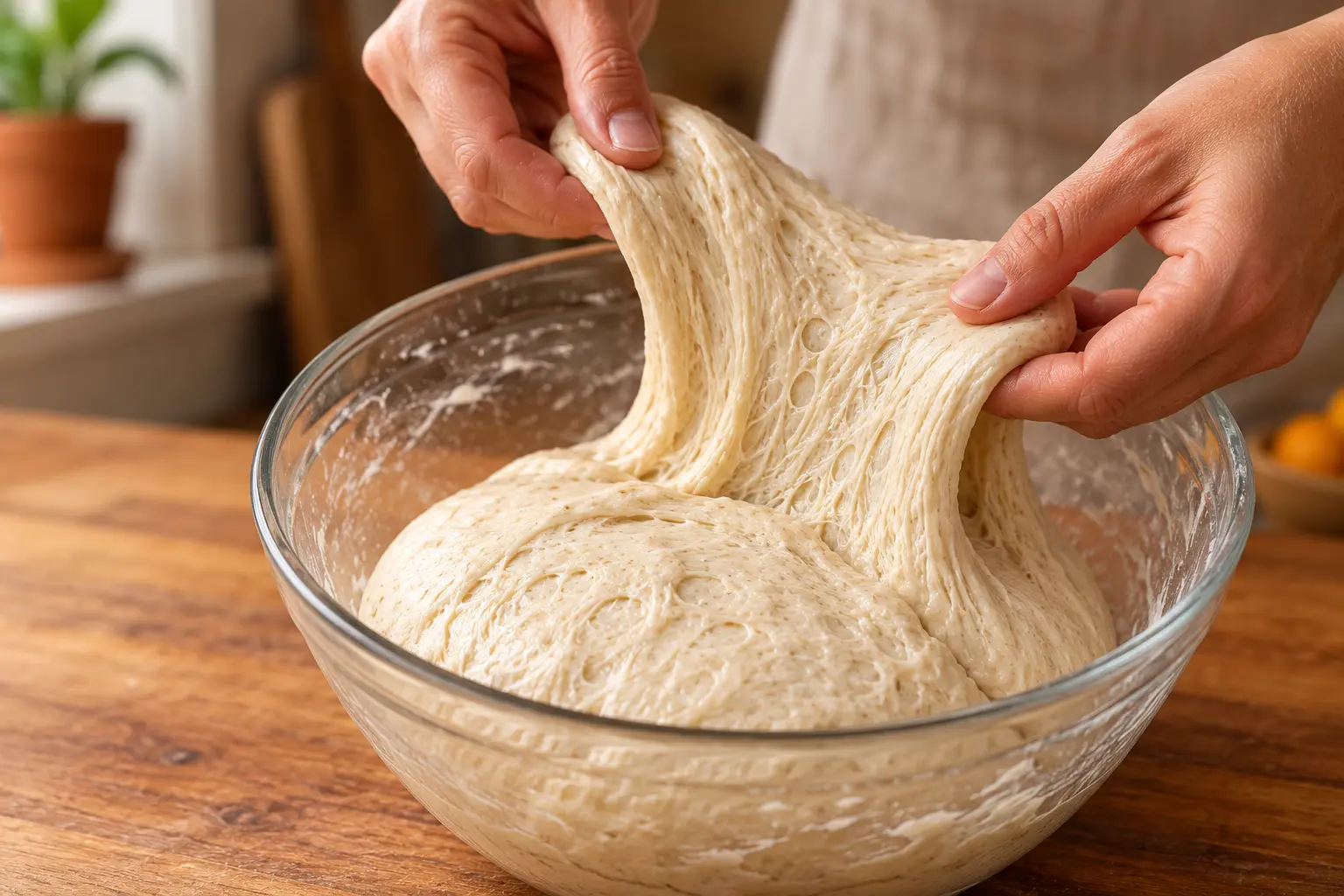
First folding round: With damp hands, lift one edge of the dough until you feel resistance, then fold it over the center. Rotate the bowl a quarter turn and repeat around all four sides. These four directional folds count as one round. Do not pull until the dough tears. Cover and rest for 30 minutes.
-
Repeat the folds: Perform three more folding rounds, with 30 minutes of covered rest between rounds, for four rounds total. Each round has about four gentle directional folds. The dough should become smoother and better able to hold its shape; if it resists stretching, let it relax rather than forcing it.
-
Finish bulk fermentation: After the last round, keep the bowl covered until the dough is aerated, slightly domed, jiggly, and about 50–75% larger than its initial mixed volume. At about 74–78°F (23–26°C), allow roughly 5–8 hours total from initial mixing, including the first rest and folds. This is a guide, not a deadline; a cooler room or less vigorous starter may need longer. Use the lower end of the rise range for warmer dough before an overnight cold proof.
Shape and Cold Proof
-
Preshape: Lightly dust the work surface with extra bread flour for the work surface, if needed. Turn out the dough gently, gather into a loose round with a bench scraper, and rest for 20 minutes. Avoid pressing out all the bubbles.
-
Shape and chill: Use rice flour for dusting a round proofing basket or a bowl lined with a clean, lint-free towel. Fold the dough edges inward, turn seam-side down, and gently draw it toward you to tighten the surface without tearing. Place seam-side up in the basket, cover, and refrigerate for 8–16 hours at about 39°F (4°C).
Score and Bake
-
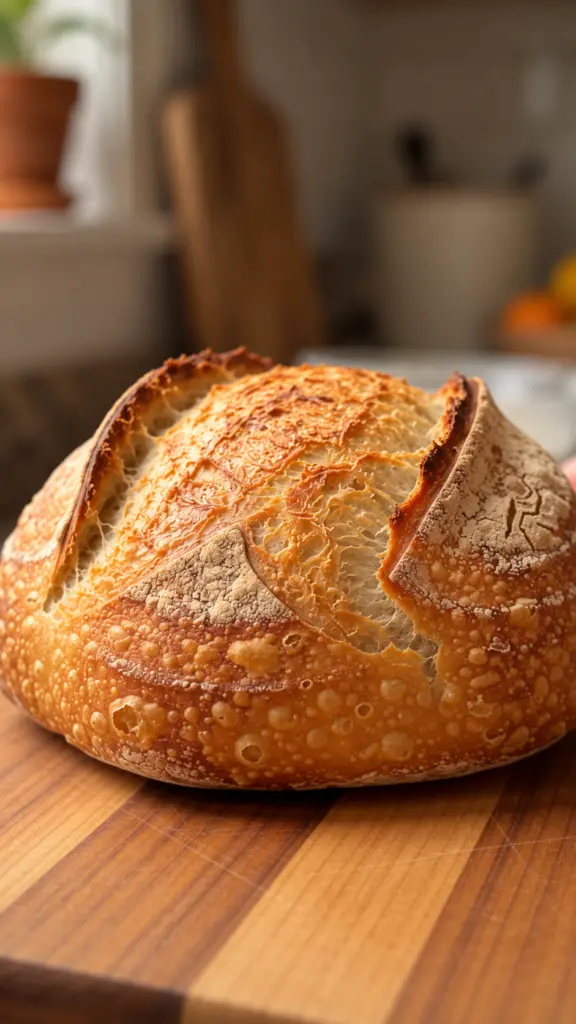
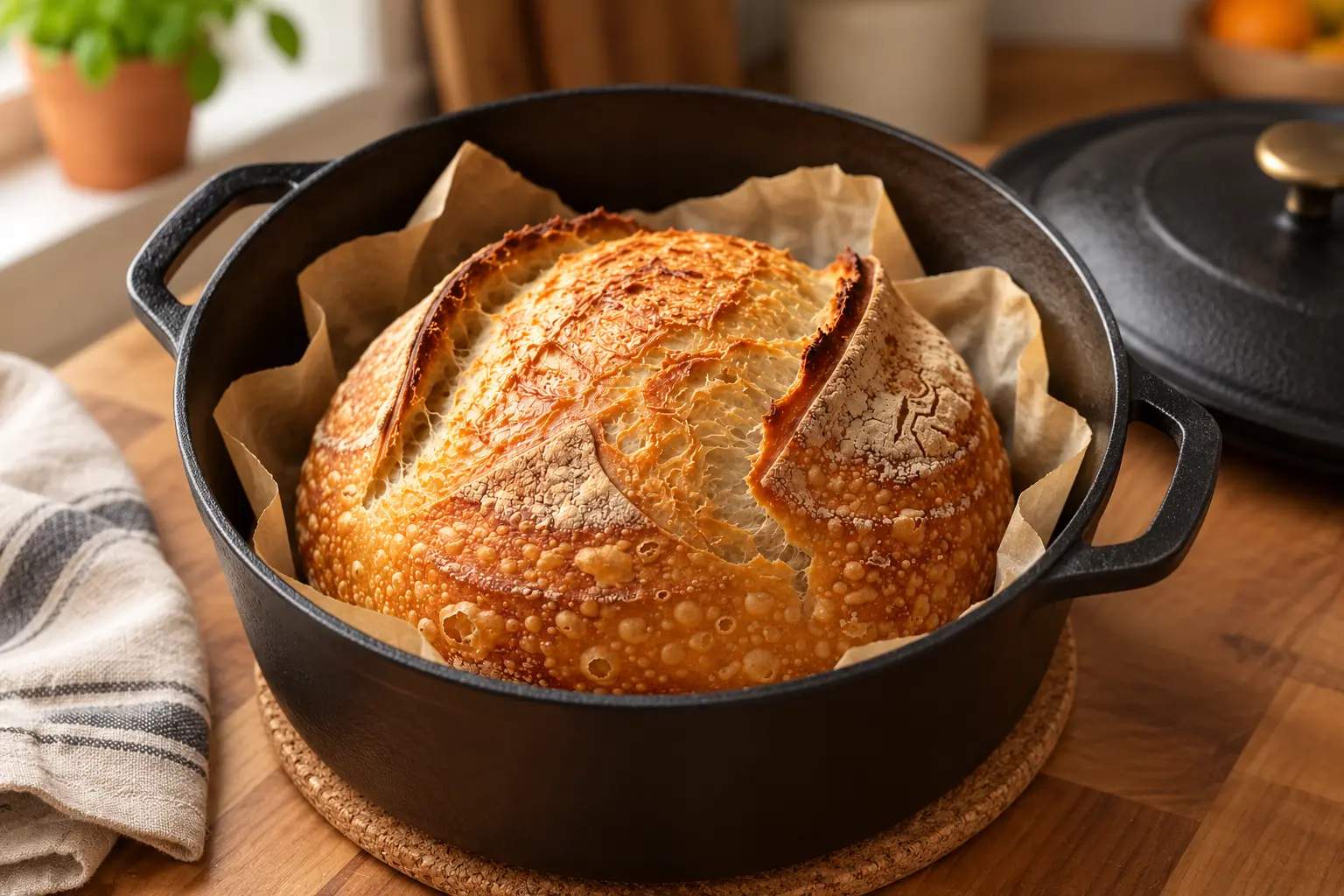
Preheat and score: Preheat the oven with a suitable 5–6-quart Dutch oven and lid inside to 450°F (230°C) for 45–60 minutes; check that the pot and its knob are rated for this temperature and empty preheating. Keep the dough refrigerated meanwhile. Turn the cold loaf onto parchment paper rated for the baking temperature. Score about 1/2 inch (1 cm) deep with a bread lame or sharp knife; one long slightly off-center cut works well.
-
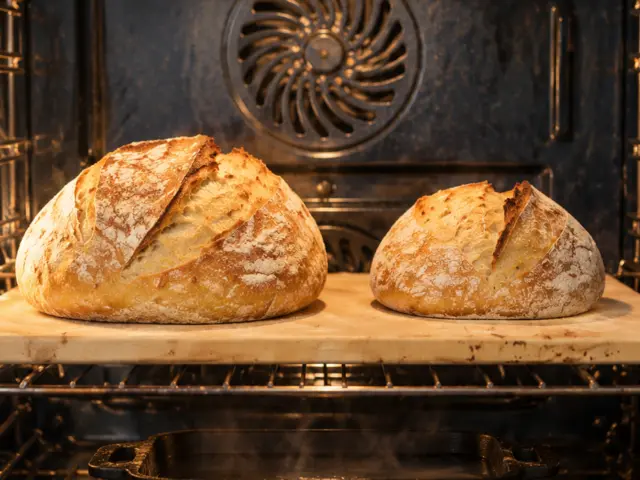
Bake: Using dry oven mitts, lower the loaf and parchment into the hot pot. Cover and bake at 450°F (230°C) for 25 minutes. Remove the lid carefully, directing steam away from your face, then bake uncovered for another 20–25 minutes until deeply golden. The center should be approximately 205–210°F (96–99°C). If needed, bake a few minutes longer to color and set the crust.
-
Cool and slice: Transfer carefully to a wire rack and cool for at least 2 hours, or until the center is no longer warm, before slicing with a serrated knife. This sets the crumb and avoids compressing it.
Suggested Schedule
For an overnight loaf, mix at 9:00 a.m., add salt at 10:00, then fold at 10:30, 11:00, 11:30, and noon. Continue bulk fermentation until the dough is ready, often around 2:00–5:00 p.m. at the stated temperature. Preshape, rest 20 minutes, shape, and refrigerate. Bake after 8–16 hours of cold proofing. Adjust the start time to suit your morning; do not delay shaping just to match the example.
Allow around 30 minutes total active preparation, 45–50 minutes baking, and at least 2 hours cooling. With bulk fermentation and an overnight proof, plan roughly 17–28 hours overall; 24 hours is a useful planning estimate. Starter feeding time is additional. Yield: one large boule, approximately 12 slices.
Tips for a Golden Crust and Good Rise
- Use a recently fed starter that is expanded, bubbly, and at or close to its peak; this is not a discard recipe.
- The 350 ml water goes into the initial dough. Keep the extra 10–15 ml separate for incorporating the salt.
- Use damp hands for the folds rather than adding flour to the bowl. A little stickiness is normal.
- Mark the dough's starting level in a straight-sided container if you want an easier way to judge its rise.
- Watch the dough, not just the clock. Warm dough ferments faster, while a cool kitchen can add hours.
- Handle the dough gently late in fermentation and stop pulling when it resists. More force does not mean better strength.
- Keep the cold loaf chilled until the oven is ready; it is usually easier to transfer and score cold.
- The photo is a visual guide, not a guarantee of an identical ear or crumb. Starter strength, fermentation, shaping, and scoring affect the result.
Variations
- Same-day proof: after shaping, proof covered at room temperature for roughly 1–3 hours, until puffy and a gentle floured-finger indentation springs back slowly and partially. Bake once ready; start preheating before the proof is complete.
- Oval loaf: shape as a batard and use an oval basket and covered baker large enough to hold the dough.
- Simple scoring: use one long cut for a raised ear, or two shallow crossing cuts for a more evenly opened top.
Serving Ideas
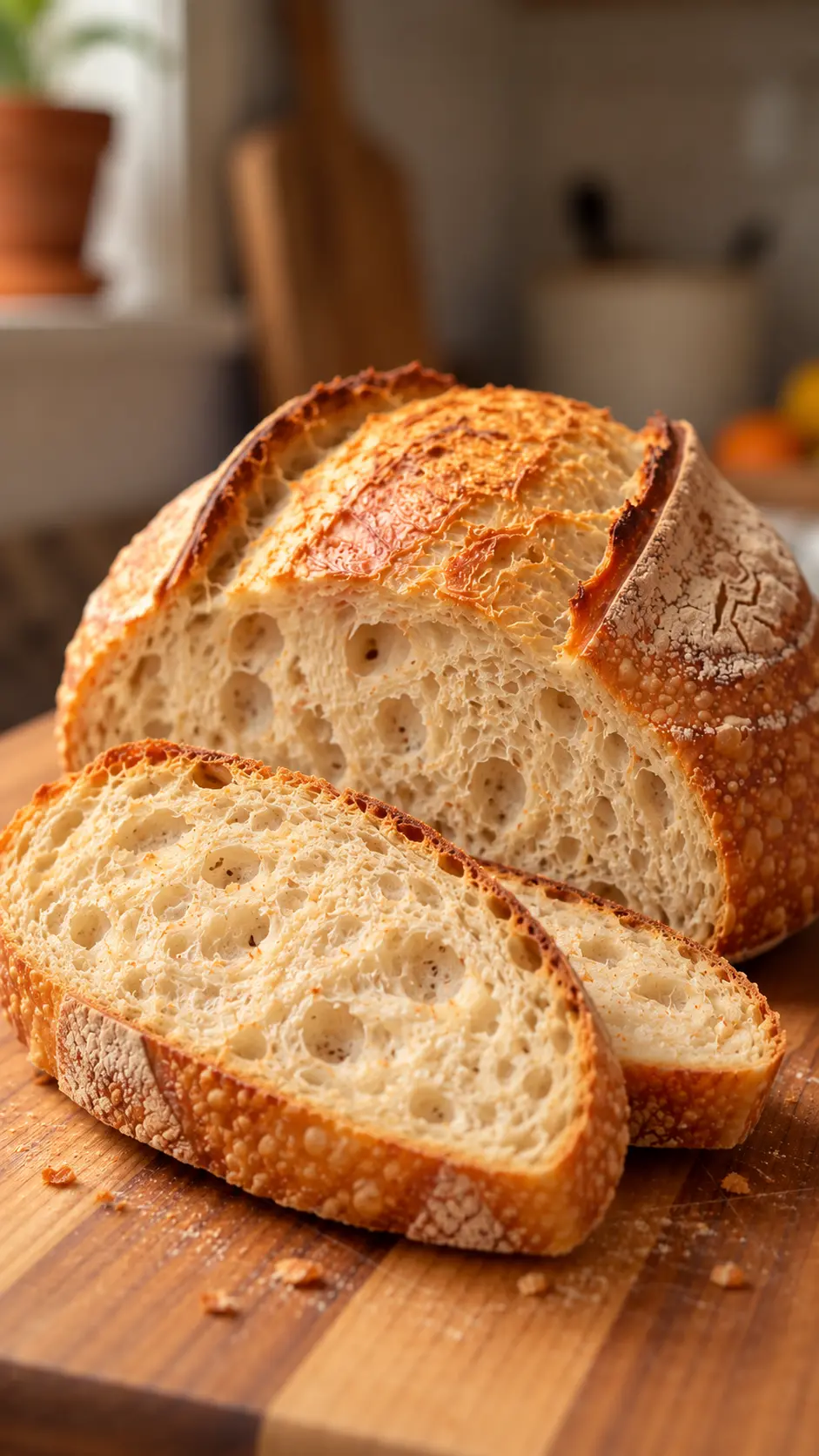
Serve thick slices with butter, toast them for eggs or avocado, or use the loaf alongside soup. Day-old slices work well for grilled sandwiches and croutons. Wait until the loaf is fully cool for cleaner slices and a crumb that holds its shape.
Storage
Once completely cool, keep the loaf in a bread box or paper bag for 1–2 days for the best crust. A sealed bag keeps it softer but softens the crust. Slice and freeze in a tightly sealed freezer bag for up to 3 months. Discard bread if mold appears.
Reheating
Toast individual slices directly from frozen. To refresh a room-temperature portion, warm it in a 350°F (175°C) oven for about 10–15 minutes, checking so the crust does not become too dark.
FAQ
Does the one-hour rest mean the loaf is ready in one hour?
No. That is only the initial rest after mixing. Folding, bulk fermentation, final proofing, baking, and cooling still follow.
What does four folds mean here?
This method uses four folding rounds spaced 30 minutes apart. Within each round, stretch and fold the dough from roughly four sides, turning the bowl as you go.
What starter consistency should I use?
The method assumes an active 100%-hydration starter, maintained with equal weights of flour and water. A stiff or much thinner starter changes how this dough handles.
How wet is this dough?
With that starter, the dough has 560 g total flour and about 410–415 g total water, including the salt splash: approximately 73–74% hydration. The extra flour used only for dusting is not included.
Can I use sourdough discard?
Not as a direct substitute here. Use a fed, actively rising starter for predictable fermentation without commercial yeast.
Why did my loaf spread?
Possible causes include insufficient dough strength, overfermentation, weak flour, or loose shaping. Check the rise and feel of the dough before extending the schedule, and shape without tearing its surface.
Why is the crumb gummy?
Underbaking, slicing while warm, and incomplete fermentation can all contribute. Bake until the center and crust are done, then cool fully before cutting.
Conclusion
A gentle rhythm of mixing, resting, and folding makes this loaf manageable without constant hands-on work. Give the starter time to do its job, shape with care, and let the finished boule cool before enjoying its crackly crust.
Print
Easy Fold-and-Rest Sourdough Loaf
- Prep Time: 30 minutes
- Cook Time: 50 minutes
- Total Time: 24 hours
- Yield: 1 large loaf (12 slices) 1x
- Category: Sourdough
- Method: Baking
Description
A naturally leavened round sourdough loaf made with a one-hour rest, four folding rounds, an overnight cold proof, and a covered-pot bake.
Ingredients
- 510 g bread flour
- 350 ml filtered water, room temperature
- 100 g bubbly active sourdough starter
- 12 g fine sea salt
- 10–15 ml water for adding the salt
- Rice flour for dusting (optional)
- Extra bread flour for the work surface (optional)
Instructions
Step 1 Mix and rest: Keep the filtered water room temperature rather than hot. In a large bowl, stir the bubbly active sourdough starter into the 350 ml water. Add the 510 g bread flour and mix until no dry flour remains. Cover and rest for 1 hour. This recipe assumes a 100%-hydration starter, fed with equal weights of flour and water. Bulk fermentation begins as soon as the starter meets the dough.
Step 2 Add salt: Sprinkle over the 12 g fine sea salt. Add the separate 10–15 ml water for adding the salt, starting with 10 ml. Pinch and fold gently until the salt and water are incorporated. Cover and rest for 30 minutes.
Step 3 First folding round: With damp hands, lift one edge of the dough until you feel resistance, then fold it over the center. Rotate the bowl a quarter turn and repeat around all four sides. These four directional folds count as one round. Do not pull until the dough tears. Cover and rest for 30 minutes.
Step 4 Repeat the folds: Perform three more folding rounds, with 30 minutes of covered rest between rounds, for four rounds total. Each round has about four gentle directional folds. The dough should become smoother and better able to hold its shape; if it resists stretching, let it relax rather than forcing it.
Step 5 Finish bulk fermentation: After the last round, keep the bowl covered until the dough is aerated, slightly domed, jiggly, and about 50–75% larger than its initial mixed volume. At about 74–78°F (23–26°C), allow roughly 5–8 hours total from initial mixing, including the first rest and folds. This is a guide, not a deadline; a cooler room or less vigorous starter may need longer. Use the lower end of the rise range for warmer dough before an overnight cold proof.
Step 6 Preshape: Lightly dust the work surface with extra bread flour for the work surface, if needed. Turn out the dough gently, gather into a loose round with a bench scraper, and rest for 20 minutes. Avoid pressing out all the bubbles.
Step 7 Shape and chill: Use rice flour for dusting a round proofing basket or a bowl lined with a clean, lint-free towel. Fold the dough edges inward, turn seam-side down, and gently draw it toward you to tighten the surface without tearing. Place seam-side up in the basket, cover, and refrigerate for 8–16 hours at about 39°F (4°C).
Step 8 Preheat and score: Preheat the oven with a suitable 5–6-quart Dutch oven and lid inside to 450°F (230°C) for 45–60 minutes; check that the pot and its knob are rated for this temperature and empty preheating. Keep the dough refrigerated meanwhile. Turn the cold loaf onto parchment paper rated for the baking temperature. Score about 1/2 inch (1 cm) deep with a bread lame or sharp knife; one long slightly off-center cut works well.
Step 9 Bake: Using dry oven mitts, lower the loaf and parchment into the hot pot. Cover and bake at 450°F (230°C) for 25 minutes. Remove the lid carefully, directing steam away from your face, then bake uncovered for another 20–25 minutes until deeply golden. The center should be approximately 205–210°F (96–99°C). If needed, bake a few minutes longer to color and set the crust.
Step 10 Cool and slice: Transfer carefully to a wire rack and cool for at least 2 hours, or until the center is no longer warm, before slicing with a serrated knife. This sets the crumb and avoids compressing it.
Notes
Assumes 100%-hydration active starter. Four rounds means roughly four directional folds per round, not four individual movements total. Initial rest and folding time count toward bulk fermentation. Plan about 17–28 hours including cooling; 24 hours is an estimate, excluding starter feeding. Use dough cues rather than a fixed clock. Keep the salt water separate from the initial 350 ml. Once completely cool, keep the loaf in a bread box or paper bag for 1–2 days for the best crust. A sealed bag keeps it softer but softens the crust. Slice and freeze in a tightly sealed freezer bag for up to 3 months. Discard bread if mold appears.