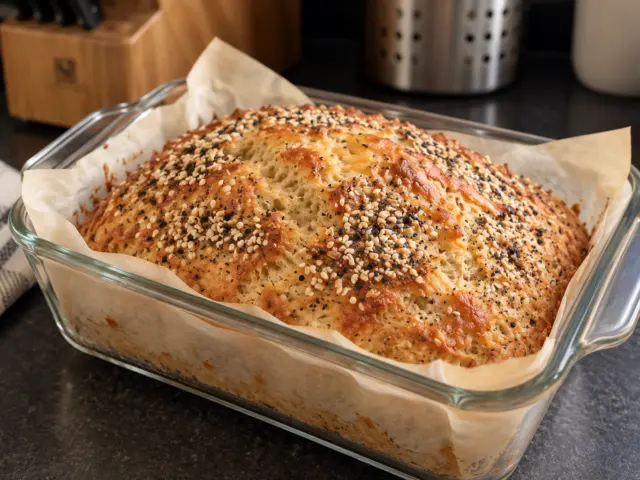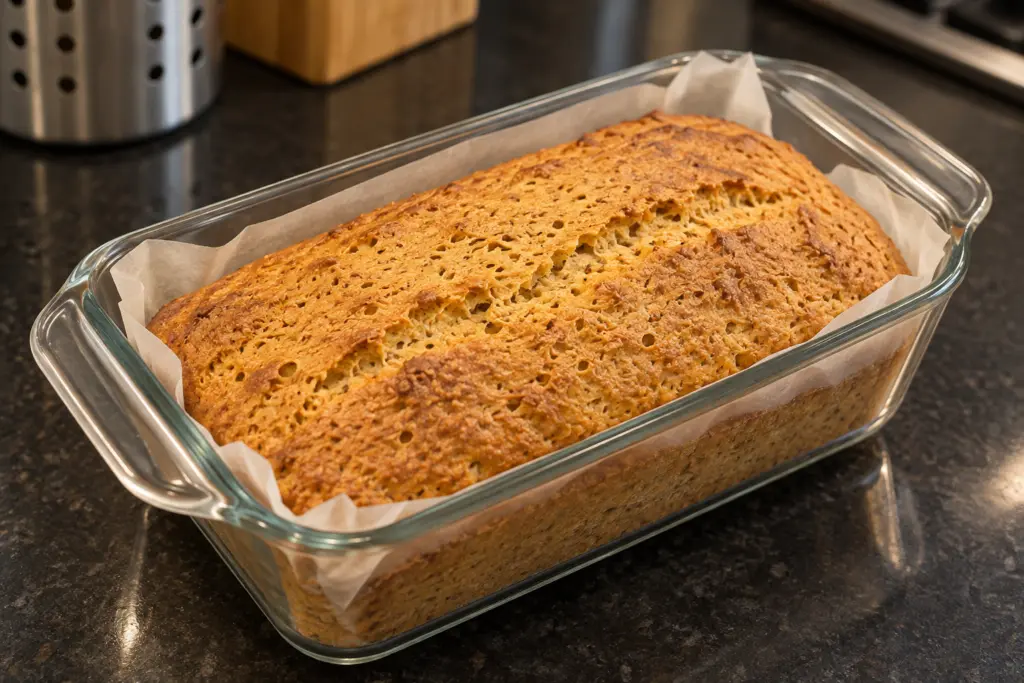
3-Ingredient Red Lentil Sandwich Bread is a simple blender-loaf idea made with dried red lentils, fresh water, and baking powder. It skips flour, yeast, eggs, and oil, letting the earthy flavor of the lentils take the lead. The short ingredient list does require patience: soaking, thorough blending, and complete cooling all matter.
Recipe development note: This method was developed from the supplied three-ingredient list and has not been kitchen-tested. Baking times and yield are estimates. The reference-inspired images are illustrative, not photographs of a tested batch; loaf height and texture may differ.
What Kind of Bread Is This?
This is a poured lentil batter baked in a loaf pan, not a kneaded dough. The word sandwich describes how you can use the slices, not a promise of fluffy white-bread texture. Without an added binder, the loaf is more delicate, particularly before it has cooled.
A plain slice will taste distinctly of lentils because the formula contains no salt, butter, or sweetener. That makes it a neutral starting point for toppings, but it will not taste like a seasoned bakery loaf. The ingredient list below stays exactly at three items.
Ingredients
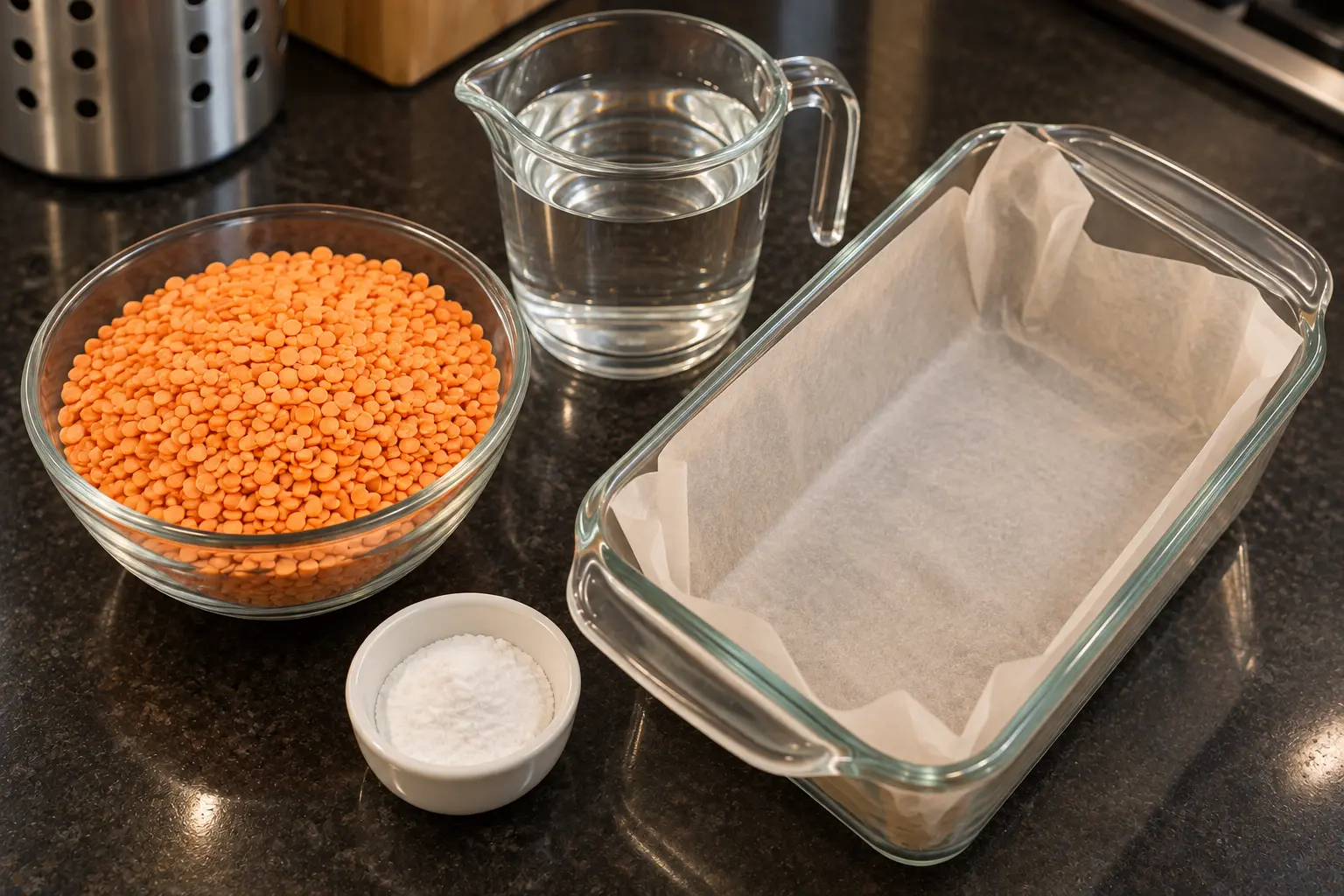
- 1 1/2 cups dried red lentils
- 3/4 cup fresh water
- 2 teaspoons baking powder
Use a standard measuring cup. The fresh water is 180 ml. Choose orange split red lentils and measure before soaking. Additional rinse and soak water is discarded, so it does not replace the water listed above.
Equipment and Pan Size
- Large soaking bowl
- Fine-mesh strainer
- Measuring cups and spoons
- High-powered blender
- Mixing bowl and whisk
- Small 8 x 4-inch loaf pan
- Baking parchment
- Cooling rack
- Skewer and serrated knife
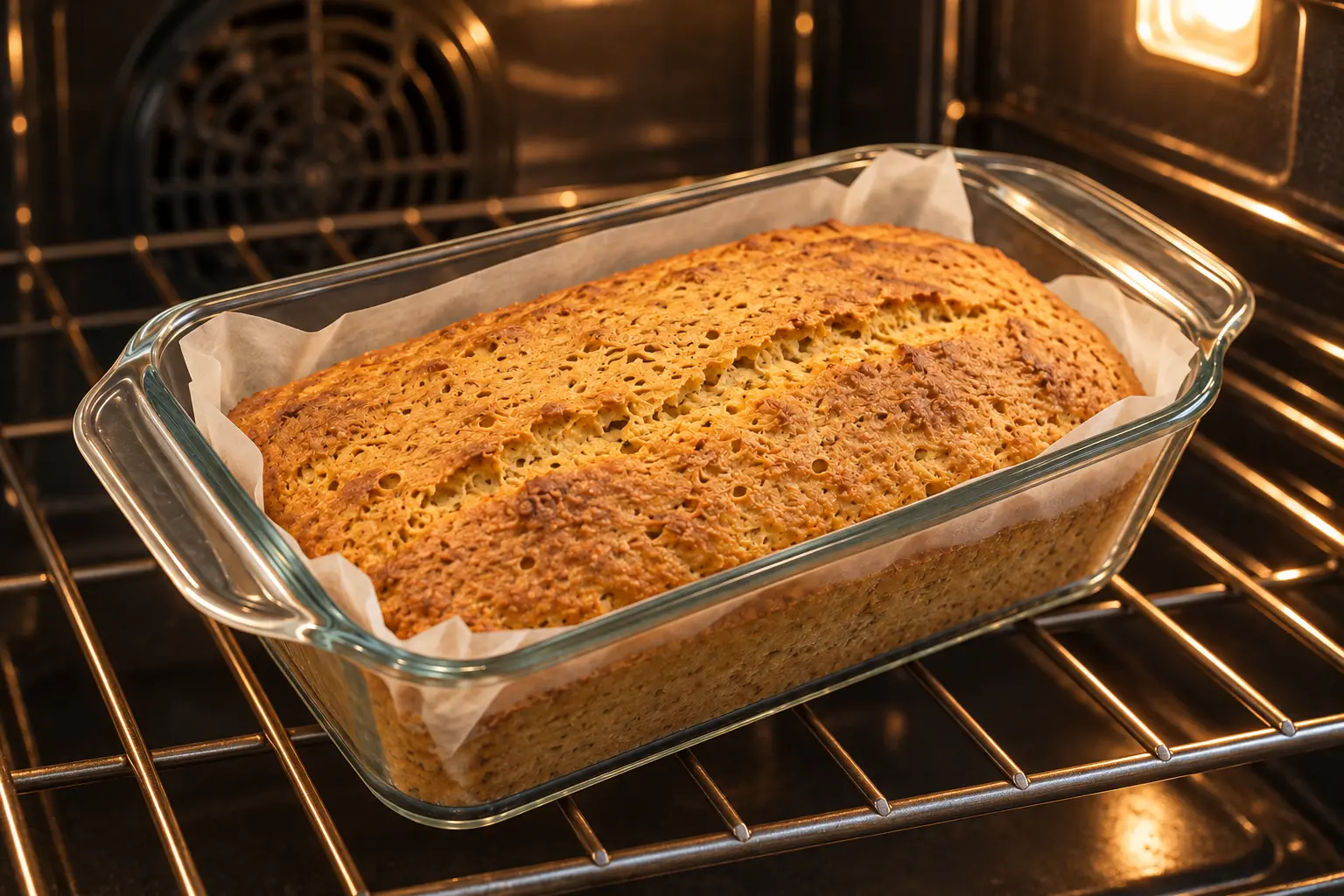
A small pan supports a modest-size loaf. Line all interior surfaces to help release the oil-free batter. The photo uses glass; an oven-rated glass pan is fine, but never move it directly from the refrigerator into a hot oven or set hot glass on a cold or wet surface. Follow the pan maker’s instructions.
Instructions: Soak and Blend
-
Soak: Measure the dried red lentils before soaking. Use split red lentils, not cooked or canned lentils. Pick over and rinse them, then cover generously with extra cool water in a large bowl. Cover and refrigerate for 8–12 hours, until the lentils are swollen and easily crushed. The soaking water is extra processing water, not the measured 3/4 cup.
-
Drain: Discard all the soaking water. Rinse the lentils again and leave them in a fine-mesh strainer for about 10 minutes. Shake gently to remove pooled water; do not leave them sitting in the soaking liquid. Measure 3/4 cup fresh water (180 ml) separately for blending.
-
Prepare the oven and pan: Heat the oven to 350°F (175°C), conventional setting. Line the base and all sides of a small 8 x 4-inch (20 x 10-cm) loaf pan with baking parchment, leaving short lifting tabs. No greasing is needed with a full lining. If using glass, use an oven-rated pan, follow its manufacturer's guidance, and avoid sudden temperature changes.
-
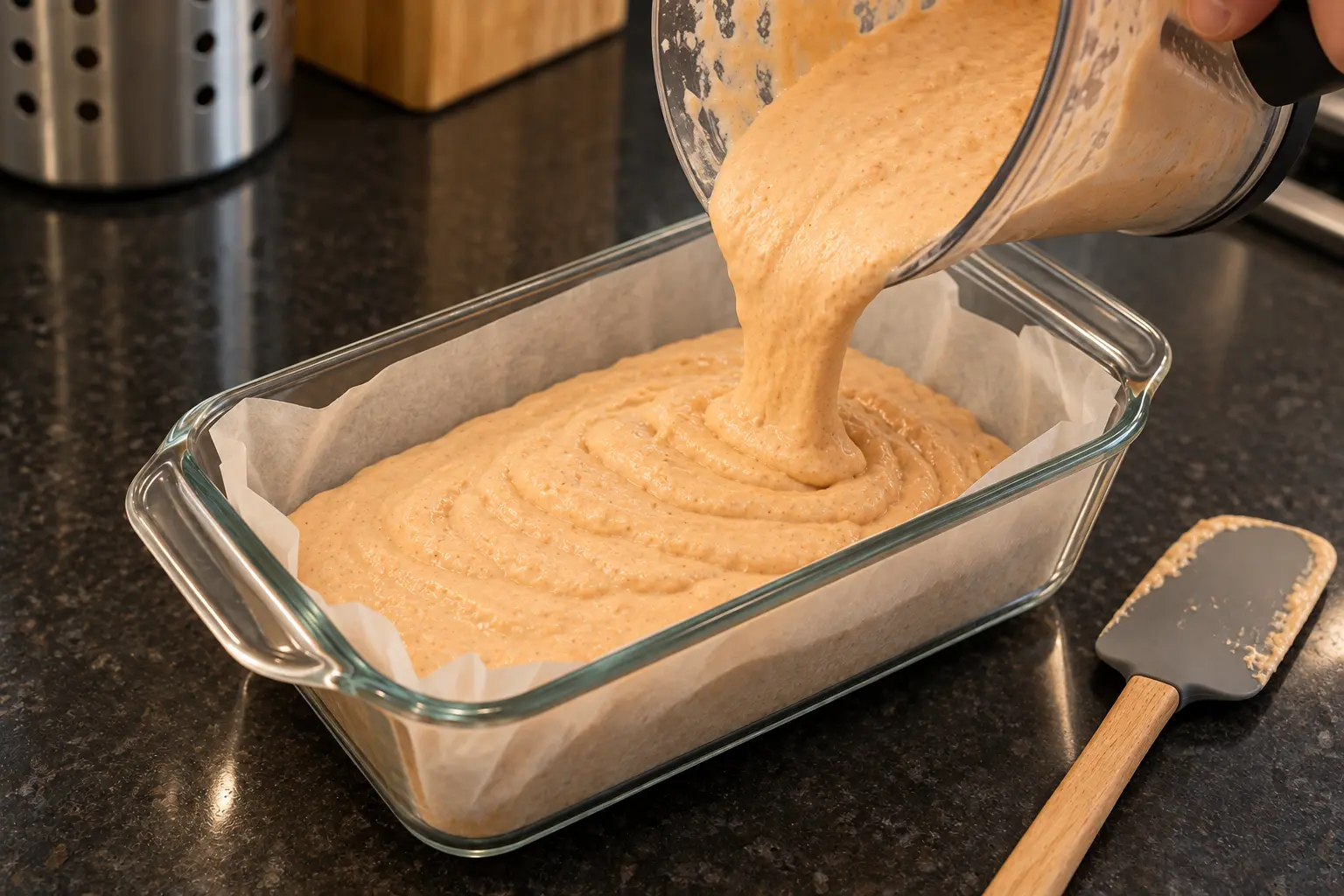
Blend: Add the drained soaked lentils and the measured fresh water to a high-powered blender. Blend until very smooth, usually 2–4 minutes depending on the machine, stopping and scraping safely as needed. The batter should be thick but pourable with no hard visible lentil pieces. Do not add more water just to help a weak blender; work in batches if necessary.
-
Add the raising agent: Scrape the batter into a bowl. Sprinkle the baking powder evenly over it and whisk thoroughly for about 20–30 seconds so no dry pockets remain. Immediately transfer to the lined pan and level the top. Do not set the batter aside to rise; this is not a yeast dough. Keep the pan no more than two-thirds full.
Bake and Cool the Loaf
-
Bake: Place the pan on the middle oven rack. Start checking at 55 minutes and allow about 60–75 minutes overall, depending on pan and oven. The surface should be golden and firm, the center should no longer wobble, and a skewer inserted deep into the middle should have no wet paste. Tent loosely with foil if the top browns before the center sets. Continue in 5–10-minute intervals if needed; a browned crust alone is not a doneness test.
-
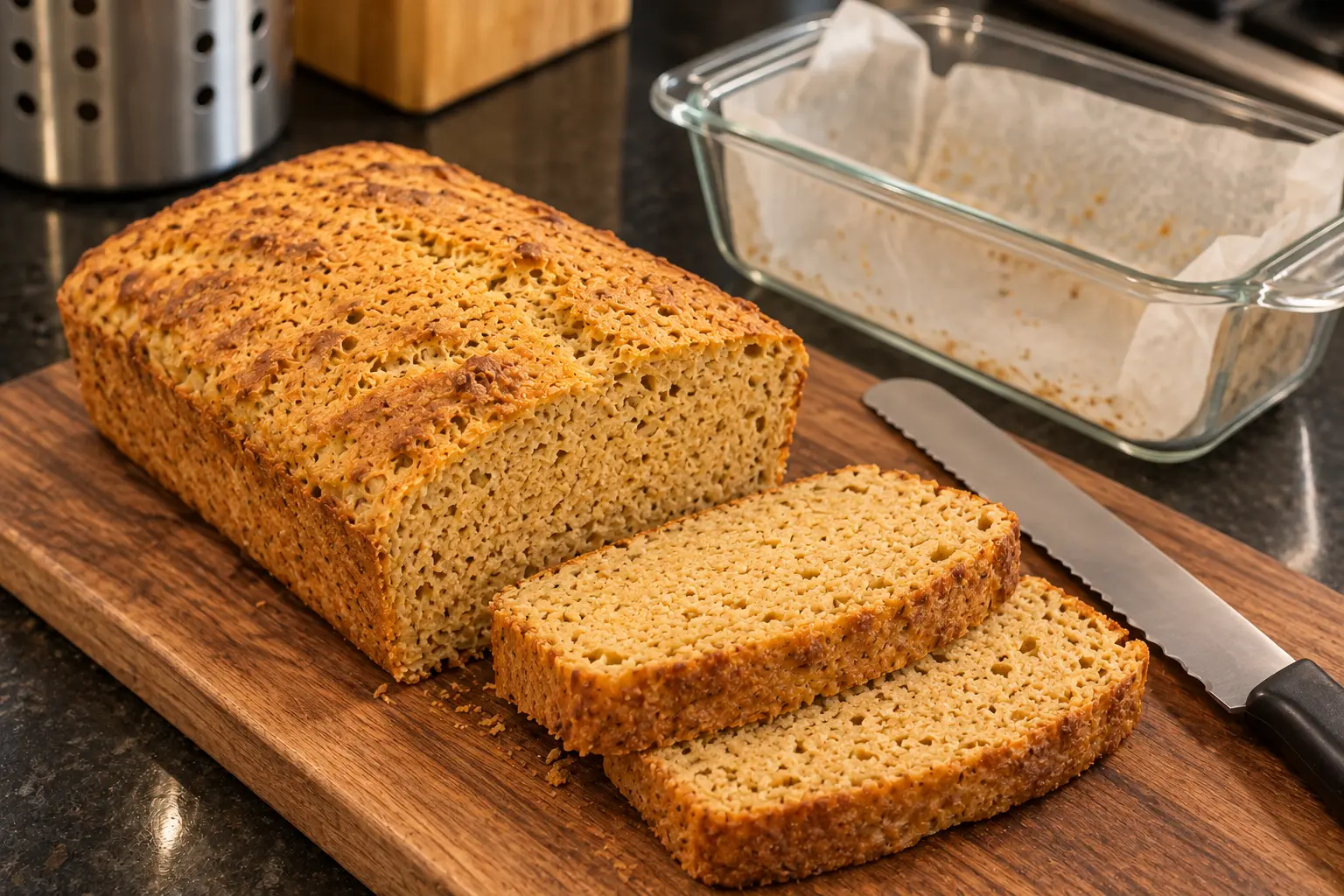
Cool: Rest the loaf in its pan on a heatproof rack for 15 minutes, then lift out carefully and peel away the parchment. Cool on the rack for at least another 75 minutes, until completely cold through the center. Do not slice while hot: this delicate lentil loaf needs time to set. If the center is still paste-like when cut, do not serve it as finished bread.
Serving the Bread
-
Slice and serve: Use a serrated knife and gentle sawing motion to cut about 10 slices, roughly 1/2–3/4 inch thick. Expect a compact, tender pulse-bread crumb rather than the springiness of wheat sandwich bread. Lightly toast individual slices on a tray if you prefer a firmer surface for sandwiches.
For an open-faced sandwich, support one thicker slice on a plate and add your preferred filling. For a closed sandwich, keep the filling light and avoid overloading the slices. Spreads, vegetables, and other fillings are separate serving suggestions, not ingredients in this loaf.
Helpful Tips
- Measure the lentils dry. The 1 1/2 cups is not the quantity after soaking.
- Use split red lentils for this method; other lentils or lentil flour are not direct substitutions.
- Drain consistently so the measured blending water does not become extra water on top of a wet bowlful of lentils.
- A smooth puree matters more than a fixed blending time. Hard grains should not remain.
- Use fresh baking powder, not baking soda. There is no added acid to balance baking soda alone.
- Have the pan lined and oven fully heated before adding baking powder.
- Do not expect gluten-like elasticity, an open sourdough crumb, or a tall bakery sandwich loaf.
- Cool completely, support the loaf while cutting, and use thicker slices if thin slices crumble.
- The recipe includes no salt, so the flavor is deliberately plain and lentil-forward.
Understanding the Batter
The goal is a continuous, thick ribbon from the blender, not a dough you can pick up. If the batter is grainy, scrape down the sides with the machine switched off and blend again. If your blender struggles, process smaller portions and combine them before adding the baking powder.
Do not keep pouring in water to make the blender run. There is no flour in this formula to absorb a large excess later. Equally, do not sprinkle in flour to rescue a thin batch while still calling it the same three-ingredient recipe.
Variations and Substitutions
- Keep the three-ingredient batter unchanged for your first attempt so you can judge its consistency.
- Try the cooled slices plain or lightly toasted; these serving changes do not alter the batter.
- A larger loaf pan will make a shallower loaf and change the baking time. Do not double the batter in the same pan.
- Seeds, herbs, salt, oil, eggs, and binders would make a different version and are not included in this three-ingredient formula.
Timing and Yield
Plan for 1 small loaf, approximately 10 slices. Active preparation takes about 15 minutes. Allow 8–12 hours for the refrigerated soak, roughly 60–75 minutes baking, and at least 90 minutes cooling. Total elapsed time is about 11 hours with an 8-hour soak, mostly hands-off. Longer soaking or extra baking increases that time.
Storage
Once the loaf has cooled, store it in a covered container in the refrigerator and use within 3 days. Avoid sealing it while warm, which traps condensation. For longer storage, separate fully cooled slices with parchment, wrap well, and freeze for up to 2 months for best quality. Discard bread with mold or an unusual odor.
Reheating
Thaw slices in the refrigerator, then warm on a baking tray at 325°F (165°C) for about 8–12 minutes, checking early. A toaster oven tray supports the delicate slices better than a pop-up toaster. Heating a slice can crisp its surface, but does not fix an underbaked, paste-like loaf.
FAQ
Is it really only three ingredients?
Yes: dried red lentils, fresh water, and baking powder. Extra water is used for rinsing and soaking, then discarded. There is no hidden egg, flour, oil, or binder in the batter.
Does the 3/4 cup water include soaking water?
No. Soak in enough extra water to keep the lentils covered, discard that water, rinse, and drain. Then measure 3/4 cup (180 ml) fresh water for the blender.
Will it rise like regular sandwich bread?
Do not expect that. This formula has no gluten, eggs, or added structural binder. Plan for a compact loaf and more delicate slices. The images illustrate the visual style, not a guaranteed rise.
Can I use canned lentils?
Not as a direct swap. The method starts with dried split red lentils that are soaked but not boiled. Cooked lentils have a different moisture level and consistency.
Why is the middle gummy?
Possible causes include excess water carried in with the lentils, insufficient baking, a very deep pan, or slicing too soon. Let the bread cool fully before judging. If the center remains wet paste, it is not ready to serve.
Can baking soda replace the baking powder?
No. These are not interchangeable here. Keep the stated 2 teaspoons baking powder and do not increase it to force a taller loaf.
Is this recipe gluten-free?
Lentils do not contain gluten, but check both lentils and baking powder for gluten-free labeling if strict avoidance is necessary. Inspect dried lentils for stray grains and use clean equipment.
How should I use the slices?
Try thicker toasted slices for open-faced sandwiches or alongside soup. Add any spreads or fillings separately; they are serving choices, not part of the three-ingredient loaf.
Conclusion
Keep this 3-Ingredient Red Lentil Sandwich Bread simple: soak the lentils, discard the soaking water, blend with the measured fresh water, and add baking powder just before baking. Give the center time to cook and the loaf time to cool, then slice gently and toast if desired.
Print
3-Ingredient Red Lentil Sandwich Bread
- Prep Time: 15 minutes
- Cook Time: 70 minutes
- Total Time: 11 hours
- Yield: 10 slices (1 small loaf) 1x
- Category: Breakfast
- Method: Baking
Description
A three-ingredient red lentil blender loaf with a compact crumb, made for thick slices and toast. Soak the lentils first and cool the bread fully.
Ingredients
- 1 1/2 cups dried red lentils
- 3/4 cup fresh water
- 2 teaspoons baking powder
Instructions
Step 1 Soak: Measure the dried red lentils before soaking. Use split red lentils, not cooked or canned lentils. Pick over and rinse them, then cover generously with extra cool water in a large bowl. Cover and refrigerate for 8–12 hours, until the lentils are swollen and easily crushed. The soaking water is extra processing water, not the measured 3/4 cup.
Step 2 Drain: Discard all the soaking water. Rinse the lentils again and leave them in a fine-mesh strainer for about 10 minutes. Shake gently to remove pooled water; do not leave them sitting in the soaking liquid. Measure 3/4 cup fresh water (180 ml) separately for blending.
Step 3 Prepare the oven and pan: Heat the oven to 350°F (175°C), conventional setting. Line the base and all sides of a small 8 x 4-inch (20 x 10-cm) loaf pan with baking parchment, leaving short lifting tabs. No greasing is needed with a full lining. If using glass, use an oven-rated pan, follow its manufacturer's guidance, and avoid sudden temperature changes.
Step 4 Blend: Add the drained soaked lentils and the measured fresh water to a high-powered blender. Blend until very smooth, usually 2–4 minutes depending on the machine, stopping and scraping safely as needed. The batter should be thick but pourable with no hard visible lentil pieces. Do not add more water just to help a weak blender; work in batches if necessary.
Step 5 Add the raising agent: Scrape the batter into a bowl. Sprinkle the baking powder evenly over it and whisk thoroughly for about 20–30 seconds so no dry pockets remain. Immediately transfer to the lined pan and level the top. Do not set the batter aside to rise; this is not a yeast dough. Keep the pan no more than two-thirds full.
Step 6 Bake: Place the pan on the middle oven rack. Start checking at 55 minutes and allow about 60–75 minutes overall, depending on pan and oven. The surface should be golden and firm, the center should no longer wobble, and a skewer inserted deep into the middle should have no wet paste. Tent loosely with foil if the top browns before the center sets. Continue in 5–10-minute intervals if needed; a browned crust alone is not a doneness test.
Step 7 Cool: Rest the loaf in its pan on a heatproof rack for 15 minutes, then lift out carefully and peel away the parchment. Cool on the rack for at least another 75 minutes, until completely cold through the center. Do not slice while hot: this delicate lentil loaf needs time to set. If the center is still paste-like when cut, do not serve it as finished bread.
Step 8 Slice and serve: Use a serrated knife and gentle sawing motion to cut about 10 slices, roughly 1/2–3/4 inch thick. Expect a compact, tender pulse-bread crumb rather than the springiness of wheat sandwich bread. Lightly toast individual slices on a tray if you prefer a firmer surface for sandwiches.
Notes
Recipe development note: This method was developed from the supplied three-ingredient list and has not been kitchen-tested. Baking times and yield are estimates. The reference-inspired images are illustrative, not photographs of a tested batch; loaf height and texture may differ. Measure lentils before soaking. Discard the extra soaking water; use 3/4 cup (180 ml) fresh water in the batter. No oil, salt, flour, eggs, or binder is included. Expect a compact, delicate loaf, not fluffy wheat bread. Total time includes an 8-hour soak and at least 90 minutes cooling. Once the loaf has cooled, store it in a covered container in the refrigerator and use within 3 days. Avoid sealing it while warm, which traps condensation. For longer storage, separate fully cooled slices with parchment, wrap well, and freeze for up to 2 months for best quality. Discard bread with mold or an unusual odor.