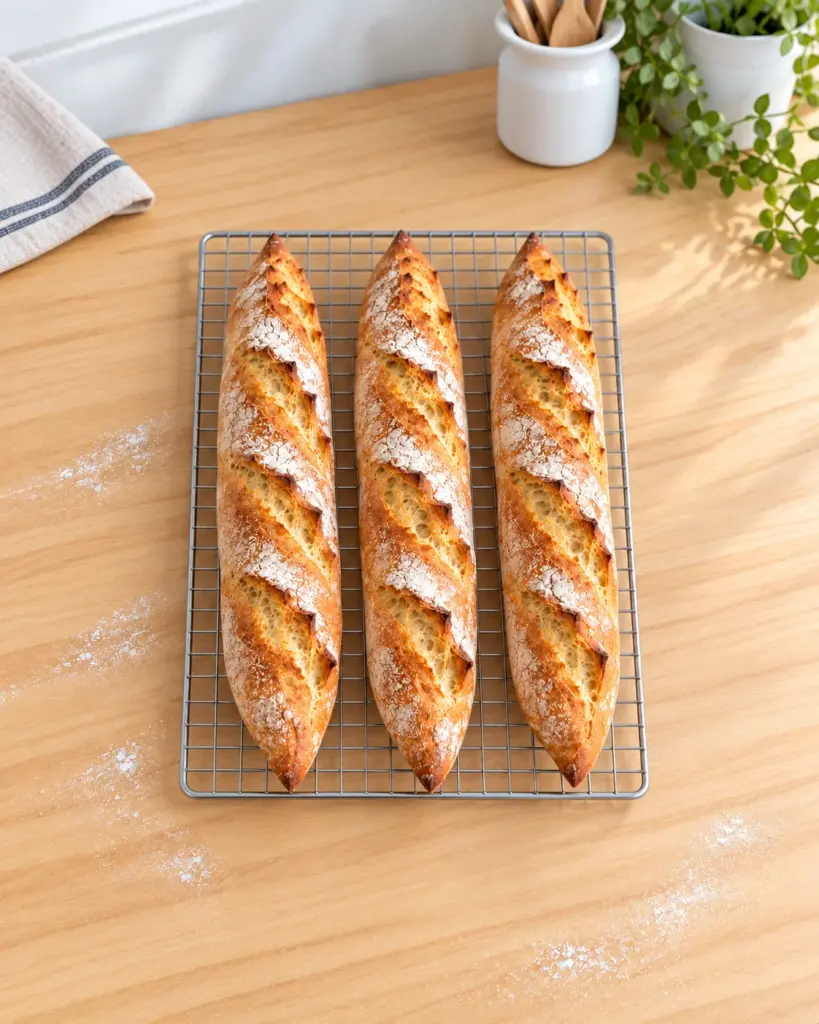
Easy Homemade Baguettes bring a crackly golden crust and a tender, chewy center to your own kitchen. This same-day recipe uses bread flour, water, instant yeast, salt, and just a teaspoon of sugar or honey. A few gentle folds help the wet dough develop strength, while a hot oven gives the shaped loaves their rustic finish. You will make three shorter baguettes sized for a home baking sheet, perfect for sandwiches, soup, or tearing into at the table.
A Simple Dough with a Rustic Finish
These baguettes do not need a sourdough starter or an overnight preferment. They do need enough resting time for the dough to become elastic and airy. With 375 ml water to 500 g flour, the dough has 75% hydration, so it will feel sticky at first. That is expected: resist adding handfuls of flour to make it behave like a firm sandwich-bread dough. Damp hands, a dough scraper, and short rests make it easier to handle without drying it out. The shape can be slightly uneven and still bake into a lovely loaf.
Ingredients
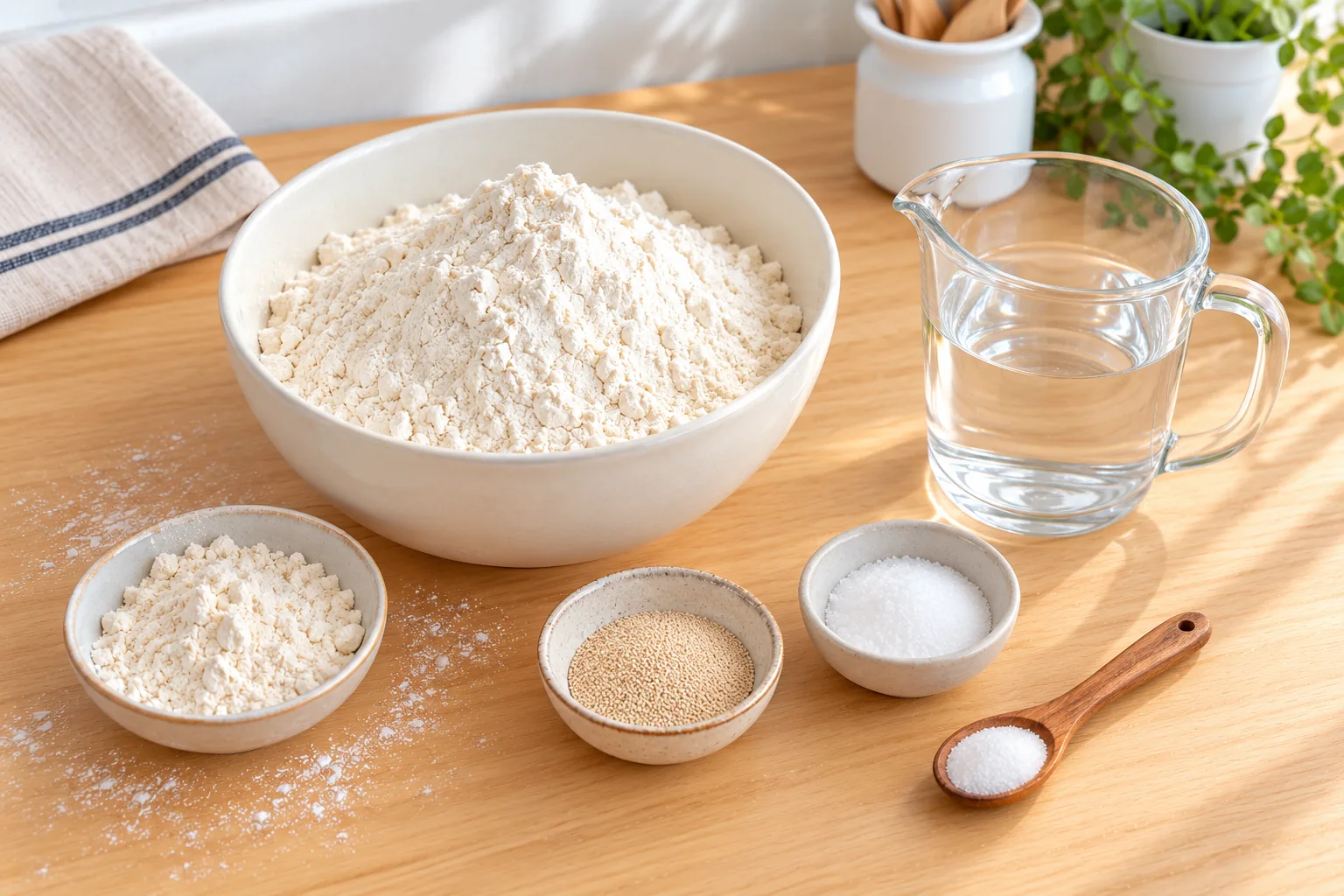
For the Baguettes
- 500 g bread flour
- 375 ml lukewarm water
- 7 g instant yeast (2¼ teaspoons)
- 10 g fine salt
- 1 teaspoon sugar or honey
For Shaping
- Extra flour, for dusting
Ingredient Details That Matter
Bread flour gives this wet dough the strength it needs to hold its shape. Weigh the flour rather than packing it into cups, since extra flour makes the finished bread heavier. Use lukewarm water around 90–100°F (32–38°C), not hot water. Instant yeast can be mixed directly with the flour; it does not require a separate activation step. The small amount of sugar or honey adds a little sweetness to support this quick, same-day style, but the finished bread is not sweet. Fine salt seasons the dough throughout. Dusting flour belongs mainly on the work surface and the outside of the shaped dough, not mixed in by the handful.
Equipment
- Digital kitchen scale and measuring jug
- Large mixing bowl and cover
- Flexible dough scraper or bench scraper
- Large rimmed metal baking sheet, about 13 × 18 inches
- Parchment paper rated for 450°F / 230°C, or a suitable baguette pan
- Bread lame or very sharp knife
- Wire cooling rack
- Optional oven-safe metal pan for steam; never use glass for this
Instructions
-
Mix the dough: In a large bowl, stir together the bread flour, instant yeast, and fine salt. Dissolve the sugar or honey in the lukewarm water, then add the liquid to the bowl. Mix with a sturdy spoon or damp hand until no dry flour remains. The dough will be rough and sticky. Cover and rest for 20 minutes.
-
Build strength with folds: With damp hands, lift one edge of the dough gently and fold it toward the center. Turn the bowl and repeat on the other three sides to complete one set. Cover and rest for 20 minutes. Repeat this set of four folds twice more, resting for 20 minutes after each set. Stop stretching when you feel resistance rather than tearing the dough.
-
Finish the first rise: After the final rest, leave the covered dough in a comfortably warm spot for about 30–60 minutes more, until noticeably airy and roughly doubled from its original mixed volume. Timing varies with room temperature, so use the dough's appearance rather than the clock alone. It should have bubbles at the edges and a gently rounded surface.
-
Divide and rest: Use extra flour for dusting the counter and lightly flour the top of the dough. Ease it out of the bowl without punching out all the air. Divide into three equal pieces, about 295 g each. Gently draw each piece into a short, loose log, cover with a clean cloth, and rest for 15 minutes. Use only enough flour to prevent sticking.
-
Shape the baguettes: Working with one piece at a time, gently flatten it into a small rectangle. Fold the top third toward the middle and press lightly to seal; fold the bottom third up. Fold the dough lengthwise in half and pinch the seam closed. Roll gently from the center outward into a 12–14-inch (30–35 cm) log with slightly tapered ends. Place seam-side down on the parchment-lined baking sheet, leaving at least 2 inches between loaves.
-
Proof and preheat: Cover the shaped loaves loosely so the covering does not stick. Let rise for 30–45 minutes, until puffy; a light fingertip dent should spring back slowly and remain faintly visible. Meanwhile, heat the oven to 450°F (230°C) with a rack in the middle. If using steam, place an empty sturdy oven-safe metal pan on a lower rack during preheating.
-
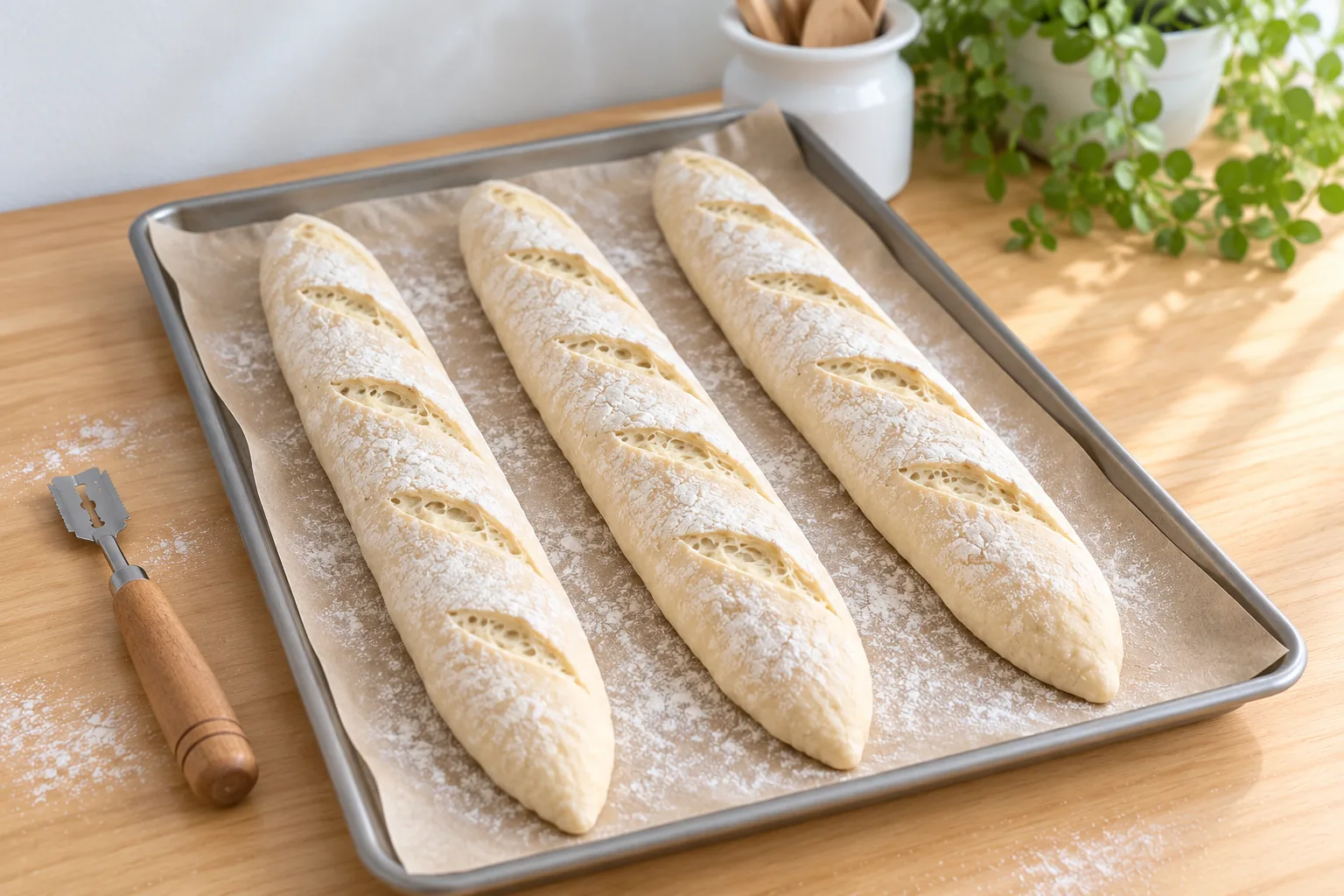
Score and bake: Dust the loaves lightly with flour. Just before baking, make three or four overlapping diagonal cuts along the length of each loaf, about ¼ inch (6 mm) deep, with the blade held at a shallow angle. Put the baking sheet on the middle rack. For optional steam, carefully pour about ½ cup (120 ml) hot water into the preheated metal pan, keeping your face and hands away from the steam, and close the door promptly. This water is separate from the dough water. Never pour water onto oven glass, the oven floor, or a glass dish. Skip the steam pan if your oven manufacturer advises against it.
-
Finish and cool: Bake for 12 minutes, then carefully remove the steam pan if used, keeping it level in case water remains. Continue baking for 13–18 minutes, rotating the baking sheet if necessary, until the baguettes are deeply golden and the centers reach about 205–210°F (96–99°C). Total baking time is about 25–30 minutes. Transfer to a wire rack and cool for at least 30 minutes before slicing.
Helpful Tips
- Keep your hands damp during folding, but avoid pouring extra water into the dough.
- Give resistant dough a 5–10 minute rest instead of forcing it longer; relaxed dough rolls more easily.
- Leave space between loaves. If your pan is smaller, make shorter baguettes rather than crowding them.
- Score immediately before baking, not before the final proof, so the cuts can open in the oven.
- Let the crust become a rich golden brown. A pale loaf usually needs more time to dry and develop its crust.
Troubleshooting
If the dough spreads, check that you completed the folds and did not let it rise far beyond doubled. A little flour on the counter helps release it, but adding a large amount changes the recipe. If the shaped loaves flatten during scoring, they may have proofed too long or lack surface tension; bake them promptly and shorten the final rise next time. If the scores barely open, the blade may be dragging, the cuts may be too shallow, or the dough may have overproofed. A dense interior can come from insufficient rising, too much added flour, or slicing while the bread is still hot. Very large holes are not guaranteed: gentle handling and correct fermentation matter more than appearance alone.
Serving Ideas
Slice the cooled baguettes on an angle for crostini, split them lengthwise for sandwiches, or serve torn pieces alongside soup, stew, or a salad. Their crisp crust is especially enjoyable on the day they are baked. For breakfast, toast a few slices and add your favorite spread. If you plan to make sandwiches later, cool the bread fully before wrapping so trapped steam does not make the crust damp.
Timing and Yield
This recipe makes 3 medium baguettes, about 12–14 inches long, or approximately 12 servings when each loaf is cut into four portions. Allow about 30 minutes of hands-on preparation, 25–30 minutes of baking, plus mixing rests, rising, and cooling. A practical total is around 3½–4 hours. Cooler kitchens can take longer; the listed rise times are guides, not deadlines.
Simple Variations
- Choose either sugar or honey in the dough; use the same 1 teaspoon amount.
- For six smaller sandwich rolls, divide into six portions and shape shorter logs. Start checking their color and doneness around 18–20 minutes.
- For a less floury exterior, use just a light dusting before scoring. The dough formula and baking method stay the same.
Storage
Baguettes are best the day they are baked. Once completely cool, keep at room temperature in a paper bag or loosely wrapped in a clean cloth for up to 1 day for the best crust. An airtight bag keeps the inside softer for another day but softens the crust. For longer storage, wrap cooled whole loaves, sections, or slices tightly and freeze for up to 2 months. Avoid refrigerating bread, which tends to make it stale more quickly.
Reheating
To refresh a whole or half baguette, lightly dampen the exterior with water and warm in a 350°F (175°C) oven for about 8–12 minutes, until crisp again. Thaw frozen loaves first, or allow additional heating time. Toast frozen slices directly in a toaster if its instructions allow. Reheat only the amount you intend to eat, since repeated reheating dries the crumb.
Allergen Notes
This recipe contains wheat and gluten. It contains no added dairy or eggs. Choosing sugar rather than honey makes the listed dough ingredients suitable for a vegan diet; check your ingredient labels and kitchen cross-contact needs.
FAQ
Do I need a stand mixer?
No. Stirring and three sets of gentle folds develop the dough without a stand mixer. A bowl and a scraper are enough.
Why is the dough so sticky?
The recipe uses 375 ml water for 500 g flour, making a 75% hydration dough. It starts sticky and becomes more elastic through resting and folding. Use damp hands instead of adding lots of flour.
Can I use all-purpose flour?
Bread flour is the intended choice. All-purpose flour may absorb less water and make a softer dough, so results and shaping can differ. For the most predictable first batch, use the specified bread flour.
Can I bake without a steam pan?
Yes. Use the same temperature and bake to a deep golden color. The crust and score opening may differ, but the loaves will still bake. Follow your oven manufacturer's guidance on steam.
Are these traditional long-fermented French baguettes?
These are a convenient same-day homemade version, with a small amount of sugar or honey and enough yeast for a shorter schedule. They are not a traditional long-fermented bakery formula.
Can I freeze the baked bread?
Yes. Cool completely, wrap well, and freeze whole or in portions for up to 2 months. Refresh in the oven or toast slices before serving.
Conclusion
A bowl, a few folds, and a hot oven are all you need to turn this simple dough into three rustic baguettes. Keep the dough soft, watch how it rises, and give the loaves enough time to develop a golden crust. After a short rest on the rack, they are ready for sandwiches, soup, or a warm place at the dinner table.
Print
Easy Homemade Baguettes
- Prep Time: 30 minutes
- Cook Time: 30 minutes
- Total Time: 3 hours 45 minutes
- Yield: 3 baguettes (12 servings) 1x
- Category: Breakfast
- Method: Baking
Description
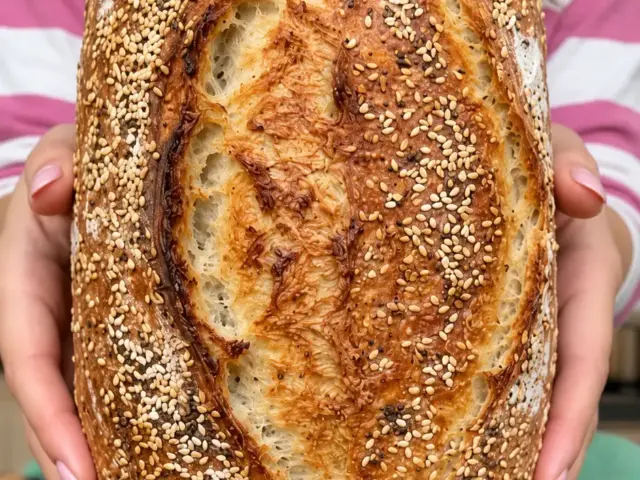
Three home-oven baguettes with flour-dusted golden crusts, opened diagonal scores, and a tender, chewy interior, made with a simple fold-and-rest dough.
Ingredients
- 500 g bread flour
- 375 ml lukewarm water
- 7 g instant yeast (2¼ teaspoons)
- 10 g fine salt
- 1 teaspoon sugar or honey
- Extra flour, for dusting
Instructions
Step 1 Mix the dough: In a large bowl, stir together the bread flour, instant yeast, and fine salt. Dissolve the sugar or honey in the lukewarm water, then add the liquid to the bowl. Mix with a sturdy spoon or damp hand until no dry flour remains. The dough will be rough and sticky. Cover and rest for 20 minutes.
Step 2 Build strength with folds: With damp hands, lift one edge of the dough gently and fold it toward the center. Turn the bowl and repeat on the other three sides to complete one set. Cover and rest for 20 minutes. Repeat this set of four folds twice more, resting for 20 minutes after each set. Stop stretching when you feel resistance rather than tearing the dough.
Step 3 Finish the first rise: After the final rest, leave the covered dough in a comfortably warm spot for about 30–60 minutes more, until noticeably airy and roughly doubled from its original mixed volume. Timing varies with room temperature, so use the dough's appearance rather than the clock alone. It should have bubbles at the edges and a gently rounded surface.
Step 4 Divide and rest: Use extra flour for dusting the counter and lightly flour the top of the dough. Ease it out of the bowl without punching out all the air. Divide into three equal pieces, about 295 g each. Gently draw each piece into a short, loose log, cover with a clean cloth, and rest for 15 minutes. Use only enough flour to prevent sticking.
Step 5 Shape the baguettes: Working with one piece at a time, gently flatten it into a small rectangle. Fold the top third toward the middle and press lightly to seal; fold the bottom third up. Fold the dough lengthwise in half and pinch the seam closed. Roll gently from the center outward into a 12–14-inch (30–35 cm) log with slightly tapered ends. Place seam-side down on the parchment-lined baking sheet, leaving at least 2 inches between loaves.
Step 6 Proof and preheat: Cover the shaped loaves loosely so the covering does not stick. Let rise for 30–45 minutes, until puffy; a light fingertip dent should spring back slowly and remain faintly visible. Meanwhile, heat the oven to 450°F (230°C) with a rack in the middle. If using steam, place an empty sturdy oven-safe metal pan on a lower rack during preheating.
Step 7 Score and bake: Dust the loaves lightly with flour. Just before baking, make three or four overlapping diagonal cuts along the length of each loaf, about ¼ inch (6 mm) deep, with the blade held at a shallow angle. Put the baking sheet on the middle rack. For optional steam, carefully pour about ½ cup (120 ml) hot water into the preheated metal pan, keeping your face and hands away from the steam, and close the door promptly. This water is separate from the dough water. Never pour water onto oven glass, the oven floor, or a glass dish. Skip the steam pan if your oven manufacturer advises against it.
Step 8 Finish and cool: Bake for 12 minutes, then carefully remove the steam pan if used, keeping it level in case water remains. Continue baking for 13–18 minutes, rotating the baking sheet if necessary, until the baguettes are deeply golden and the centers reach about 205–210°F (96–99°C). Total baking time is about 25–30 minutes. Transfer to a wire rack and cool for at least 30 minutes before slicing.
Notes
Yield: 3 medium baguettes, approximately 12 servings. Dough hydration: 75%. Rise times depend on room temperature. Optional steam water is separate from the 375 ml dough water. Use a metal steam pan only and follow oven manufacturer guidance. No sourdough starter is needed. Baguettes are best the day they are baked. Once completely cool, keep at room temperature in a paper bag or loosely wrapped in a clean cloth for up to 1 day for the best crust. An airtight bag keeps the inside softer for another day but softens the crust. For longer storage, wrap cooled whole loaves, sections, or slices tightly and freeze for up to 2 months. Avoid refrigerating bread, which tends to make it stale more quickly.