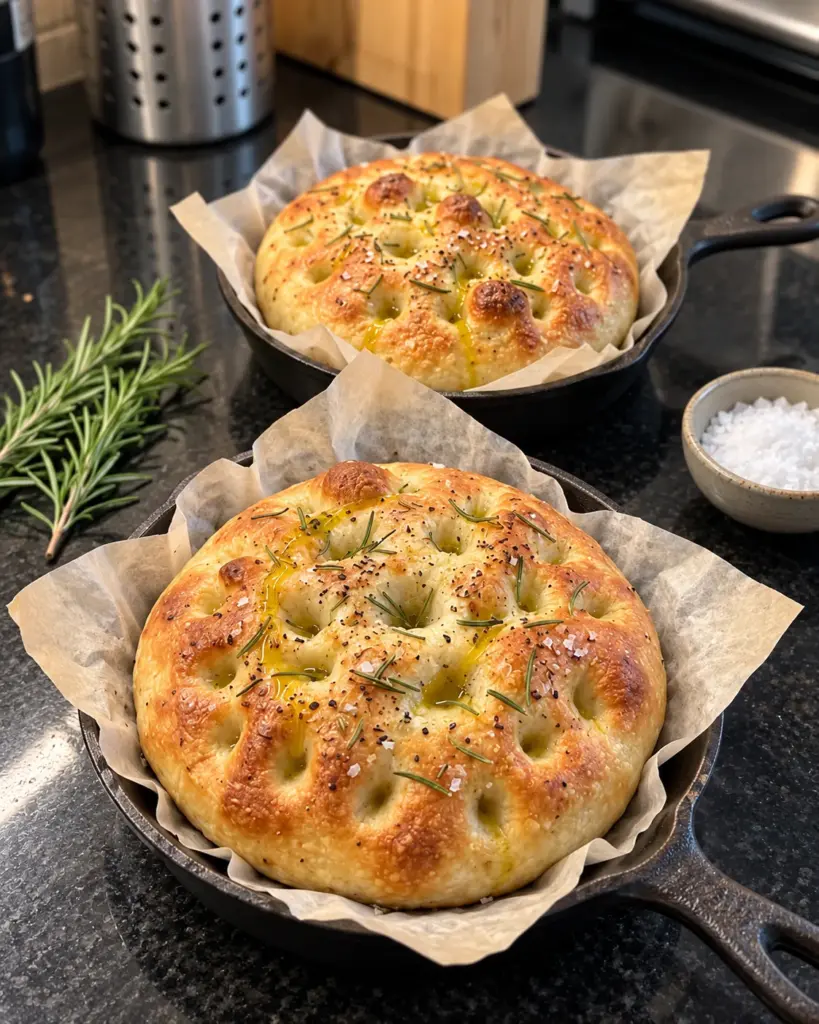
Easy Mini Rosemary Olive Oil Focaccia turns a simple yeast dough into two golden individual breads with crisp edges, soft dimpled centers, and fragrant rosemary. The dough is mixed in one bowl, strengthened with a few folds, then pressed into small well-oiled skillets. A final drizzle of olive oil, fresh rosemary, and flaky salt gives the surface its classic focaccia character without adding a long ingredient list.
Small-Skillet Focaccia with a Golden Olive-Oil Crust
This recipe makes two small round focaccias rather than one large pan. The smaller size helps create plenty of crisp, oil-brushed edges while keeping the middle tender. The dough is fairly soft, so use oiled hands for the folds and dimpling instead of adding flour. Two 6-inch cast-iron skillets are ideal, but two similarly sized oven-safe pans work as well. Let the dough become visibly puffy before baking; the dimples should remain defined and hold the topping oil.
Ingredients
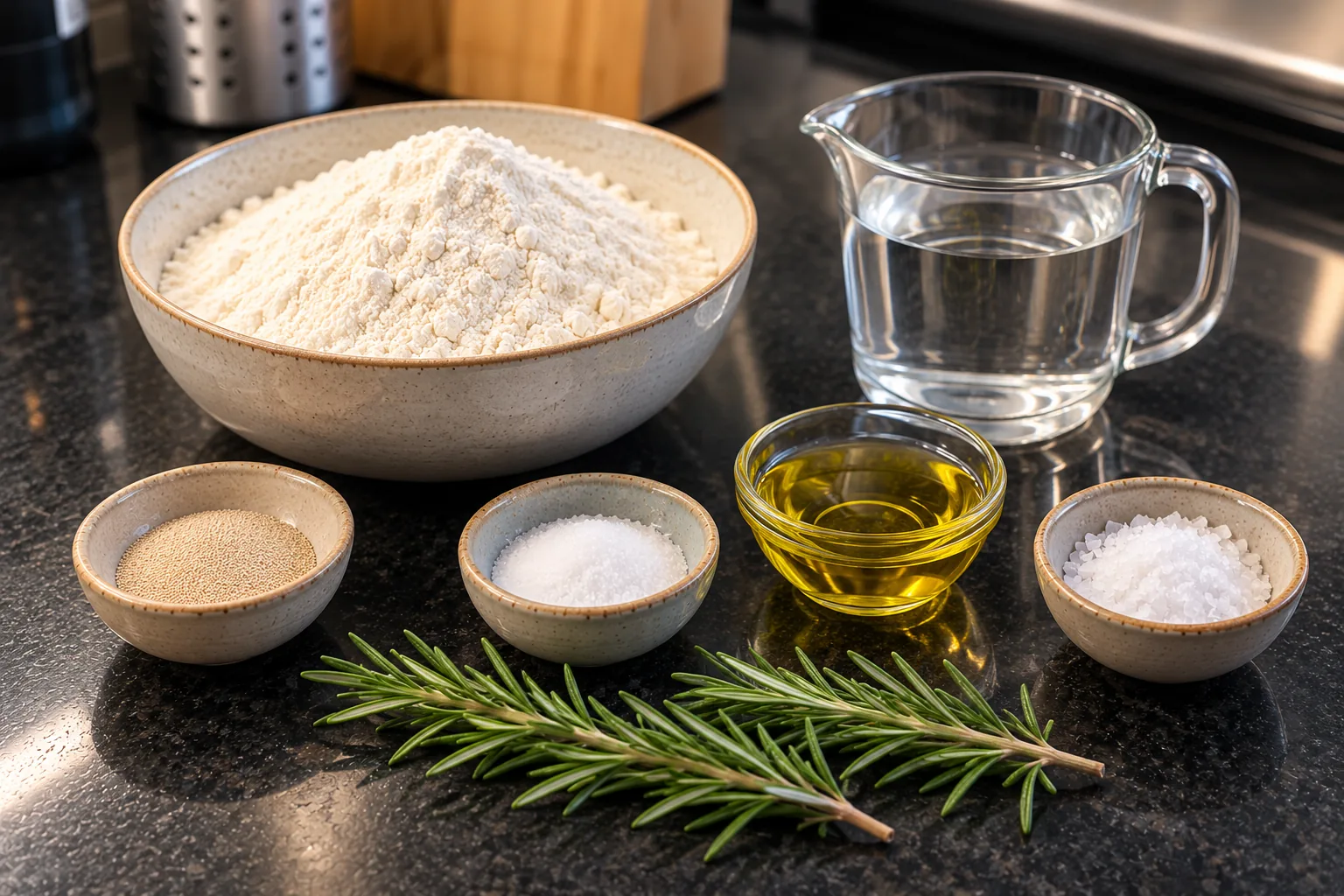
For the Focaccia
- 240 g bread flour (2 cups)
- 180 ml lukewarm water (¾ cup)
- 1 teaspoon instant yeast
- ½ teaspoon fine salt
- 2 tablespoons olive oil, plus extra for the skillets
For the Rosemary Topping
- 2 tablespoons olive oil
- 2 teaspoons fresh rosemary leaves
- ½ teaspoon flaky sea salt
Ingredient Details That Matter
Bread flour gives the soft, high-hydration dough enough strength to rise into a pillowy focaccia. Lukewarm water, around 90–100°F (32–38°C), helps the instant yeast work without overheating it. Instant yeast goes straight into the flour. Fine salt belongs in the dough for seasoning, while flaky sea salt stays on top for texture. Olive oil is used in three places: in the dough, to generously coat the skillets so the edges crisp, and over the dimpled tops. Use fresh rosemary leaves rather than woody stems; roughly chop them only if the leaves are very long.
Equipment
- Large mixing bowl and cover
- Digital scale or measuring cups and spoons
- Dough scraper or flexible spatula
- Two 6-inch cast-iron skillets or two similarly sized oven-safe round pans
- Parchment paper
- Pastry brush or spoon
- Wire cooling rack
Instructions
-
Mix the dough: Measure 2 tablespoons olive oil plus extra for the skillets before you begin. In a large bowl, stir the bread flour, instant yeast, and fine salt together. Add the lukewarm water and the measured dough oil. Mix with a spoon or damp hand until all the flour is hydrated and no dry patches remain. The dough will be sticky and shaggy. Cover the bowl and rest for 15 minutes.
-
Fold for strength: With lightly oiled hands, lift one edge of the dough and fold it toward the center. Turn the bowl and repeat on the other three sides to complete one set of folds. Cover and rest for 15 minutes. Repeat this folding set twice more, resting 15 minutes after each one. Do not add extra flour; the dough will become smoother as it rests.
-
Let the dough rise: Cover the bowl and leave it in a comfortably warm spot for 45–60 minutes more, until the dough is puffy, airy, and roughly doubled in volume. The timing can vary with your kitchen temperature. Look for small bubbles and a gently rounded surface.
-
Prepare the skillets: About 20 minutes before the rise is finished, heat the oven to 425°F (220°C) with a rack in the middle. Lightly oil two 6-inch cast-iron skillets with extra olive oil for the skillets, then line the bases and sides with parchment paper, leaving enough overhang to lift the breads if needed. Brush the parchment with a little more olive oil.
-
Divide and pan: With oiled hands or a scraper, gently release the risen dough onto a lightly oiled surface. Divide it into two equal pieces. Ease one piece into each prepared skillet, turning it once so both sides have a little oil. Gently press from the center outward to spread the dough. If it springs back, cover and rest for 10 minutes, then finish pressing it toward the edges.
-
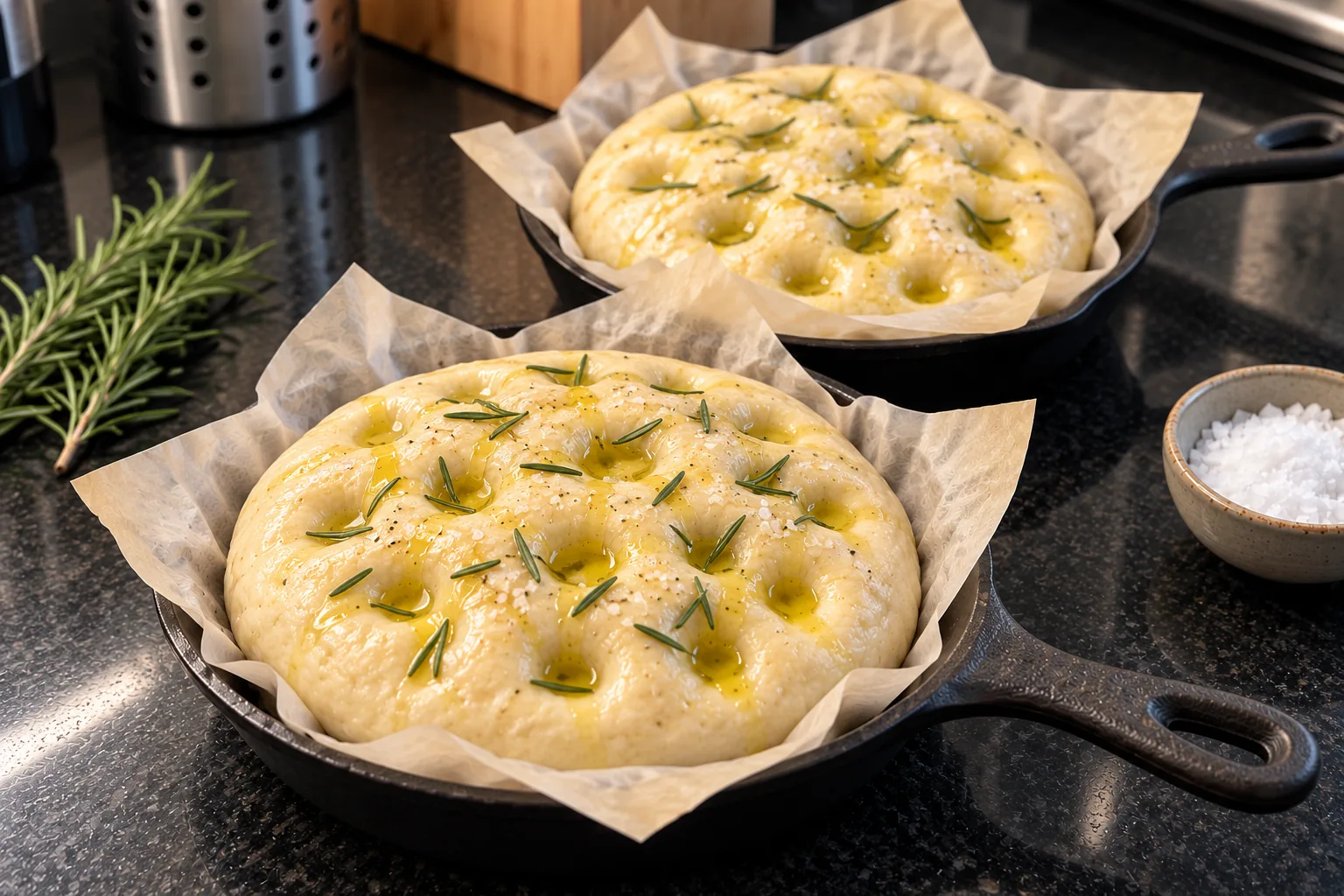
Proof and dimple: Cover the skillets loosely and let the dough rise for 20–30 minutes, until visibly puffy. Stir the 2 tablespoons olive oil for the rosemary topping with the fresh rosemary leaves. Drizzle most of this rosemary oil over both doughs. Oil your fingertips, then press deeply and decisively all over to make dimples, without tearing through the dough. Scatter the flaky sea salt over the tops.
-
Bake: Place both skillets on the middle rack and bake at 425°F (220°C) for 18–22 minutes, rotating their positions after about 12 minutes if your oven browns unevenly. The focaccia is ready when the tops and edges are deeply golden, the oil is bubbling in some dimples, and the internal temperature near the center is about 200–205°F (93–96°C).
-
Finish and cool: Carefully remove the hot skillets. Spoon or brush any remaining rosemary oil over the warm focaccia. Let cool in the skillets for 5 minutes, then lift out with the parchment or use a thin spatula. Transfer to a rack and rest for at least 15 minutes before tearing or slicing.
Helpful Tips
- Use olive oil on your hands and work surface rather than flour; added flour can make this small batch heavy.
- For deep dimples, press straight down with all fingertips at once and lift straight up. Repeat quickly before the dough relaxes.
- Cast iron holds heat well, so watch the bottoms near the end of baking. If they color too fast in your oven, set the skillets on a baking sheet.
- Rosemary can burn if it is exposed in very thin spots. Nestle a few leaves into the oil-filled dimples for protection.
- The focaccia is best warm, but always give it a short rest so the interior can set.
Troubleshooting
If the dough feels difficult to stretch in the skillets, cover it and wait 10 minutes; resting is more effective than forcing it. If the focaccia is pale, give it a few additional minutes until the edges are golden. If the center seems dense, the dough may not have risen enough before panning or before baking. If oil pools heavily in one place, spread it gently with a spoon after dimpling. If the bottom browns faster than the top, move the oven rack one position higher next time or place the skillet on a preheated baking sheet only for the final few minutes.
Serving Ideas
Serve each mini focaccia warm as a small sharing bread, cut into wedges for soup or salad, or split horizontally for a compact sandwich. It pairs naturally with olive oil for dipping, but its rosemary and salt topping is flavorful enough to enjoy on its own. For a simple appetizer, tear it into pieces while still slightly warm and place it in a basket with a clean napkin.
Timing and Yield
This recipe makes 2 mini 6-inch skillet focaccias, enough for 4 side-dish servings or 2 generous individual portions. Plan on about 20 minutes of active work, 20 minutes of baking, and roughly 2½ hours total including resting, rising, final proofing, and cooling. Warmer rooms may shorten the rise; use the dough's puffiness as the guide.
Simple Variations
- Use two small round oven-safe pans if you do not have cast iron; oil them generously and begin checking for color a few minutes early.
- For a softer top, cover the warm focaccia loosely with a clean towel for its first 10 minutes of cooling. For a crisper top, leave it uncovered on the rack.
- If fresh rosemary is unavailable, use ½ teaspoon dried rosemary, rubbed between your fingers before mixing it into the topping oil.
Storage
Mini focaccia is best on the day it is baked. Once cool, store in an airtight container or bag at room temperature for up to 2 days. The crust will soften in storage, which is normal. For longer storage, wrap each fully cooled focaccia tightly and freeze for up to 2 months. Avoid refrigerating it, as refrigeration can make bread stale more quickly.
Reheating
Warm room-temperature or thawed focaccia in a 350°F (175°C) oven for 6–10 minutes, directly on a rack or on a small baking sheet, until warm and the edges regain their crispness. A light brush of olive oil before reheating refreshes the top. For a single wedge, a dry skillet over low heat with a lid set slightly ajar also warms it gently.
Allergen Notes
This recipe contains wheat and gluten. It contains no eggs or dairy as written. Check your olive oil and any serving accompaniments for your own dietary requirements and consider cross-contact needs.
FAQ
Can I make this in one larger pan?
Yes. Use a well-oiled 9-inch round pan or an 8-inch square pan, but the bread will be thicker and the bake time may change. Start checking at 20 minutes and bake until deeply golden and cooked through.
Do I need cast-iron skillets?
No. Two small oven-safe round pans work well. Cast iron creates crisp edges because it retains heat, but the dough and topping are the same.
Why is the dough sticky?
The dough has a generous amount of water for the flour. That moisture produces a tender, open crumb. Use oiled hands and short rests instead of incorporating extra flour.
Can I use dried rosemary?
Yes. Use ½ teaspoon dried rosemary in place of the 2 teaspoons fresh leaves, rubbing it between your fingers first to release its aroma.
Can I make the dough ahead?
For the most predictable version, make and bake it the same day. If you want to refrigerate the dough, use a covered bowl and expect the timing and yeast activity to change; this article's listed rise times do not apply unchanged.
How do I know the focaccia is baked?
Look for a deeply golden top and edges, bubbling oil in some dimples, and a center temperature around 200–205°F (93–96°C).
Conclusion
A small bowl of dough and two little skillets are enough for a warm, olive-oil-rich focaccia moment at home. Let the dough rest, oil the pans generously, and press in those deep dimples before baking. The result is two fragrant mini breads with tender centers, crisp edges, and rosemary in every bite.
Print
Easy Mini Rosemary Olive Oil Focaccia
- Prep Time: 20 minutes
- Cook Time: 22 minutes
- Total Time: 2 hours 30 minutes
- Yield: 2 mini focaccias (4 servings) 1x
- Category: Breakfast
- Method: Baking
Description
Two individual skillet focaccias with golden dimpled tops, crisp olive-oil edges, rosemary fragrance, and flaky sea salt.
Ingredients
- 240 g bread flour (2 cups)
- 180 ml lukewarm water (¾ cup)
- 1 teaspoon instant yeast
- ½ teaspoon fine salt
- 2 tablespoons olive oil, plus extra for the skillets
- 2 tablespoons olive oil
- 2 teaspoons fresh rosemary leaves
- ½ teaspoon flaky sea salt
Instructions
Step 1 Mix the dough: Measure 2 tablespoons olive oil plus extra for the skillets before you begin. In a large bowl, stir the bread flour, instant yeast, and fine salt together. Add the lukewarm water and the measured dough oil. Mix with a spoon or damp hand until all the flour is hydrated and no dry patches remain. The dough will be sticky and shaggy. Cover the bowl and rest for 15 minutes.
Step 2 Fold for strength: With lightly oiled hands, lift one edge of the dough and fold it toward the center. Turn the bowl and repeat on the other three sides to complete one set of folds. Cover and rest for 15 minutes. Repeat this folding set twice more, resting 15 minutes after each one. Do not add extra flour; the dough will become smoother as it rests.
Step 3 Let the dough rise: Cover the bowl and leave it in a comfortably warm spot for 45–60 minutes more, until the dough is puffy, airy, and roughly doubled in volume. The timing can vary with your kitchen temperature. Look for small bubbles and a gently rounded surface.
Step 4 Prepare the skillets: About 20 minutes before the rise is finished, heat the oven to 425°F (220°C) with a rack in the middle. Lightly oil two 6-inch cast-iron skillets with extra olive oil for the skillets, then line the bases and sides with parchment paper, leaving enough overhang to lift the breads if needed. Brush the parchment with a little more olive oil.
Step 5 Divide and pan: With oiled hands or a scraper, gently release the risen dough onto a lightly oiled surface. Divide it into two equal pieces. Ease one piece into each prepared skillet, turning it once so both sides have a little oil. Gently press from the center outward to spread the dough. If it springs back, cover and rest for 10 minutes, then finish pressing it toward the edges.
Step 6 Proof and dimple: Cover the skillets loosely and let the dough rise for 20–30 minutes, until visibly puffy. Stir the 2 tablespoons olive oil for the rosemary topping with the fresh rosemary leaves. Drizzle most of this rosemary oil over both doughs. Oil your fingertips, then press deeply and decisively all over to make dimples, without tearing through the dough. Scatter the flaky sea salt over the tops.
Step 7 Bake: Place both skillets on the middle rack and bake at 425°F (220°C) for 18–22 minutes, rotating their positions after about 12 minutes if your oven browns unevenly. The focaccia is ready when the tops and edges are deeply golden, the oil is bubbling in some dimples, and the internal temperature near the center is about 200–205°F (93–96°C).
Step 8 Finish and cool: Carefully remove the hot skillets. Spoon or brush any remaining rosemary oil over the warm focaccia. Let cool in the skillets for 5 minutes, then lift out with the parchment or use a thin spatula. Transfer to a rack and rest for at least 15 minutes before tearing or slicing.
Notes
Yield: 2 mini 6-inch focaccias, 4 side-dish servings. The 2 tablespoons olive oil in the dough and 2 tablespoons for topping are separate. Extra oil for the skillets is in addition. Use oven-safe skillets or pans only. Mini focaccia is best on the day it is baked. Once cool, store in an airtight container or bag at room temperature for up to 2 days. The crust will soften in storage, which is normal. For longer storage, wrap each fully cooled focaccia tightly and freeze for up to 2 months. Avoid refrigerating it, as refrigeration can make bread stale more quickly.