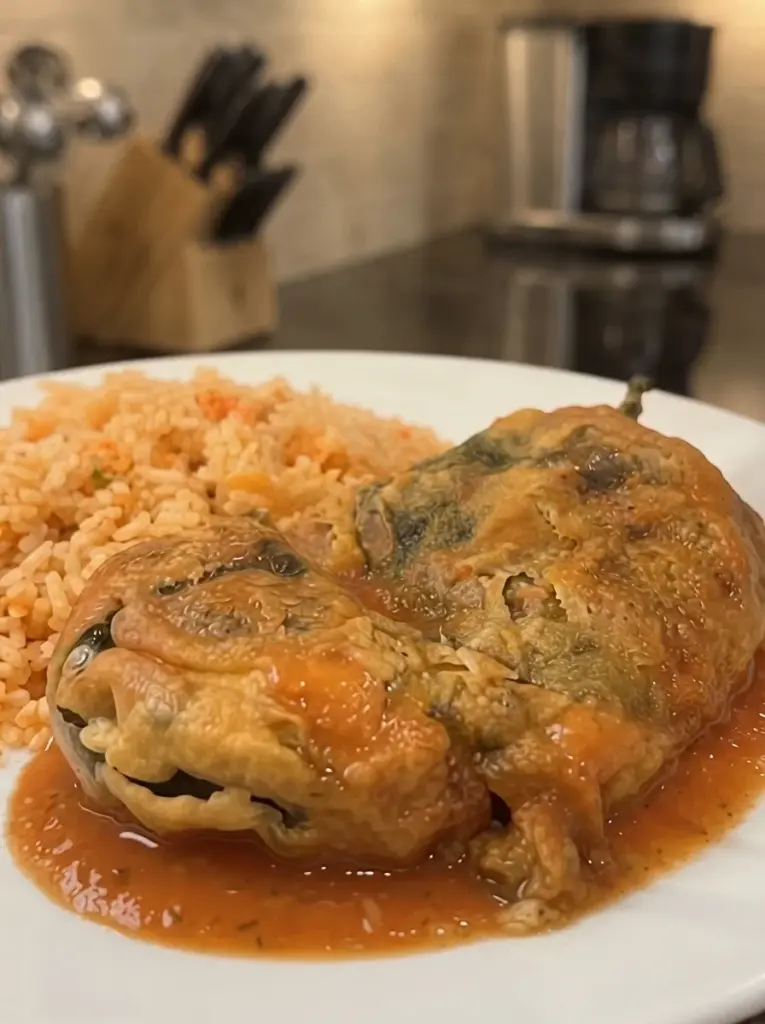
Chiles Rellenos de Queso Panela bring together roasted poblano peppers, mild fresh cheese, a golden egg coating, and a warm tomato sauce. The peppers become tender and smoky, while the airy coating adds richness and a delicate contrast to the bright sauce.
Panela makes this version distinctive. It softens when heated but generally holds its shape, so the filling will be tender and lightly springy rather than stretchy like melted Oaxaca or Monterey Jack cheese. That mild flavor works beautifully with the roasted poblanos and savory tomato caldillo.
This recipe takes more care than a simple stuffed-pepper bake, especially when whipping the eggs and frying. Preparing the sauce and peppers first lets you focus on the coating when it is time to cook.
The quantities and method below are a suggested recipe based on the dish description and have not been kitchen-tested. Frying time, oil absorption, and pepper size will vary.
Recipe at a Glance
- Yield: 4 stuffed poblanos
- Servings: 4
- Preparation: Approximately 35–45 minutes, including roasting, steaming, and filling
- Sauce and frying: Approximately 25–35 minutes, with some work overlapping
- Total: Approximately 1–1¼ hours
- Method: Roasting, stovetop sauce, and shallow frying
Why You’ll Love This Dish
- Roasted pepper flavor: Poblanos become smoky and tender after blistering and peeling.
- A mild cheese filling: Panela provides a fresh, gently salty contrast.
- Light egg coating: Properly beaten whites create the traditional-style capeado exterior.
- Homemade tomato sauce: A simple caldillo balances the rich fried coating.
- A satisfying meal: Serve one pepper with rice, beans, or warm tortillas.
What Are Chiles Rellenos de Queso Panela?
Chiles rellenos are stuffed chiles, and there are many regional and household preparations. In this version, roasted poblanos are filled with panela, lightly dusted with flour, coated in beaten egg, and fried. The egg coating is often called capeado.
A warm tomato sauce can be spooned beneath the peppers, poured around them, or used for a short, gentle finish on the stove. Serving over sauce preserves more of the coating’s texture. Briefly simmering the peppers in sauce gives a softer, more integrated result.
This is one home-style interpretation, rather than a claim that every Mexican household prepares the dish the same way.
Ingredients
For the Stuffed Peppers
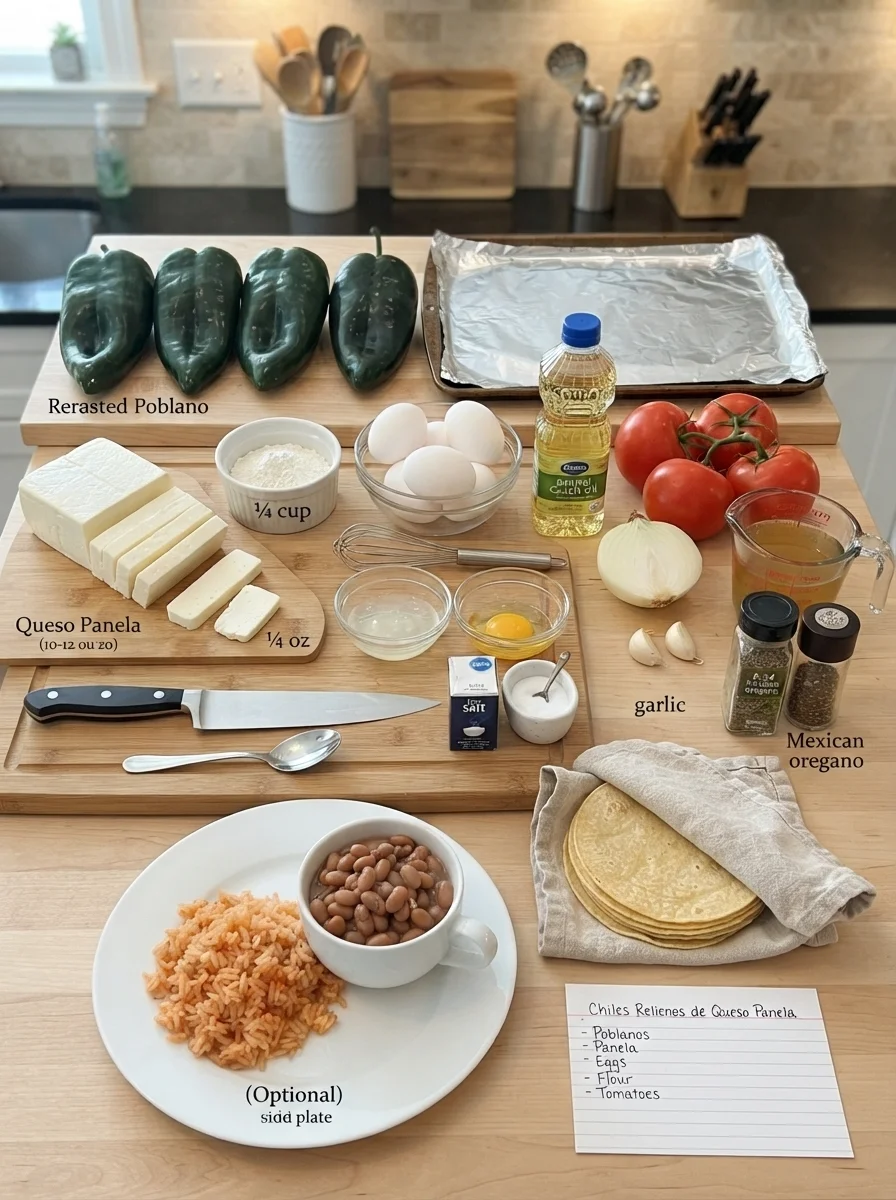
- 4 large poblano peppers, preferably broad and reasonably straight
- 10–12 ounces panela cheese, cut into thick strips or wedges
- ¼ cup all-purpose flour, for dusting; you may not use it all
- 4 large eggs, separated
- ¼ teaspoon fine salt, divided, or to taste
- Neutral frying oil, such as canola or vegetable oil, enough for approximately ½ inch in the skillet
For the Tomato Sauce
- 1 pound ripe Roma tomatoes, approximately 5–6 medium
- ¼ medium white onion, roughly chopped
- 2 garlic cloves, peeled
- ¾ cup low-sodium vegetable or chicken broth, plus more as needed
- 1 tablespoon neutral oil
- ½ teaspoon dried Mexican oregano, optional
- Salt and black pepper, to taste
For Serving
- Mexican-style rice
- Pinto or black beans
- Warm corn tortillas
- Chopped cilantro, optional
Serving accompaniments are optional and are not included in the base recipe’s yield.
Ingredient Notes
Poblanos
Choose peppers with enough width to hold cheese and a stem that is still attached. Similar-sized peppers cook and serve more evenly.
Poblanos are often relatively mild, but their heat varies. Removing the seeds and inner ribs reduces some heat, but does not guarantee a completely mild pepper. Wear gloves if you are sensitive to chiles, and avoid touching your face while handling them.
Panela Cheese
Panela is a fresh cheese with a mild flavor and a texture that usually remains intact when heated. It is not a melting cheese in the same way as Oaxaca cheese.
Drain any packing liquid and gently blot the cheese. Cut pieces that fit inside the peppers without forcing the sides apart. The suggested amount allows approximately 2½–3 ounces per pepper, but smaller poblanos may need less.
If you want a stretchy filling, you can use a suitable melting cheese instead, but that changes the defining texture of this version. Cheese brands also vary in saltiness, so taste a small piece before seasoning heavily.
Eggs
The whites supply the volume for the coating. Separate the eggs carefully, keeping yolk out of the whites, and use a clean, dry bowl without greasy residue.
Have everything ready before whipping. The coating loses volume as it stands, so it is best prepared shortly before frying.
Flour
A thin flour layer helps the egg adhere to the peppers. Shake off excess; a thick coating can become pasty and makes dipping less tidy.
Tomatoes and Broth
Roma tomatoes provide body without as much watery pulp as some larger slicing tomatoes. The sauce should be pourable but not thin like plain broth.
Low-sodium broth makes seasoning easier to control. Use vegetable broth for a meat-free sauce, and check the cheese ingredients if strict vegetarian suitability matters.
Equipment
Use a broiler-safe baking sheet, covered bowl, blender, saucepan, wide heavy skillet, hand mixer, and two broad spatulas or a spatula and spoon. A thermometer helps monitor frying oil. A rack over a tray is useful for draining the peppers.
Wooden toothpicks are optional for holding a slit closed. If used, count them and remove every one before serving.
How to Make Chiles Rellenos de Queso Panela
1. Roast the Poblanos
Preheat the broiler. Place the poblanos on a foil-lined, broiler-safe tray and broil, turning with tongs, until the skins blister and darken on most sides. This may take approximately 8–15 minutes, depending on the broiler and distance from the heat.
Watch closely. The goal is blistered skin and pliable flesh, not peppers cooked until they collapse.
2. Steam and Peel
Transfer the hot peppers to a bowl and cover for approximately 10 minutes. Once cool enough to handle, gently rub away the loosened skin.
Avoid rinsing if you can remove the skin by hand, since rinsing adds moisture and washes away some roasted flavor. A few small skin patches are better than tearing the pepper while trying to remove every bit.
3. Open and Clean the Peppers
Make one lengthwise slit in each pepper, keeping the stem and the rest of the pepper intact. Carefully remove the seed cluster and loose seeds with a small spoon or your fingers.
Work gently around the top so the pepper stays together. Blot the inside and outside dry. If the peppers release liquid, let them drain briefly before filling.
4. Start the Tomato Sauce
While the peppers steam or drain, place the tomatoes in a saucepan with enough water to cover. Simmer for approximately 8–10 minutes, until softened. Drain and allow them to cool enough for your blender’s instructions.
Blend the tomatoes with the onion, garlic, and ¾ cup broth until smooth. Use safe hot-liquid blending practices: do not seal a hot mixture in an unvented personal blender. If necessary, cool first or use an immersion blender in a suitable container.
5. Cook the Sauce
Heat 1 tablespoon oil in a saucepan over medium heat. Carefully pour in the blended tomato mixture; it may splatter. Add the optional oregano.
Bring to a gentle simmer and cook for approximately 12–15 minutes, stirring occasionally, until the raw onion and garlic flavor mellows and the sauce develops some body. Add broth a little at a time if it becomes too thick. Season with salt and pepper, then keep warm on low heat.
6. Fill the Poblanos
Place panela strips inside each pepper, leaving enough room to bring the edges of the slit close together. Do not overfill.
If necessary, secure the slit with one or two toothpicks, keeping them easy to locate. Blot the outside again and lightly season only if needed.
7. Prepare the Frying Station
Set a draining rack over a tray. Put the flour on a plate and have your spatulas ready.
Add approximately ½ inch oil to a wide, heavy skillet, keeping plenty of room below the rim. Warm over medium heat to approximately 350°F. Adjust the burner as needed to keep the oil near 340–350°F during cooking.
Work in small batches so the oil temperature does not drop sharply. Keep water and wet utensils away from the hot oil.
8. Make the Egg Coating
Beat the egg whites with a small pinch of the measured salt until they hold firm, glossy peaks. In a separate small bowl, gently beat the yolks.
Fold the yolks into the whites in two additions using a broad spatula. Stop once the color is mostly uniform. The mixture should remain airy; vigorous stirring knocks out the volume.
Do not add extra milk or water. This coating is whipped egg rather than a thin flour batter.
9. Dust and Coat
Dust a filled pepper lightly with flour on all sides, shaking off excess. Support it underneath and gently coat with the egg mixture.
For a very soft pepper, lay a small bed of egg coating on a broad spatula, place the floured pepper on it, and spoon more coating over the top. Keep the coating light rather than trying to build an oversized shell.
Coat each pepper just before it goes into the oil.
10. Fry Gently
Carefully lower the pepper into the hot oil, placing it away from you. Fry one or two at a time, depending on pan size, without crowding.
Cook for approximately 2–3 minutes on the first side, until the coating is golden and set. Use two utensils to turn it gently, then cook the other side for approximately 2–3 minutes. Carefully spoon a little hot oil over pale edges if needed.
Times are approximate. The egg coating should be fully cooked and the filling warm. Lower the heat if the exterior darkens rapidly. Avoid squeezing the pepper with tongs, which can break the coating or push out the cheese.
11. Drain and Remove Toothpicks
Transfer to the rack and allow excess oil to drain. Repeat with the remaining peppers, checking the oil temperature between batches.
Remove every toothpick before plating. If the coating makes them difficult to see, locate them carefully rather than leaving them for diners to find.
12. Serve with the Sauce
For a more distinct coating, spoon warm tomato sauce into shallow bowls and place a pepper on top just before serving.
For a softer finish, place the cooked peppers in a wide pan with the hot sauce and spoon sauce around them for a minute or two. Avoid prolonged simmering or frequent turning, which can break the delicate coating.
Serve promptly with rice, beans, or tortillas.
Tips for Successful Capeado
Dry the peppers well. Surface water makes the flour and egg less likely to adhere and can cause splattering.
Finish the preparation before beating eggs. Sauce, cheese, flour, oil, and utensils should be ready first.
Keep yolk and grease out of the whites. Clean equipment helps them whip properly.
Fold gently. You want to preserve the trapped air that creates the light coating.
Support the whole pepper. A broad spatula is more useful than gripping the middle with tongs.
Serve soon after frying. The coating softens as it sits, particularly once sauce is added.
Troubleshooting
| Problem | Possible cause | What to try |
|---|---|---|
| Pepper tears while peeling | Overroasting or rough handling | Roast only until blistered; peel gently and accept small skin patches. |
| Filling pushes out | Too much cheese or a large opening | Use less filling and support the pepper during turning. |
| Egg coating slides off | Wet pepper or insufficient flour dusting | Blot dry and apply a thin, even flour layer. |
| Whites will not whip | Yolk or grease contamination | Start with a clean bowl and carefully separated whites. |
| Coating becomes flat | Overmixing or waiting too long | Fold gently and fry promptly. |
| Exterior becomes dark quickly | Oil too hot | Reduce heat and monitor temperature between batches. |
| Coating is greasy | Oil too cool or crowded pan | Fry smaller batches and let the oil recover. |
| Cheese does not become stretchy | Normal panela behavior | Expect a soft, shape-holding filling rather than melted strands. |
Variations
A Stretchier Cheese Filling
Use Oaxaca cheese or another suitable melting cheese for a different result. Avoid overfilling, since melted cheese can escape more readily.
Panela and Herbs
Add a small pinch of chopped epazote or cilantro to the filling if desired. Keep additions modest so the pepper closes easily.
A Spicier Sauce
Blend a small cooked serrano or jalapeño into the tomato sauce, then taste before adding more. Poblano heat varies, so assess the whole dish rather than assuming it needs extra chile.
Without Egg Coating
Stuffed roasted poblanos can be heated in sauce without capeado, but the dish will have a different texture and preparation method. Do not expect an oven or air fryer to reproduce the same coating simply by using these frying instructions unchanged.
Serving Suggestions
Serve one stuffed pepper per person with Mexican-style rice and beans. Warm corn tortillas are useful for catching the tomato sauce.
A simple cabbage slaw or crisp green salad adds freshness alongside the fried coating. Since panela is mild, the sauce provides much of the brightness, so offer enough for each serving without necessarily covering the pepper completely.
Make-Ahead and Storage
You can roast, peel, and clean the peppers a day ahead. Refrigerate covered, then blot dry before filling. Prepare the sauce ahead as well and refrigerate separately.
Whip the egg coating just before frying. It is not a good component to prepare hours in advance.
Refrigerate cooked leftovers promptly in shallow, covered containers and use within 3–4 days. Keep the sauce separate if you want to preserve as much coating texture as possible.
Reheat the peppers in a 350°F oven until hot throughout, checking for an internal temperature of 165°F when reheating leftovers. Warm the sauce separately. The coating will be softer than when freshly fried. A microwave is convenient but softens it further.
Freezing assembled, battered peppers is not ideal for texture. For the best result, make a smaller batch or prepare the roasted peppers and sauce ahead and fry near serving time.
Frequently Asked Questions
Does panela melt?
It generally softens while retaining its shape. It is not intended to create the stretchy filling associated with Oaxaca or similar melting cheeses.
Do I have to remove every seed?
Remove the main seed cluster and loose seeds without tearing the pepper. A few remaining seeds are less of a problem than a badly damaged pepper.
Can I roast the peppers over a gas flame?
That is another preparation method, but use appropriate tongs, ventilation, and careful supervision. The broiler method above keeps the recipe within one clearly described approach.
Can I use canned tomatoes for the sauce?
A 14–15-ounce can of tomatoes can be a convenient variation. Skip the tomato-softening step and adjust the broth after blending so the sauce is not too thin. Flavor and salt will depend on the product.
Can I make them gluten-free?
The dusting contains wheat flour. A suitable gluten-free dusting may be possible, but it has not been tested here. Check all other ingredients and preparation practices if avoiding gluten medically.
Why is my coating soft instead of crisp?
Capeado is an airy egg coating rather than a breadcrumb crust. It naturally softens, especially in sauce. Serve over sauce immediately after frying for a clearer contrast.
Can I omit toothpicks?
Yes, if the pepper closes adequately and you can support it during coating and frying. They are an optional aid, not a required ingredient.
Recipe Card: Chiles Rellenos de Queso Panela
Yield: 4 peppers
Servings: 4
Total time: Approximately 1–1¼ hours
Ingredients
- 4 large poblanos
- 10–12 ounces panela, cut into strips
- ¼ cup flour for dusting, used as needed
- 4 large eggs, separated
- ¼ teaspoon fine salt, divided, or to taste
- Neutral oil for approximately ½ inch in the skillet
Sauce:
- 1 pound Roma tomatoes
- ¼ medium white onion
- 2 garlic cloves
- ¾ cup low-sodium broth, plus more as needed
- 1 tablespoon oil
- ½ teaspoon Mexican oregano, optional
- Salt and pepper, to taste
Instructions
- Broil poblanos, turning, until blistered. Cover in a bowl for 10 minutes, then peel gently.
- Make one slit in each pepper and remove the seed cluster. Blot dry.
- Simmer tomatoes in water until softened, approximately 8–10 minutes. Drain and blend safely with onion, garlic, and broth.
- Heat the tablespoon of oil in a saucepan. Carefully add the sauce and oregano; simmer for 12–15 minutes. Season and keep warm.
- Fill peppers with panela without overstuffing. Secure with toothpicks only if needed.
- Heat approximately ½ inch oil in a wide skillet to about 350°F. Prepare a draining rack.
- Beat whites with a small pinch of salt to firm, glossy peaks. Lightly beat yolks separately, then fold into whites.
- Dust each pepper lightly with flour, coat with egg, and carefully lower into the oil. Fry in small batches, approximately 2–3 minutes per side, until golden and the egg is cooked through. Adjust heat as needed.
- Drain, remove all toothpicks, and serve promptly over warm tomato sauce. Alternatively, finish briefly in the sauce for a softer coating.
Nutrition Note
A dependable calorie estimate requires knowing how much frying oil is absorbed, how much flour adheres, and which panela is used. These can vary substantially. Calculate from your ingredients and cooking yield if you need detailed nutrition; rice, beans, and tortillas are additional.
Notes
- This suggested formula has not been kitchen-tested.
- Panela softens but generally does not become stretchy.
- Dry peppers and freshly beaten egg coating are important for adhesion.
- Prepare the sauce and frying station before whipping the whites.
- Count and remove any toothpicks before serving.
Final Thoughts
Roasted poblanos, mild panela, and tomato sauce give this dish its comforting balance. Careful drying, gentle filling, and freshly whipped capeado help the peppers stay intact through frying. Serve promptly, with sauce beneath or around each pepper, to enjoy the contrast between the tender filling and golden egg coating.
Print
Chiles Rellenos de Queso Panela
Description
Yield: 4 peppers
Servings: 4
Total time: Approximately 1–1¼ hours
Ingredients
- 4 large poblanos
- 10–12 ounces panela, cut into strips
- ¼ cup flour for dusting, used as needed
- 4 large eggs, separated
- ¼ teaspoon fine salt, divided, or to taste
- Neutral oil for approximately ½ inch in the skillet
Sauce:
- 1 pound Roma tomatoes
- ¼ medium white onion
- 2 garlic cloves
- ¾ cup low-sodium broth, plus more as needed
- 1 tablespoon oil
- ½ teaspoon Mexican oregano, optional
- Salt and pepper, to taste
Instructions
- Broil poblanos, turning, until blistered. Cover in a bowl for 10 minutes, then peel gently.
- Make one slit in each pepper and remove the seed cluster. Blot dry.
- Simmer tomatoes in water until softened, approximately 8–10 minutes. Drain and blend safely with onion, garlic, and broth.
- Heat the tablespoon of oil in a saucepan. Carefully add the sauce and oregano; simmer for 12–15 minutes. Season and keep warm.
- Fill peppers with panela without overstuffing. Secure with toothpicks only if needed.
- Heat approximately ½ inch oil in a wide skillet to about 350°F. Prepare a draining rack.
- Beat whites with a small pinch of salt to firm, glossy peaks. Lightly beat yolks separately, then fold into whites.
- Dust each pepper lightly with flour, coat with egg, and carefully lower into the oil. Fry in small batches, approximately 2–3 minutes per side, until golden and the egg is cooked through. Adjust heat as needed.
- Drain, remove all toothpicks, and serve promptly over warm tomato sauce. Alternatively, finish briefly in the sauce for a softer coating.
A