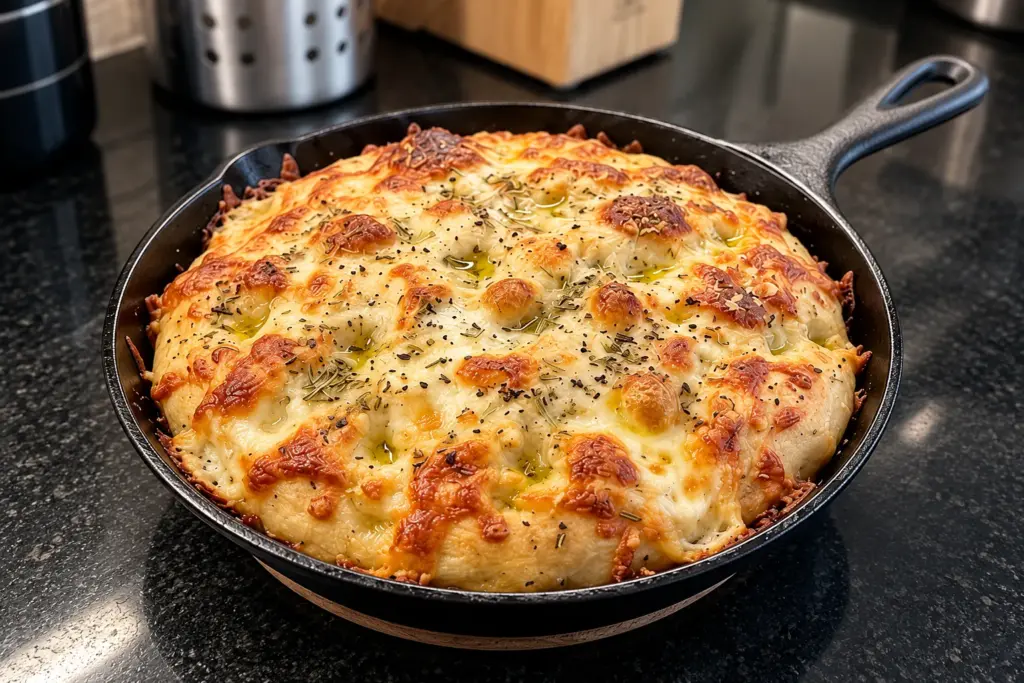
Small-Batch Cheesy Herb Skillet Focaccia is a small, shareable bread with a bubbly center, a crisp olive-oil base, and golden mozzarella and Parmesan on top. Rosemary, Italian seasoning, and garlic powder give the soft dough a savory finish without a long ingredient list.
A Small Skillet, a Bubbly Crumb, and Plenty of Cheese
This recipe is sized for an 8-inch skillet rather than a full sheet pan. It makes one small focaccia to share as a side, with the browned cheese, dimples, and rosemary shown in the reference photo. The modest batch still needs time to rise; small does not mean instant.
Ingredients
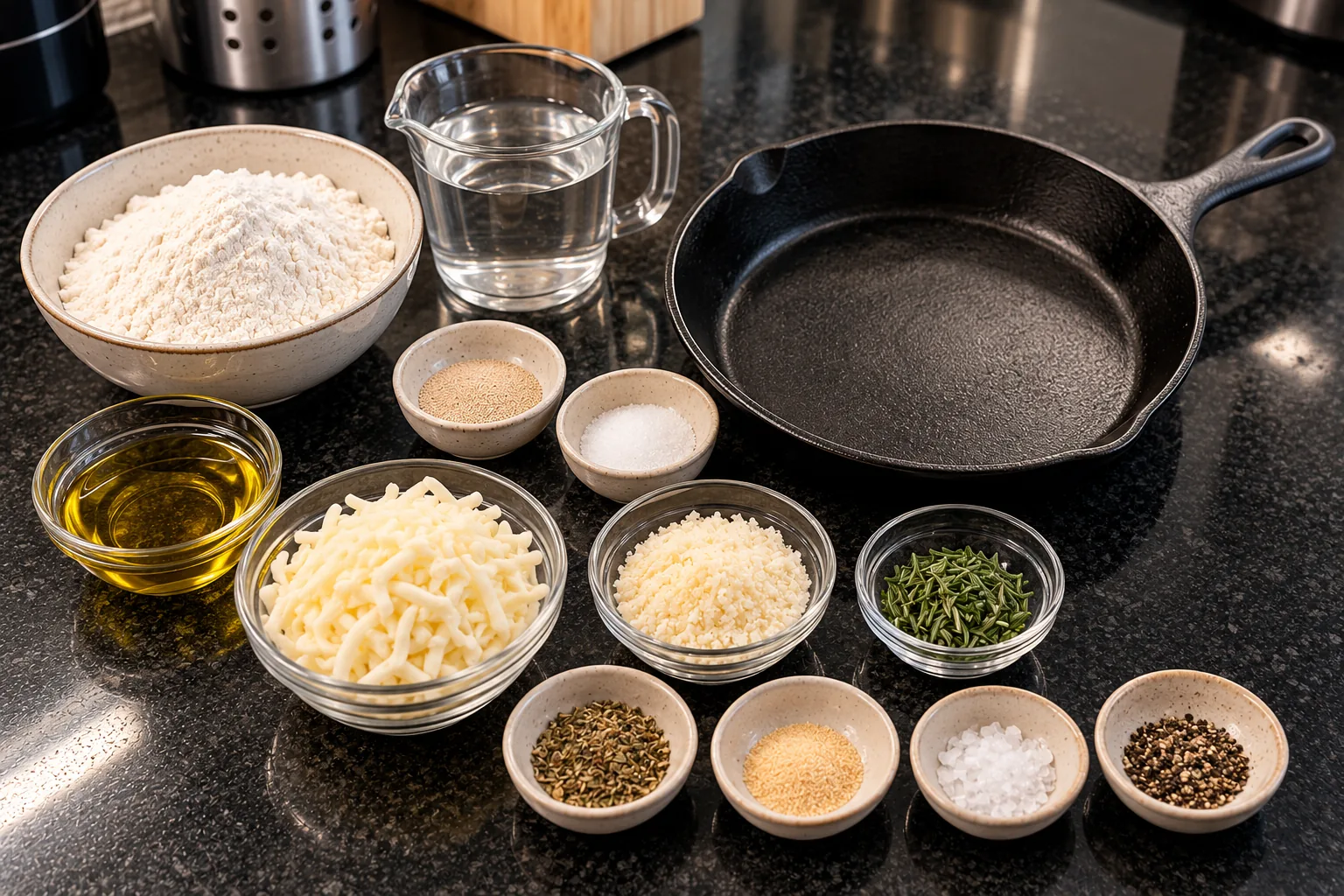
For the Focaccia
- 200 g bread flour
- 160 ml lukewarm water
- ½ teaspoon instant yeast
- ½ teaspoon fine salt
- 1 tablespoon olive oil, plus extra for the skillet
For the Cheesy Herb Topping
- 100 g shredded mozzarella cheese
- 30 g grated Parmesan cheese
- 1 tablespoon olive oil
- 1 teaspoon chopped fresh rosemary
- ½ teaspoon dried Italian seasoning
- ¼ teaspoon garlic powder
- Flaky sea salt, a pinch
- Freshly ground black pepper, to taste
Ingredient Details That Matter
The dough contains 160 ml water for 200 g bread flour, so it should stay noticeably sticky. Bread flour gives that moisture more structure. There are two separate tablespoons of olive oil: one in the dough and one on top, plus a little extra for the skillet. Use low-moisture shredded mozzarella rather than mozzarella packed in liquid, which can leave the surface wet.
Equipment
- Kitchen scale
- Medium mixing bowl and sturdy spoon
- 8-inch oven-safe cast-iron skillet
- Small bowl for herb oil
- Oven mitts and heatproof trivet
- Spatula and wire rack
Instructions
-
Mix: Whisk the bread flour, instant yeast, and fine salt in a medium bowl. Add the lukewarm water and 1 tablespoon olive oil for the dough. Stir firmly with a spoon until no dry flour remains. The dough will be wet and sticky; that is expected at this water-to-flour ratio. Water should feel barely warm, about 90–100°F (32–38°C), not hot. Use the measured tablespoon of olive oil plus a separate small amount later for the skillet; do not put the pan-coating oil into the dough.
-
Rest and strengthen: Cover and rest for 20 minutes. With a wet hand, lift one edge of the dough and fold it toward the center; rotate the bowl and repeat on all four sides. Cover for another 20 minutes, then repeat one gentle set. Stop if the dough resists stretching. These brief folds support the wet dough without conventional kneading.
-
First rise: Cover and let rise for another 60–90 minutes, until visibly aerated, puffy, and roughly doubled from its original volume. The two earlier rests count as part of this first-rise period. A cooler room may need longer; look for bubbles and expansion rather than following the clock rigidly.
-
Proof in the skillet: Coat the bottom and sides of an 8-inch (20-cm) oven-safe cast-iron skillet with the extra olive oil, about 1–2 teaspoons or enough for a thin continuous film. Scrape in the dough and gently ease it outward. If it resists reaching the edges, rest 10 minutes, then ease it outward again. Cover and leave for about 45–60 minutes, including that short relaxation, until very puffy and gently jiggly.
-
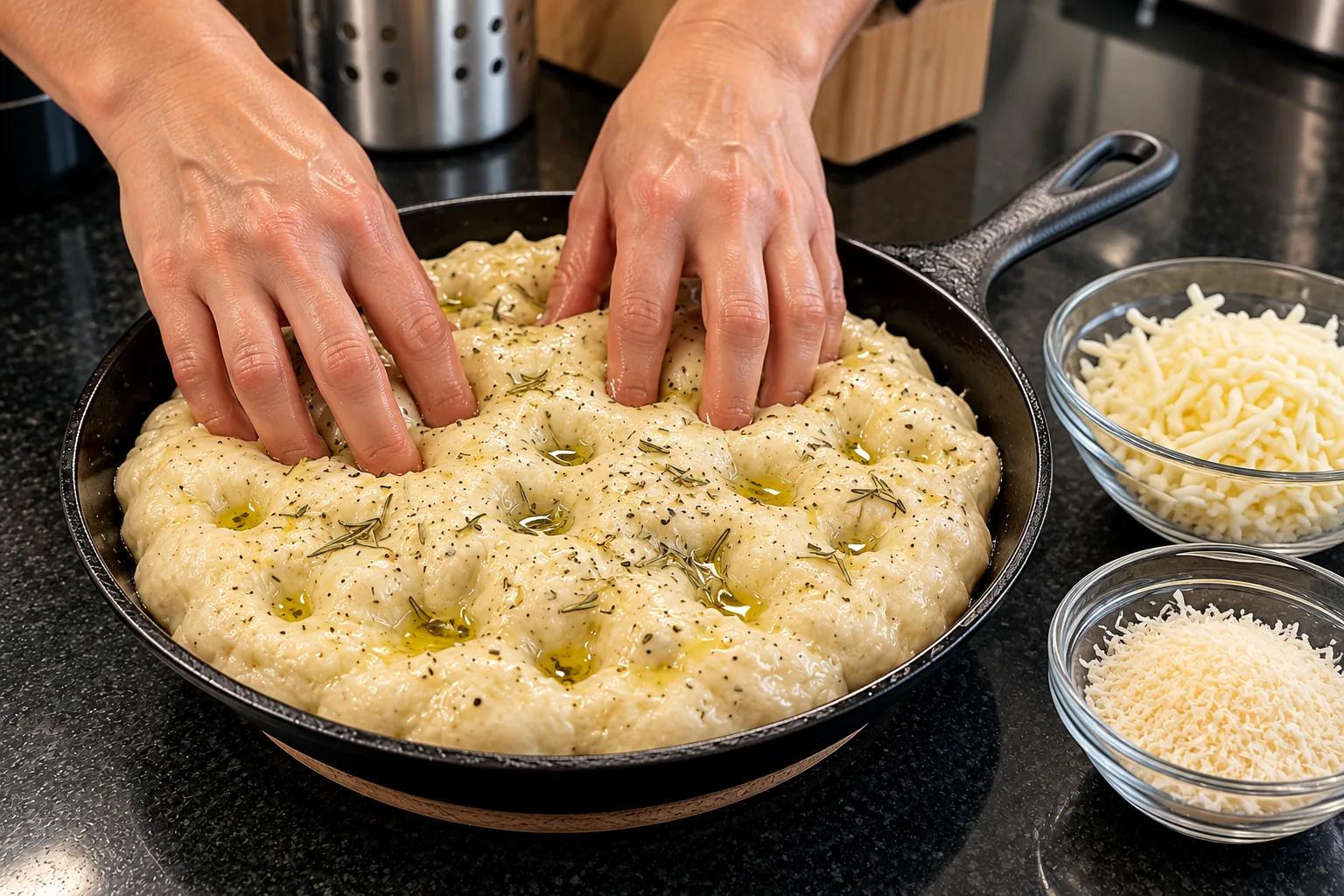
Dimple and season: Preheat the oven to 425°F (220°C) with a rack in the lower-middle position. Mix the separate 1 tablespoon topping olive oil with the chopped rosemary, dried Italian seasoning, and garlic powder. Drizzle over the dough, then press oiled fingertips straight down to make dimples without flattening the whole loaf. Add the pinch of flaky sea salt and freshly ground black pepper lightly; the cheeses add salt too.
-
Start baking: Bake the dimpled focaccia without cheese for 10 minutes. Wearing oven mitts, set the skillet on a heatproof surface and quickly scatter all the shredded mozzarella cheese and grated Parmesan cheese across the top. Return it to the oven; keep in mind that the handle is extremely hot.
-
Finish: Bake for another 10–15 minutes, about 20–25 minutes total, until the cheese is melted and golden, the edges are crisp, and the bread beneath the topping is set. Tent loosely with foil if the cheese darkens too quickly. If using a thermometer, a bread-only area in the middle should be about 200–205°F (93–96°C).
-
Cool briefly: Rest in the skillet for 5 minutes, then loosen the edges and move the focaccia to a rack for another 5 minutes before cutting. This helps keep the bottom from steaming soft. Cut into 4 wedges or smaller sharing pieces, and handle the hot skillet with oven mitts.
Helpful Tips
- Do not turn the wet dough into a dry ball by adding extra flour.
- Wet your hand for the folds and oil your fingertips for dimpling.
- Keep the two folding sessions gentle; they should not tear the dough.
- Let the dough relax if it springs back from the skillet edges.
- Use an oven-safe skillet with no plastic or wooden handle parts.
- Do not preheat the empty skillet for this recipe; the dough proofs in the oiled pan.
- Add cheese partway through baking so the dough gets a head start.
- A larger skillet makes a thinner focaccia that may bake more quickly.
Troubleshooting
A dense center often means the dough was baked before it became properly puffy. A pale, soft base can result from a poorly preheated oven or leaving the cooked bread sitting in the skillet too long. If the topping browns early, shield it loosely while the bread finishes rather than removing the loaf with an underbaked center.
Serving Ideas
Cut into four wedges for a side dish, or divide into smaller squares for sharing. It works alongside soup or a salad and is especially pleasant while the cheese is still warm. If using it for sandwiches, let it cool further before splitting so the soft center does not compress.
Timing and Yield
Plan on about 20 minutes active preparation, 100–130 minutes for the first rise including the two short rests, 45–60 minutes in the skillet, 20–25 minutes baking, and 10 minutes cooling. Around 3 hours 40 minutes is a useful planning estimate; a cool kitchen can take longer.
Simple Variations
- Omit only the finishing pinch of flaky salt if your cheeses are particularly salty.
- Use the same topping quantities in a similar-size oven-safe metal baking pan if you do not have cast iron; expect the base to brown differently.
- Keep the rosemary finely chopped so it spreads through the topping rather than sitting in woody clumps.
Storage
This focaccia has the best crust on baking day. Cool and refrigerate leftover cheese-topped pieces in a covered container within 2 hours, then use within 3 days. Freeze cooled portions for up to 2 months for best quality.
Reheating
Reheat refrigerated pieces in a 350°F (175°C) oven for about 8–12 minutes, until hot throughout. Use a tray and cover loosely at first if the cheese is already dark. Avoid reheating in a sealed container, which traps steam and softens the crust.
Allergen Notes
Contains wheat and milk. Check the cheese labels and rennet source when cooking for someone with dietary restrictions.
FAQ
Why is the dough so sticky?
The formula has 80% water relative to flour weight. That wet dough is intentional. Use a spoon, wet fingers, and the short folds instead of adding enough flour to make it stiff.
Do I need to knead it?
There is no conventional kneading in this method. Two brief sets of bowl folds give the dough structure, followed by enough time to rise.
Can I use a 10-inch skillet?
Yes, but the same dough will spread thinner and may need less baking time. An 8-inch skillet is the intended size for a thicker small-batch focaccia.
Does all the olive oil go into the dough?
No. One tablespoon goes into the dough, a separate tablespoon carries the herbs on top, and a little extra coats the skillet.
Why add the cheese after ten minutes?
It gives the dough a head start and reduces the chance of burning the mozzarella and Parmesan before the center is baked.
Is this a stovetop focaccia?
No. The skillet is the baking vessel, but the bread cooks in the oven. Make sure the entire skillet is safe at the stated temperature.
Conclusion
Keep the dough wet, wait for a puffy rise, and add the cheese after the first stage of baking. This small skillet focaccia delivers golden cheese, fragrant herbs, and a crisp base without making a large tray.
Print
Small-Batch Cheesy Herb Skillet Focaccia
- Prep Time: 20 minutes
- Cook Time: 25 minutes
- Total Time: 3 hours 40 minutes
- Yield: 1 small focaccia (4 side servings) 1x
- Category: Lunch
- Method: Baking
Description
An 8-inch skillet focaccia with a soft, airy center, golden cheese topping, rosemary, and a crisp olive-oil base.
Ingredients
- 200 g bread flour
- 160 ml lukewarm water
- ½ teaspoon instant yeast
- ½ teaspoon fine salt
- 1 tablespoon olive oil, plus extra for the skillet
- 100 g shredded mozzarella cheese
- 30 g grated Parmesan cheese
- 1 tablespoon olive oil
- 1 teaspoon chopped fresh rosemary
- ½ teaspoon dried Italian seasoning
- ¼ teaspoon garlic powder
- Flaky sea salt, a pinch
- Freshly ground black pepper, to taste
Instructions
Step 1 Mix: Whisk the bread flour, instant yeast, and fine salt in a medium bowl. Add the lukewarm water and 1 tablespoon olive oil for the dough. Stir firmly with a spoon until no dry flour remains. The dough will be wet and sticky; that is expected at this water-to-flour ratio. Water should feel barely warm, about 90–100°F (32–38°C), not hot. Use the measured tablespoon of olive oil plus a separate small amount later for the skillet; do not put the pan-coating oil into the dough.
Step 2 Rest and strengthen: Cover and rest for 20 minutes. With a wet hand, lift one edge of the dough and fold it toward the center; rotate the bowl and repeat on all four sides. Cover for another 20 minutes, then repeat one gentle set. Stop if the dough resists stretching. These brief folds support the wet dough without conventional kneading.
Step 3 First rise: Cover and let rise for another 60–90 minutes, until visibly aerated, puffy, and roughly doubled from its original volume. The two earlier rests count as part of this first-rise period. A cooler room may need longer; look for bubbles and expansion rather than following the clock rigidly.
Step 4 Proof in the skillet: Coat the bottom and sides of an 8-inch (20-cm) oven-safe cast-iron skillet with the extra olive oil, about 1–2 teaspoons or enough for a thin continuous film. Scrape in the dough and gently ease it outward. If it resists reaching the edges, rest 10 minutes, then ease it outward again. Cover and leave for about 45–60 minutes, including that short relaxation, until very puffy and gently jiggly.
Step 5 Dimple and season: Preheat the oven to 425°F (220°C) with a rack in the lower-middle position. Mix the separate 1 tablespoon topping olive oil with the chopped rosemary, dried Italian seasoning, and garlic powder. Drizzle over the dough, then press oiled fingertips straight down to make dimples without flattening the whole loaf. Add the pinch of flaky sea salt and freshly ground black pepper lightly; the cheeses add salt too.
Step 6 Start baking: Bake the dimpled focaccia without cheese for 10 minutes. Wearing oven mitts, set the skillet on a heatproof surface and quickly scatter all the shredded mozzarella cheese and grated Parmesan cheese across the top. Return it to the oven; keep in mind that the handle is extremely hot.
Step 7 Finish: Bake for another 10–15 minutes, about 20–25 minutes total, until the cheese is melted and golden, the edges are crisp, and the bread beneath the topping is set. Tent loosely with foil if the cheese darkens too quickly. If using a thermometer, a bread-only area in the middle should be about 200–205°F (93–96°C).
Step 8 Cool briefly: Rest in the skillet for 5 minutes, then loosen the edges and move the focaccia to a rack for another 5 minutes before cutting. This helps keep the bottom from steaming soft. Cut into 4 wedges or smaller sharing pieces, and handle the hot skillet with oven mitts.
Notes
Use an 8-inch oven-safe skillet. Oil is separate: 1 tablespoon in dough, 1 tablespoon in topping, plus extra for skillet. Add both cheeses after 10 minutes baking. Total baking time is 20–25 minutes. First-rise timing includes both 20-minute rests. This focaccia has the best crust on baking day. Cool and refrigerate leftover cheese-topped pieces in a covered container within 2 hours, then use within 3 days. Freeze cooled portions for up to 2 months for best quality.