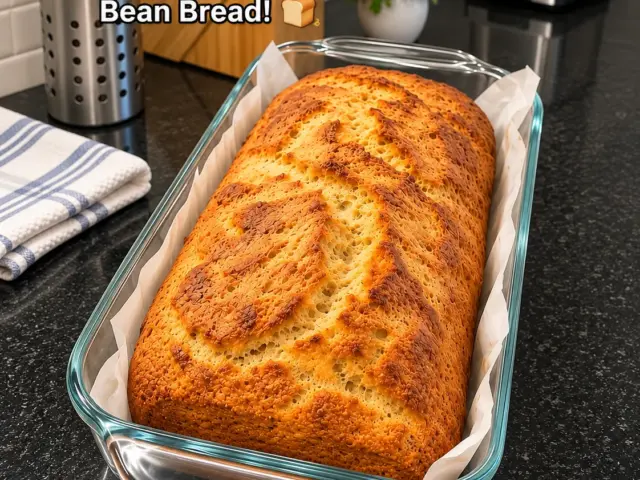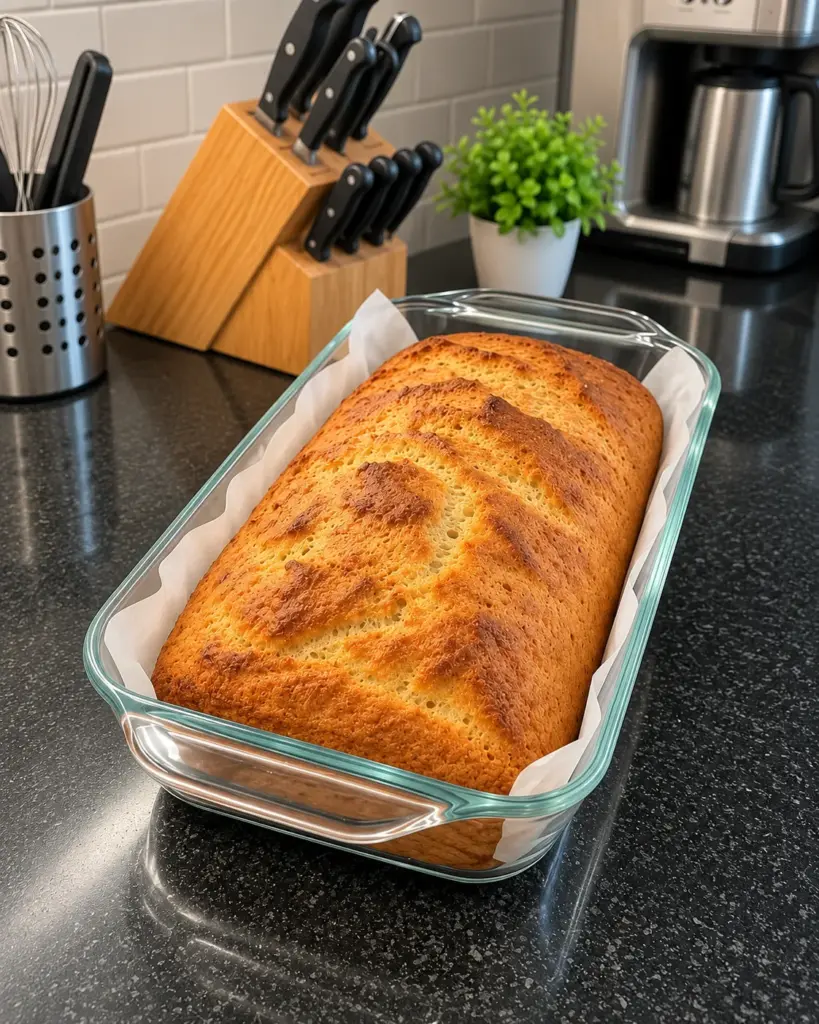
Great Northern Bean Sandwich Bread with Flour and Eggs is a simple loaf built around three substantial ingredients: cooked Great Northern beans, eggs, and all-purpose or oat flour. The beans add moisture and a mild flavor, the eggs hold the mixture together, and flour creates the structure needed for slices. This version is different from a bean-and-baking-powder loaf: flour is part of the base recipe here, while baking powder remains an optional addition for extra lift. The loaf in the reference photo is a plain, golden loaf with a naturally cracked top, baked in a parchment-lined glass pan.
There is no yeast and no rise time in this recipe. Think of it as a savory quick bread rather than a wheat sandwich loaf with stretchy dough. For the strict three-ingredient version, separate the four eggs and whip the whites before gently folding them into the thick bean batter. That simple technique adds air without changing the ingredient count. You may add baking powder, oil, yogurt, herbs, Parmesan, or a seeded finish if you prefer a softer or more seasoned loaf.
Because canned and home-cooked beans carry different amounts of moisture, the most useful cues are visual: beans should be drained and dried, the batter should be thick and spoonable, and the baked center should be set before the bread comes out of the oven. Letting the loaf cool fully is just as important as baking it. A cooled slice holds together for toast, sandwich fillings, or serving alongside soup. The instructions below make each optional choice clear so you can bake the plain loaf or a dressed-up variation confidently.
Why You’ll Love This Recipe
The primary recipe has only three ingredients, and the beans can be cooked ahead or drained from cans. This makes the loaf useful when you want an alternative to yeast bread without planning for a long proof. A blender smooths the beans quickly; the pan and oven do the rest. The plain loaf is mildly flavored, so it works with either simple spreads or a more savory topping.
The flour creates a different result from recipes that rely only on beans, eggs, and baking powder. It gives the crumb a little more body, which helps the loaf cut into sandwich-sized pieces after cooling. All-purpose flour gives the firmest, most familiar structure. Oat flour is an allowed option, though its slice may be softer and more delicate. You can decide which flour best suits how you plan to serve it.
The optional ingredients offer useful changes without obscuring the core formula. Baking powder can produce a lighter loaf; Greek yogurt and olive oil contribute tenderness; garlic, rosemary or thyme, and Parmesan make it more savory. A separate egg wash, sesame seeds, sunflower seeds, flaky salt, and a post-bake butter brush can add a golden, textured crust. The photographed loaf stays plain, while the toppings are there for anyone who wants them.
Ingredients
For the Bread
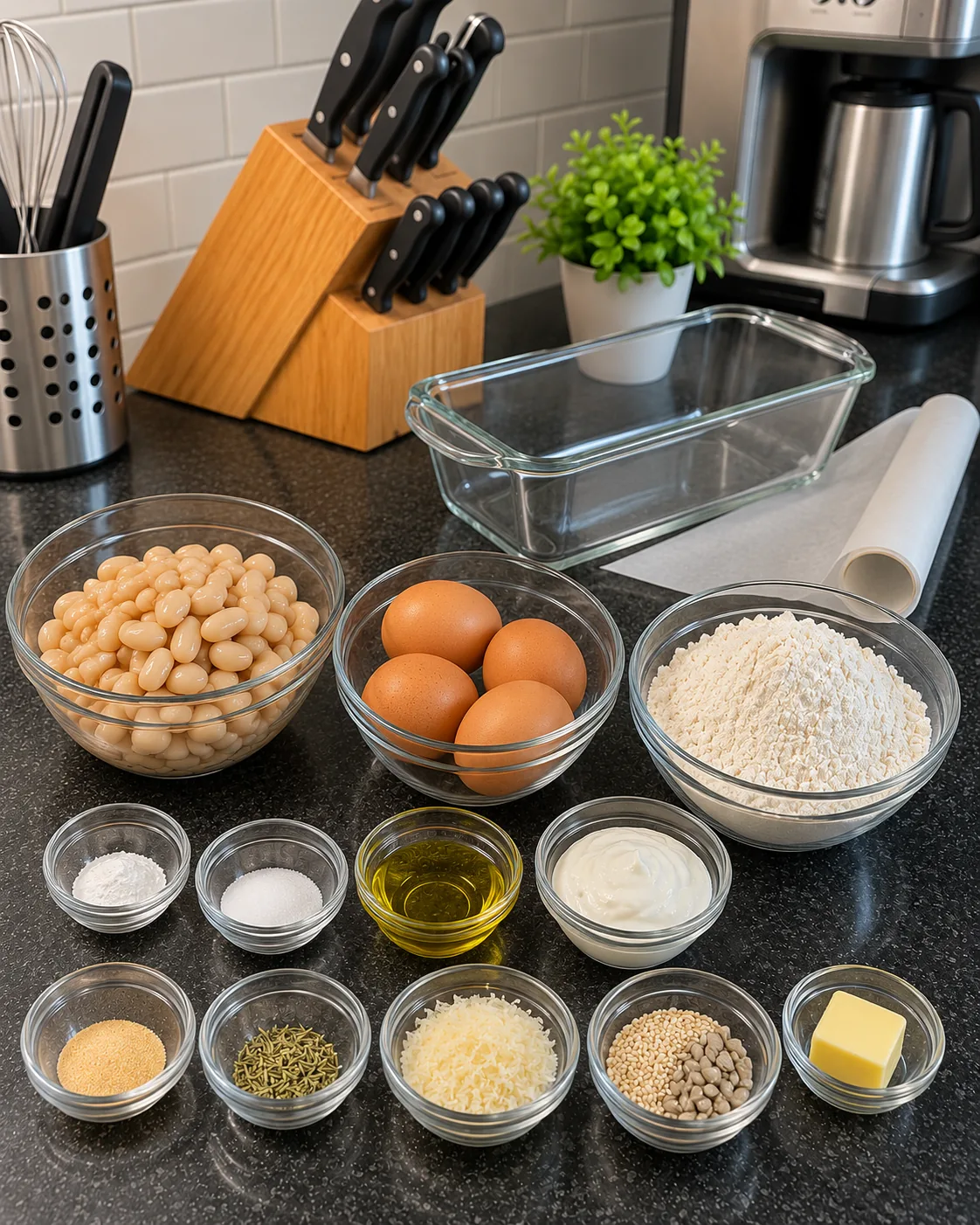
- 2 1/2 cups cooked Great Northern beans, drained and rinsed — Rinse thoroughly and pat dry. Excess surface liquid is the main threat to a sliceable center.
- 4 large eggs — Separate yolks and whites for the three-ingredient method; beaten whites help lift the thick batter.
- 1 1/2 cups all-purpose flour or oat flour — All-purpose flour gives sturdier slices; oat flour gives a more tender, fragile loaf.
Optional Additions
- 2 teaspoons baking powder for a lighter loaf — Mix into the flour before folding it into the bean puree.
- 1/2 teaspoon fine sea salt — Adds flavor to otherwise mild beans; reduce other salt if using the flaky topping.
- 1 tablespoon olive oil for extra moisture — Blend with the beans and yolks to soften the crumb.
- 2 tablespoons plain Greek yogurt for extra softness — Use thick yogurt and blend it into the wet ingredients.
- 1/2 teaspoon garlic powder for a savory flavor — Whisk into the flour to distribute the seasoning evenly.
- 1 teaspoon dried rosemary or thyme — Crush large leaves lightly before adding them to the dry ingredients.
- 1/4 cup grated Parmesan cheese for extra flavor — Fold through the batter before the egg whites; it also adds saltiness.
Optional Topping
- 1 large egg, beaten for egg wash — This is a fifth egg, separate from the four eggs in the bread; brush it on before baking.
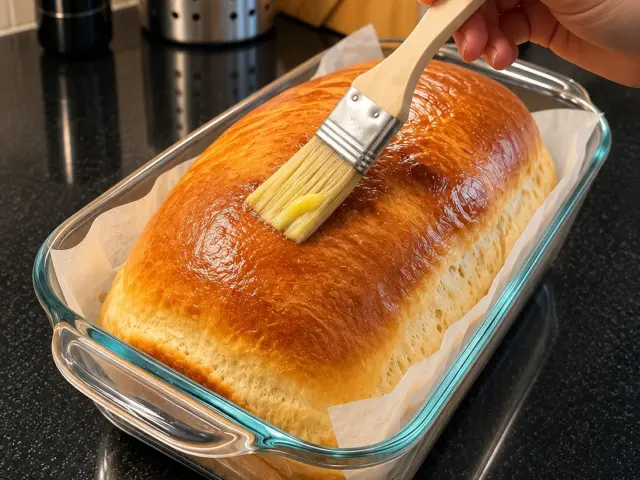
- 1 tablespoon melted butter for a golden crust — Brush over the warm loaf after baking, not into the raw batter.
- 1 tablespoon white sesame seeds — Scatter over the egg wash or press lightly into the raw batter.
- 1 tablespoon sunflower seeds — Spread thinly so the seeds adhere and do not shed when sliced.
- 1 teaspoon flaky sea salt — Use sparingly on top, particularly if Parmesan or fine salt is added.
Ingredient Notes and Substitutions
Great Northern beans have a mild taste, but their moisture varies. Drain canned beans completely, rinse away the canning liquid, and pat them dry before measuring the full 2 1/2 cups. Home-cooked beans should be tender and cooled.
The four eggs in the bread are distinct from the optional beaten egg for egg wash. If you skip the topping, you need only four eggs. Separating and whipping the base eggs improves lift without adding another ingredient.
All-purpose flour and oat flour are alternatives, not equal-texture substitutes. All-purpose flour generally gives neater slices. Oat flour may make a softer, slightly crumbly loaf, so cool it completely and use a careful serrated-knife cut.
The optional baking powder creates more predictable rise but makes the formula four ingredients. The plain three-ingredient loaf relies on air incorporated into the egg whites and may bake a little lower. Either version should be fully cooked at the center.
Olive oil and Greek yogurt are optional ways to tenderize the loaf. Avoid adding extra water to the batter. Garlic powder, herbs, and Parmesan can be used together for a savory version, but taste the salt level of the cheese before choosing the full amount of added salt.
An egg wash and seeds change only the crust, while melted butter is brushed on after baking. The reference image shows a plain top; omit the optional finish if you want the photographed look.
Instructions — Detailed Preparation
Step 1: Prepare the pan and oven
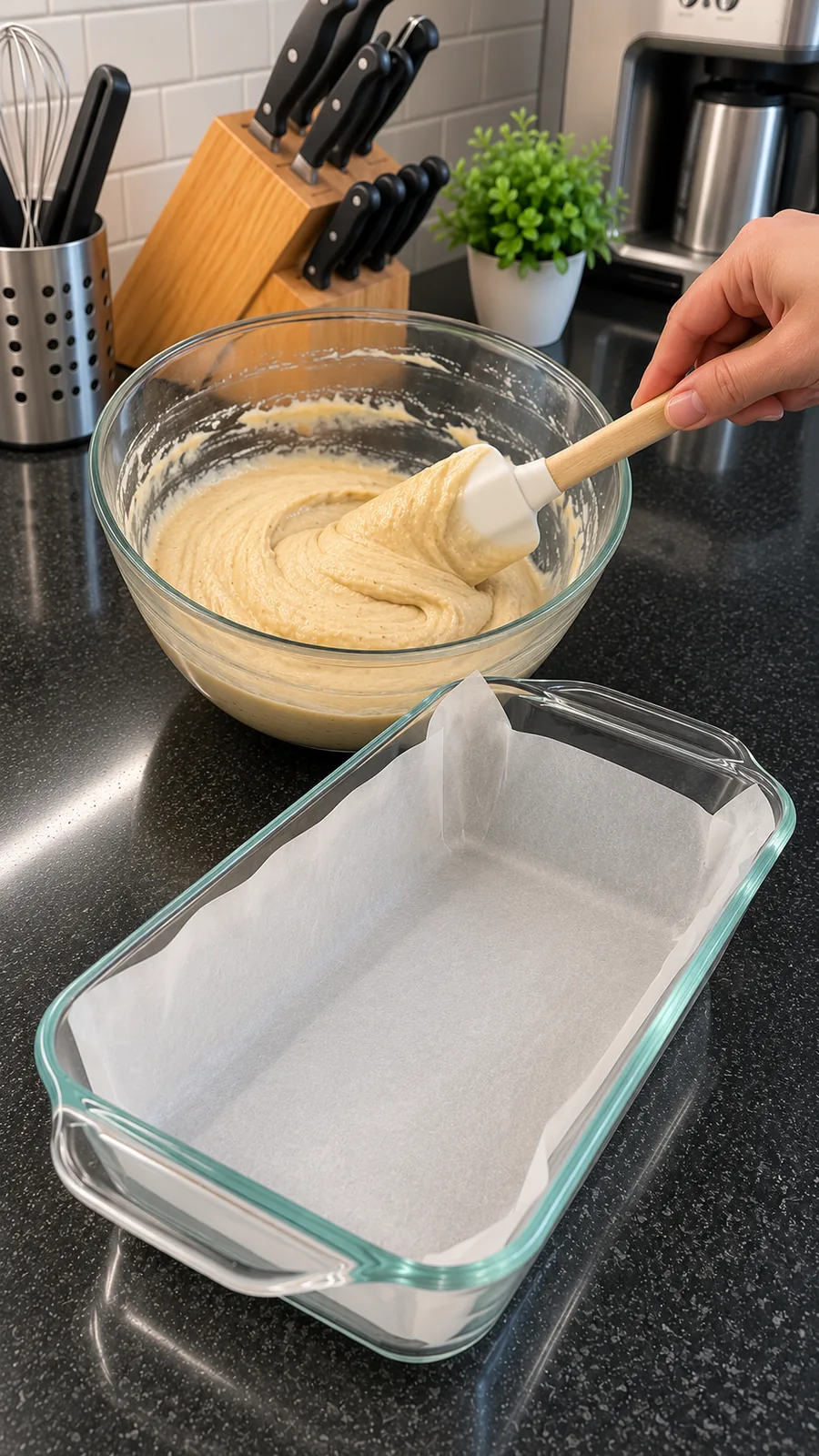
Heat the oven to 350°F (175°C). Line a 9-by-5-inch loaf pan with parchment, leaving handles of paper at the long sides so the baked loaf can be lifted out. Set a wire rack nearby for cooling. The photo shows a clear glass loaf pan; a metal pan also works, though browning may differ. Make sure the parchment lies flat enough that it will not fold into the batter.
Step 2: Drain and puree the beans
Measure 2 1/2 cups cooked Great Northern beans after draining and rinsing them. Pat them dry with a clean towel so liquid does not thin the batter. Separate the 4 large eggs, reserving the whites in a spotless bowl. Add the four yolks to a food processor with the beans and process until smooth, scraping down the bowl. If using 1 tablespoon olive oil for extra moisture or 2 tablespoons plain Greek yogurt for extra softness, blend either or both into this puree now.
Step 3: Whisk the flour and optional seasonings
Place 1 1/2 cups all-purpose flour or oat flour in a large mixing bowl. If using the optional 2 teaspoons baking powder for a lighter loaf, whisk it in thoroughly. Add the optional 1/2 teaspoon fine sea salt, 1/2 teaspoon garlic powder for a savory flavor, and 1 teaspoon dried rosemary or thyme if desired. Stirring these through the flour first prevents pockets of seasoning or baking powder in the finished loaf.
Step 4: Form a thick batter
Scrape the smooth bean-yolk mixture into the flour and fold until no dry streaks remain. If using 1/4 cup grated Parmesan cheese for extra flavor, fold it in now. The mixture should be thick enough to mound on a spatula but soft enough to spread in the pan. Do not beat the flour mixture aggressively; excessive mixing can toughen an all-purpose-flour loaf. Do not add water to make it pourable.
Step 5: Whip and fold the egg whites
Beat the reserved whites from the 4 large eggs with a hand mixer or clean whisk until they reach soft to medium peaks. Stir about one-third into the thick batter to loosen it. Fold in the rest in two additions, lifting from the bottom and turning the bowl. Stop as soon as no large white pockets remain. The trapped air is particularly helpful when you omit optional baking powder.
Step 6: Fill and optionally top the loaf
Spoon the batter into the parchment-lined pan and smooth the top gently. For the plain photographed finish, bake it as it is. If using the optional topping, use 1 large egg, beaten for egg wash, in addition to the four eggs in the loaf, and brush a thin coat over the surface. Sprinkle on 1 tablespoon white sesame seeds, 1 tablespoon sunflower seeds, and up to 1 teaspoon flaky sea salt. If skipping egg wash but using seeds, press them very lightly into the batter.
Step 7: Bake until the center is set
Bake at 350°F (175°C) for about 50 to 65 minutes, starting to check around 50 minutes. The top should be golden and naturally cracked, and a skewer inserted into the middle should come out without wet batter. If you use a food thermometer, the center should be about 200–205°F (93–96°C). If the top browns too quickly, tent loosely with foil and continue baking. Oat flour or wetter beans may extend the baking time.
Step 8: Cool, brush if desired, and slice
Let the bread rest in its pan for 15 minutes, then lift it out by the parchment and cool completely on the wire rack, at least 45 to 60 minutes longer. If using the optional 1 tablespoon melted butter for a golden crust, brush the warm top just after lifting the loaf out. Wait until the center has cooled before slicing with a serrated knife. This rest helps the bean-rich crumb set into cleaner sandwich slices.
Expert Tips
- Measure the beans after draining, rinsing, and patting dry. Wet beans make the batter looser than the recipe intends.
- Use a processor to puree the beans thoroughly before flour goes in. Large bean skins create uneven pockets in the crumb.
- Keep the egg-white bowl free of oil and yolk. A clean bowl helps the whites hold air.
- Whip to soft or medium peaks, not stiff dry clumps. Flexible whites fold into the bean batter more easily.
- Fold flour only until combined, and fold egg whites gently. Both choices help the loaf stay as light as this bean-rich formula allows.
- Check the center with a skewer, not just the crust color. A loaf can brown well before the middle has set.
- Use all-purpose flour for sandwiches that need sturdier slices; choose oat flour when a tender texture matters more than firm structure.
- Cool the loaf fully before cutting and toast slices lightly if you want a firmer surface for spreads.
Common Mistakes
Leaving the beans wet is the most common route to a gummy center. Rinsing is helpful, but it must be followed by thorough draining and drying. If using home-cooked beans, let them cool and drain before measuring. Adding water to the processor makes the batter easier to blend but undermines the sliceable texture.
Skipping the egg-white step in the strict three-ingredient version can produce a dense loaf. The whites add air without another ingredient. Beat them in a clean bowl, fold them in late, and do not stir vigorously afterward. Optional baking powder improves reliability but is a separate, fourth ingredient.
Mistaking a dark crust for a cooked center can lead to a wet slice. Test the middle and tent with foil if needed. The loaf also needs a full cooling period; hot bean bread often seems sticky or compressed even when it has baked correctly. Resist slicing as soon as it leaves the pan.
Adding the optional topping at the wrong time can cause problems. Egg wash, sesame seeds, sunflower seeds, and flaky salt go on before baking; melted butter is brushed on after baking. A thick egg wash can pool at the edges, and too many seeds can fall off after cutting, so keep both light.
Serving Ideas
Use fully cooled slices for sandwiches with egg, avocado, turkey, roasted vegetables, or a thick hummus spread. The mild Great Northern bean flavor lets other ingredients stand out. If you included garlic, herbs, and Parmesan, savory fillings will feel especially natural. A light toast can help the surface support a moist filling without tearing.
At breakfast, toast a slice and top it with a soft egg, cottage cheese, or a little butter. The seeded version offers a nuttier bite, while the plain version is versatile enough for a simple jam if you omitted savory additions. Cut the slices at a moderate thickness; very thin pieces of oat-flour loaf can be fragile.
The bread also works alongside soup or a salad. Serve a toasted slice on the side instead of leaving it in hot liquid, which may soften a bean-rich crumb quickly. For a small appetizer, cut cooled slices into squares, toast them, and add a savory spread immediately before serving.
Storage and Freezing
Cool the loaf completely, then wrap it tightly or keep it in an airtight container in the refrigerator for up to 4 days. The bread contains cooked beans and eggs, so refrigerated storage is more appropriate than leaving it on the counter for several days. If you plan to use one slice at a time, place parchment between slices to make separation easy.
For longer storage, freeze fully cooled slices with parchment between them in a freezer-safe bag for up to 2 months. Toast a slice directly from frozen or thaw it covered in the refrigerator before warming. Oat-flour slices may be softer after thawing, so handle them gently. Do not wrap warm bread: trapped steam creates condensation and a damp crust.
FAQ
How is this different from the other Great Northern bean bread?
This loaf uses 1 1/2 cups flour as the third required ingredient. The earlier bean loaf uses baking powder as its third required ingredient. Their structure and ingredient lists are therefore different even though both use Great Northern beans and eggs.
Is it really a three-ingredient recipe?
Yes, the base is cooked Great Northern beans, four eggs, and all-purpose or oat flour. Every item under Optional Additions and Optional Topping increases the ingredient count if used.
Can canned Great Northern beans be used?
Yes. Drain and rinse them thoroughly, pat dry, then measure 2 1/2 cups. Canning liquid left on the beans can make the loaf gummy.
Does the loaf need baking powder to rise?
No. Whipped egg whites give the plain version modest lift, though it will be denser than the optional version with 2 teaspoons baking powder.
Can I use oat flour instead of all-purpose flour?
Yes, oat flour is listed as an alternative. Expect a softer, potentially more delicate slice and let the bread cool completely before cutting.
When do I use the extra egg and melted butter?
The optional fifth egg is beaten and brushed on before baking as an egg wash. The optional 1 tablespoon melted butter is brushed on the warm loaf after baking.
Why is the center still wet after the top browns?
Beans that were not dried, an overly short bake, or a pan that browns the crust quickly can all contribute. Tent the top and continue baking until a center skewer has no wet batter, then cool fully.
Conclusion
Great Northern Bean Sandwich Bread with Flour and Eggs is a flour-based bean loaf with a mild taste and a sliceable crumb. Dry the cooked beans, puree them smoothly, use whipped whites for lift, and bake until the center sets. Choose all-purpose flour for firmer sandwiches or oat flour for a more tender slice. Optional savory additions and a seeded finish can dress it up, but the simple three-ingredient loaf remains a useful, flexible starting point.
Print
Great Northern Bean Sandwich Bread with Flour and Eggs
- Prep Time: 20 minutes
- Cook Time: 55 minutes
- Total Time: 2 hours 15 minutes
- Yield: 1 loaf (12 slices) 1x
- Category: Sourdough
- Method: Baking
Description
A sliceable Great Northern bean sandwich loaf made from cooked beans, eggs, and flour, with optional savory seasonings and a seeded finish.
Ingredients
- 2 1/2 cups cooked Great Northern beans, drained and rinsed
- 4 large eggs
- 1 1/2 cups all-purpose flour or oat flour
- 2 teaspoons baking powder for a lighter loaf
- 1/2 teaspoon fine sea salt
- 1 tablespoon olive oil for extra moisture
- 2 tablespoons plain Greek yogurt for extra softness
- 1/2 teaspoon garlic powder for a savory flavor
- 1 teaspoon dried rosemary or thyme
- 1/4 cup grated Parmesan cheese for extra flavor
- 1 large egg, beaten for egg wash
- 1 tablespoon melted butter for a golden crust
- 1 tablespoon white sesame seeds
- 1 tablespoon sunflower seeds
- 1 teaspoon flaky sea salt
Instructions
Step 1 Heat the oven to 350°F (175°C). Line a 9-by-5-inch loaf pan with parchment, leaving handles of paper at the long sides so the baked loaf can be lifted out. Set a wire rack nearby for cooling. The photo shows a clear glass loaf pan; a metal pan also works, though browning may differ. Make sure the parchment lies flat enough that it will not fold into the batter.
Step 2 Measure 2 1/2 cups cooked Great Northern beans after draining and rinsing them. Pat them dry with a clean towel so liquid does not thin the batter. Separate the 4 large eggs, reserving the whites in a spotless bowl. Add the four yolks to a food processor with the beans and process until smooth, scraping down the bowl. If using 1 tablespoon olive oil for extra moisture or 2 tablespoons plain Greek yogurt for extra softness, blend either or both into this puree now.
Step 3 Place 1 1/2 cups all-purpose flour or oat flour in a large mixing bowl. If using the optional 2 teaspoons baking powder for a lighter loaf, whisk it in thoroughly. Add the optional 1/2 teaspoon fine sea salt, 1/2 teaspoon garlic powder for a savory flavor, and 1 teaspoon dried rosemary or thyme if desired. Stirring these through the flour first prevents pockets of seasoning or baking powder in the finished loaf.
Step 4 Scrape the smooth bean-yolk mixture into the flour and fold until no dry streaks remain. If using 1/4 cup grated Parmesan cheese for extra flavor, fold it in now. The mixture should be thick enough to mound on a spatula but soft enough to spread in the pan. Do not beat the flour mixture aggressively; excessive mixing can toughen an all-purpose-flour loaf. Do not add water to make it pourable.
Step 5 Beat the reserved whites from the 4 large eggs with a hand mixer or clean whisk until they reach soft to medium peaks. Stir about one-third into the thick batter to loosen it. Fold in the rest in two additions, lifting from the bottom and turning the bowl. Stop as soon as no large white pockets remain. The trapped air is particularly helpful when you omit optional baking powder.
Step 6 Spoon the batter into the parchment-lined pan and smooth the top gently. For the plain photographed finish, bake it as it is. If using the optional topping, use 1 large egg, beaten for egg wash, in addition to the four eggs in the loaf, and brush a thin coat over the surface. Sprinkle on 1 tablespoon white sesame seeds, 1 tablespoon sunflower seeds, and up to 1 teaspoon flaky sea salt. If skipping egg wash but using seeds, press them very lightly into the batter.
Step 7 Bake at 350°F (175°C) for about 50 to 65 minutes, starting to check around 50 minutes. The top should be golden and naturally cracked, and a skewer inserted into the middle should come out without wet batter. If you use a food thermometer, the center should be about 200–205°F (93–96°C). If the top browns too quickly, tent loosely with foil and continue baking. Oat flour or wetter beans may extend the baking time.
Step 8 Let the bread rest in its pan for 15 minutes, then lift it out by the parchment and cool completely on the wire rack, at least 45 to 60 minutes longer. If using the optional 1 tablespoon melted butter for a golden crust, brush the warm top just after lifting the loaf out. Wait until the center has cooled before slicing with a serrated knife. This rest helps the bean-rich crumb set into cleaner sandwich slices.
Notes
Use exactly three distinct WebP images; reuse the featured media ID for the Tasty card. Cool the loaf completely, then wrap it tightly or keep it in an airtight container in the refrigerator for up to 4 days. The bread contains cooked beans and eggs, so refrigerated storage is more appropriate than leaving it on the counter for several days. If you plan to use one slice at a time, place parchment between slices to make separation easy. For longer storage, freeze fully cooled slices with parchment between them in a freezer-safe bag for up to 2 months. Toast a slice directly from frozen or thaw it covered in the refrigerator before warming. Oat-flour slices may be softer after thawing, so handle them gently. Do not wrap warm bread: trapped steam creates condensation and a damp crust.