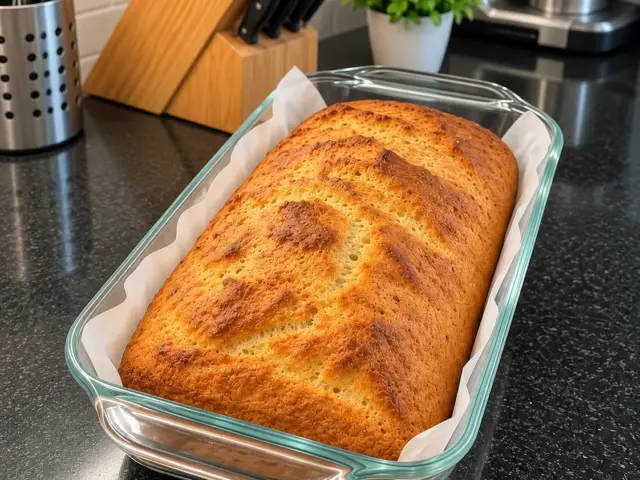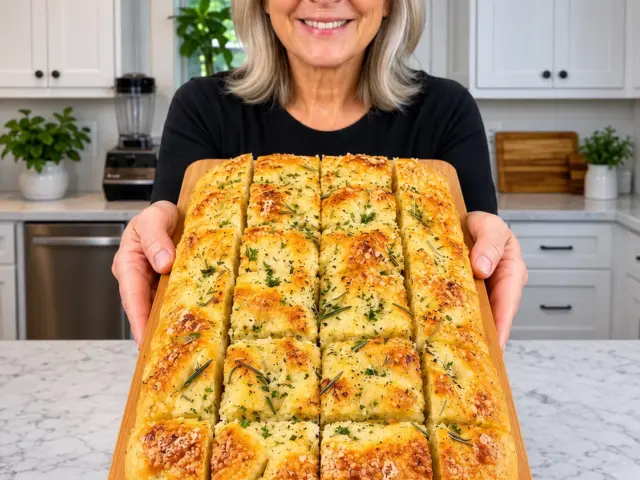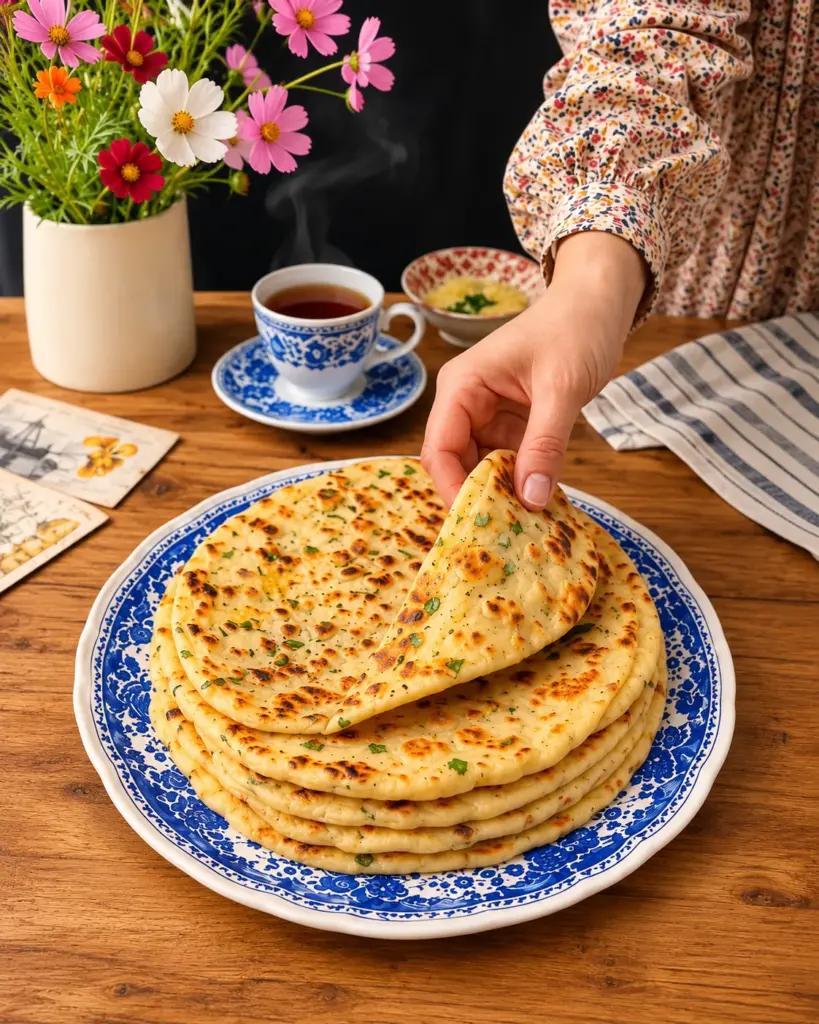
Potato bazlama is a soft skillet flatbread enriched with cooled mashed potatoes. The dough rises until puffy, then cooks in a hot pan to develop golden brown spots and a tender interior. A garlic herb butter brushed over the warm rounds makes them especially fragrant. Serve a stack with tea, breakfast eggs, soup, or a hearty savory meal.
Mashed potatoes keep this yeasted flatbread soft and pliable. The rounds are cooked one by one in a skillet, so there is no oven baking. A short rise and a hot pan produce the signature browned spots and tender centers. This guide covers ingredients, substitutions, detailed preparation, common mistakes, serving ideas, and storage so you can make Potato Bazlama with confidence.
Why You’ll Love This Recipe
Plain, cooled mashed potatoes add a gentle potato flavor and help retain moisture. Olive oil softens the dough, while a modest amount of sugar helps the yeast begin working. The garlic herb butter is brushed on after cooking so parsley and chives stay bright and the garlic does not burn in the pan. The recipe is flexible enough for a weeknight meal and distinctive enough to share. Each ingredient has a clear job, and the method relies on visible cues as well as a clock. You can make the base recipe as written or choose a few of the optional additions without changing the fundamental method.
Because this flatbread is savory, it works at breakfast, lunch, and dinner. You can serve it warm, toast leftovers, and freeze individual portions for another day. The practical steps below make it easy to recognize the right texture before the bread is cooked and to avoid a damp or dense center.
Ingredients
For the Dough
- 3 cups all purpose flour: All purpose flour contributes flavor, texture, or the finishing appearance. Measure it before mixing and use the specified amount for the intended balance.
- 1 cup warm milk: Warm milk contributes flavor, texture, or the finishing appearance. Measure it before mixing and use the specified amount for the intended balance.
- 1/2 cup warm water: Warm water contributes flavor, texture, or the finishing appearance. Measure it before mixing and use the specified amount for the intended balance.
- 2 1/4 teaspoons instant yeast: Teaspoons instant yeast contributes flavor, texture, or the finishing appearance. Measure it before mixing and use the specified amount for the intended balance.
- 1 teaspoon granulated sugar: Granulated sugar contributes flavor, texture, or the finishing appearance. Measure it before mixing and use the specified amount for the intended balance.
- 1 teaspoon fine sea salt: Fine sea salt contributes flavor, texture, or the finishing appearance. Measure it before mixing and use the specified amount for the intended balance.
- 2 tablespoons olive oil: Olive oil contributes flavor, texture, or the finishing appearance. Measure it before mixing and use the specified amount for the intended balance.
- 1 cup mashed potatoes cooled: Mashed potatoes cooled contributes flavor, texture, or the finishing appearance. Measure it before mixing and use the specified amount for the intended balance.
Optional Additions
- 1/2 teaspoon garlic powder: Garlic powder contributes flavor, texture, or the finishing appearance. Measure it before mixing and use the specified amount for the intended balance.
- 1 teaspoon dried oregano or thyme: Dried oregano or thyme contributes flavor, texture, or the finishing appearance. Measure it before mixing and use the specified amount for the intended balance.
- 2 tablespoons plain Greek yogurt: Plain greek yogurt contributes flavor, texture, or the finishing appearance. Measure it before mixing and use the specified amount for the intended balance.
- 1/4 cup grated Parmesan cheese: Grated parmesan cheese contributes flavor, texture, or the finishing appearance. Measure it before mixing and use the specified amount for the intended balance.
- 1/2 teaspoon freshly ground black pepper: Freshly ground black pepper contributes flavor, texture, or the finishing appearance. Measure it before mixing and use the specified amount for the intended balance.
- 1 tablespoon fresh parsley finely chopped: Fresh parsley finely chopped contributes flavor, texture, or the finishing appearance. Measure it before mixing and use the specified amount for the intended balance.
For the Garlic Herb Butter Topping
- 3 tablespoons unsalted butter melted: Unsalted butter melted contributes flavor, texture, or the finishing appearance. Measure it before mixing and use the specified amount for the intended balance.
- 2 cloves garlic finely minced: Garlic finely minced contributes flavor, texture, or the finishing appearance. Measure it before mixing and use the specified amount for the intended balance.
- 2 tablespoons fresh parsley chopped: Fresh parsley chopped contributes flavor, texture, or the finishing appearance. Measure it before mixing and use the specified amount for the intended balance.
- 1 tablespoon fresh chives finely chopped: Fresh chives finely chopped contributes flavor, texture, or the finishing appearance. Measure it before mixing and use the specified amount for the intended balance.
- 1/2 teaspoon dried oregano: Dried oregano contributes flavor, texture, or the finishing appearance. Measure it before mixing and use the specified amount for the intended balance.
- 1/4 teaspoon flaky sea salt: Flaky sea salt contributes flavor, texture, or the finishing appearance. Measure it before mixing and use the specified amount for the intended balance.
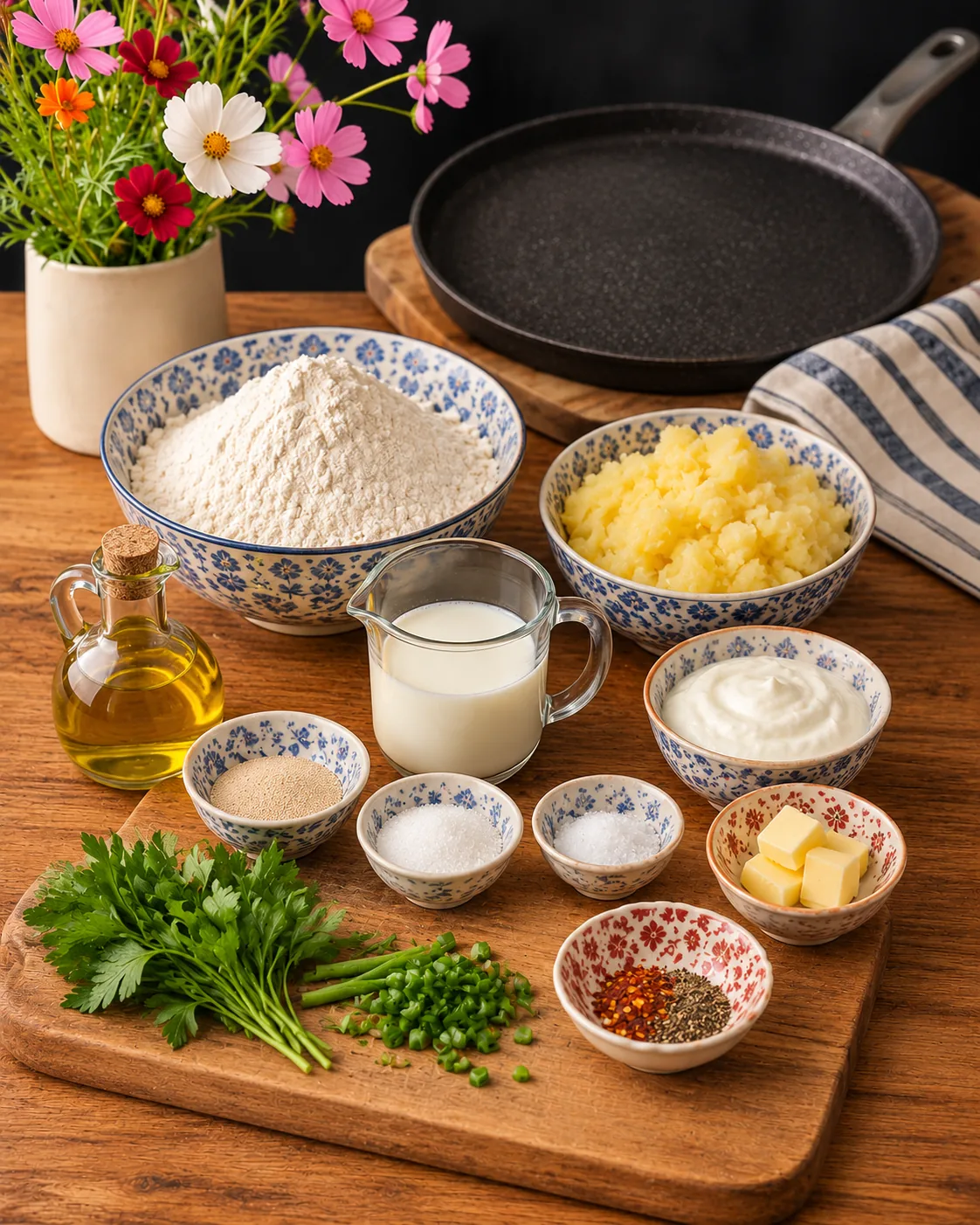
Ingredient Notes and Substitutions
Plain, cooled mashed potatoes add a gentle potato flavor and help retain moisture. Olive oil softens the dough, while a modest amount of sugar helps the yeast begin working. The garlic herb butter is brushed on after cooking so parsley and chives stay bright and the garlic does not burn in the pan. Measure flour by spooning it into the cup and leveling it, rather than pressing it down. Keep the wet ingredients at a moderate temperature so they mix evenly. Fresh herbs should be chopped shortly before use, then patted dry if they were just washed. Dry herbs and spices are more concentrated; begin with the listed quantity.
The optional additions are choices, not a requirement to use all of them at once. Select one or two if you want a stronger cheese or herb flavor. If a dairy product looks particularly wet, drain excess liquid briefly. A very wet mixture can demand extra cooking time and leave the center heavy. Keep the topping separate until the moment described in the instructions.
For the best texture, keep the proportions of the principal flour and liquid ingredients as written. Swapping every dairy product at once can change thickness, acidity, and browning. If you do make a substitution, watch the mixture itself: it should match the texture described in the preparation steps. A small variation in brand or room temperature is normal.
Instructions — Detailed Preparation
Step 1: Wake the yeast
Combine the warm milk, warm water, instant yeast, and granulated sugar. The liquids should feel warm but never hot. Leave for 5 minutes while you gather the flour.
Step 2: Mix the dough
Mix the all purpose flour, fine sea salt, olive oil, and mashed potatoes cooled with the yeast mixture. If using garlic powder, dried oregano or thyme, plain Greek yogurt, grated Parmesan cheese, freshly ground black pepper, or fresh parsley finely chopped, add them now. Stir into a shaggy dough.
Step 3: Knead and rise
Knead the dough for 6 to 8 minutes until smooth and slightly tacky, adding only a dusting of flour if needed. Cover and let rise until doubled, about 60 to 75 minutes in a warm room.
Step 4: Divide and rest
Divide into eight pieces, roll each into a ball, and cover for 10 minutes. Roll into rounds about 1/4 inch thick. Keep the uncooked rounds covered so they do not dry out.
Step 5: Cook in the skillet
Heat a dry heavy skillet over medium heat, about 350°F (175°C) on an electric skillet. Cook each round for 2 to 3 minutes per side until puffed and golden with brown spots. Adjust the heat if spots darken before the center cooks.
Step 6: Finish with garlic herb butter
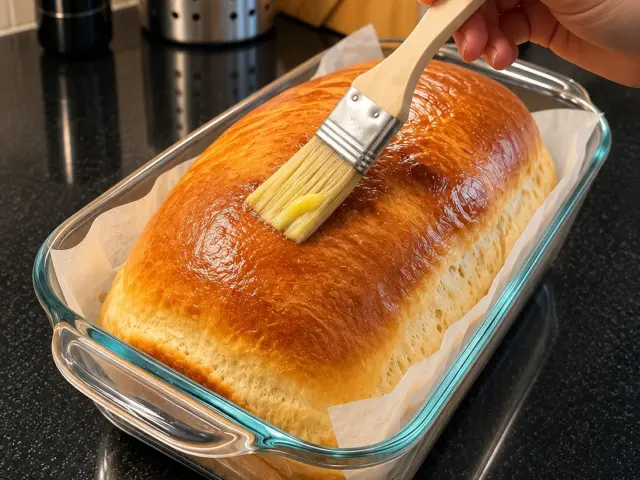
Mix the unsalted butter melted, garlic finely minced, fresh parsley chopped, fresh chives finely chopped, dried oregano, and flaky sea salt. Brush over the warm bazlama and stack under a towel to keep soft.
Expert Tips
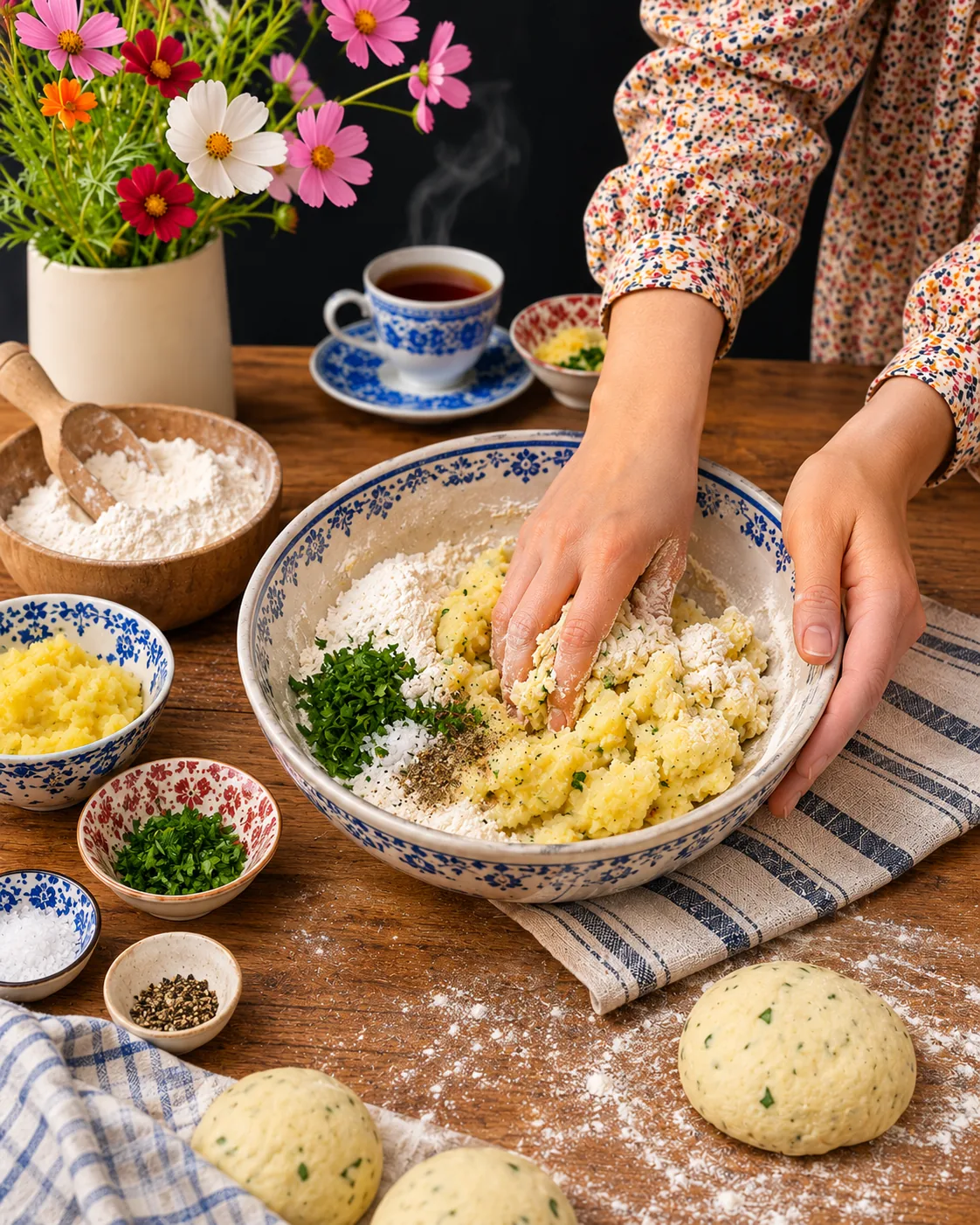
Mix warm milk and warm water with instant yeast and sugar, then add flour, salt, oil, and cooled mashed potatoes. Knead until smooth and slightly tacky, let rise until doubled, and divide into six to eight pieces. Roll into rounds, rest briefly, and cook on a medium-hot dry skillet until puffed and browned on both sides. Brush with garlic herb butter while warm. Take time to prepare the pan, tools, and toppings before mixing. That keeps the process calm and prevents the mixture from sitting too long. Use fresh leaveners or yeast, as appropriate, and measure the salt instead of guessing. The most useful cue is the texture of the mixture and the final cooked center, not the color of the outside alone.
Keep each portion an even thickness so it cooks at the same rate. If the surface colors faster than the center, adjust heat or use a loose foil tent as the method calls for. Allow the bread to cool enough to set before cutting. A serrated knife and gentle sawing motion help protect a soft crumb. For a polished finish, distribute herbs and seeds evenly so every serving has some.
Common Mistakes
Too much flour: Scooping directly from the bag compresses flour and changes the balance. Spoon and level or use a scale. Too much moisture: Wet dairy or mashed potatoes can leave a heavy center; drain or cool them as directed. Rushing the cooking: A browned outside does not prove the middle is finished. Use the time and doneness cues in the detailed steps.
Overhandling: Once the mixture reaches its intended texture, unnecessary mixing makes the result tougher. Uneven topping: Clumps of garlic or herbs can brown too fast, so spread them lightly. Cutting too soon: The crumb continues to settle after cooking. Give it time before making neat slices or stacking the portions tightly.
Serving Ideas
Serve alongside hummus, yogurt dip, grilled vegetables, olives, or eggs. Fold warm rounds around cheese and herbs, or use them to scoop up stew. A stack stays soft under a clean towel until serving. For a simple meal, add a protein and fresh vegetables so the bread can be the flavorful centerpiece. Warm it just before serving to revive the aroma of garlic and herbs. If serving a crowd, arrange pieces on a board and keep a little topping or spread on the side.
Storage and Freezing
Cool completely and store airtight at room temperature for 1 day or refrigerate for up to 3 days. Freeze parchment-separated rounds for up to 2 months. Let the bread cool before wrapping it; trapped steam softens the crust and can make the surface sticky. Label frozen portions with the date and separate them with parchment so you can remove only what you need. Warm each flatbread in a dry skillet for 30 to 60 seconds per side, or wrap a stack in foil and heat at 325°F (165°C) until soft.
FAQ
Can I prepare Potato Bazlama ahead of time?
Yes. Cool completely and store airtight at room temperature for 1 day or refrigerate for up to 3 days. Freeze parchment-separated rounds for up to 2 months. Reheat only the portions you plan to eat so the remaining bread keeps its best texture.
How do I know when it is fully cooked?
Follow the timing in the method and check the center as well as the surface. A nicely browned crust can develop before the middle is set, especially if the pan or skillet is too hot.
Can I use all the optional additions?
You can, but the loaf or flatbread may become heavier and saltier. Start with one or two additions and preserve the main ingredient proportions.
Why is the texture dense?
The usual causes are too much flour, excess wet ingredients, old leavener, or overmixing. Measure carefully and follow the texture cues in the steps.
How should I reheat leftovers?
Warm each flatbread in a dry skillet for 30 to 60 seconds per side, or wrap a stack in foil and heat at 325°F (165°C) until soft.
Conclusion
Potato Bazlama is a flavorful homemade flatbread built from approachable ingredients. Mashed potatoes keep this yeasted flatbread soft and pliable. The rounds are cooked one by one in a skillet, so there is no oven baking. A short rise and a hot pan produce the signature browned spots and tender centers. Follow the measurements, watch the texture, and allow the bread to cool or rest before serving. You will have a reliable savory recipe for meals, snacks, and make-ahead portions.
Print
Potato Bazlama
- Prep Time: 20 minutes
- Cook Time: 25 minutes
- Total Time: 1 hour 45 minutes
- Yield: 8 flatbreads 1x
- Category: Sourdough
- Method: Baking
Description
Soft, golden Turkish-style potato flatbreads cooked in a skillet and finished with garlic herb butter.
Ingredients
- 3 cups all purpose flour
- 1 cup warm milk
- 1/2 cup warm water
- 2 1/4 teaspoons instant yeast
- 1 teaspoon granulated sugar
- 1 teaspoon fine sea salt
- 2 tablespoons olive oil
- 1 cup mashed potatoes cooled
- 1/2 teaspoon garlic powder
- 1 teaspoon dried oregano or thyme
- 2 tablespoons plain Greek yogurt
- 1/4 cup grated Parmesan cheese
- 1/2 teaspoon freshly ground black pepper
- 1 tablespoon fresh parsley finely chopped
- 3 tablespoons unsalted butter melted
- 2 cloves garlic finely minced
- 2 tablespoons fresh parsley chopped
- 1 tablespoon fresh chives finely chopped
- 1/2 teaspoon dried oregano
- 1/4 teaspoon flaky sea salt
Instructions
Step 1 Combine the warm milk, warm water, instant yeast, and granulated sugar. The liquids should feel warm but never hot. Leave for 5 minutes while you gather the flour.
Step 2 Mix the all purpose flour, fine sea salt, olive oil, and mashed potatoes cooled with the yeast mixture. If using garlic powder, dried oregano or thyme, plain Greek yogurt, grated Parmesan cheese, freshly ground black pepper, or fresh parsley finely chopped, add them now. Stir into a shaggy dough.
Step 3 Knead the dough for 6 to 8 minutes until smooth and slightly tacky, adding only a dusting of flour if needed. Cover and let rise until doubled, about 60 to 75 minutes in a warm room.
Step 4 Divide into eight pieces, roll each into a ball, and cover for 10 minutes. Roll into rounds about 1/4 inch thick. Keep the uncooked rounds covered so they do not dry out.
Step 5 Heat a dry heavy skillet over medium heat, about 350°F (175°C) on an electric skillet. Cook each round for 2 to 3 minutes per side until puffed and golden with brown spots. Adjust the heat if spots darken before the center cooks.
Step 6 Mix the unsalted butter melted, garlic finely minced, fresh parsley chopped, fresh chives finely chopped, dried oregano, and flaky sea salt. Brush over the warm bazlama and stack under a towel to keep soft.
Notes
Use the featured image once and reuse the same media ID in the Tasty card. Cool before storing. Cool completely and store airtight at room temperature for 1 day or refrigerate for up to 3 days. Freeze parchment-separated rounds for up to 2 months.