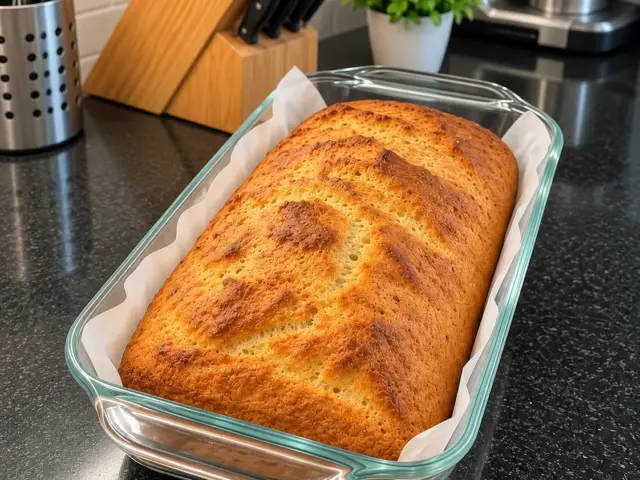
No-Knead Parmesan Herb Focaccia Bites turn one airy pan of bread into golden, savory pieces ready to pull apart or share. The dough is deliberately wet, so it can be mixed with a spoon instead of kneaded. While it rises, the flour hydrates and the yeast creates the airy pockets that make focaccia tender. Olive oil, garlic, Parmesan, rosemary, and parsley form the fragrant top, while melted butter brushed on after baking gives the edges a soft, rich finish.
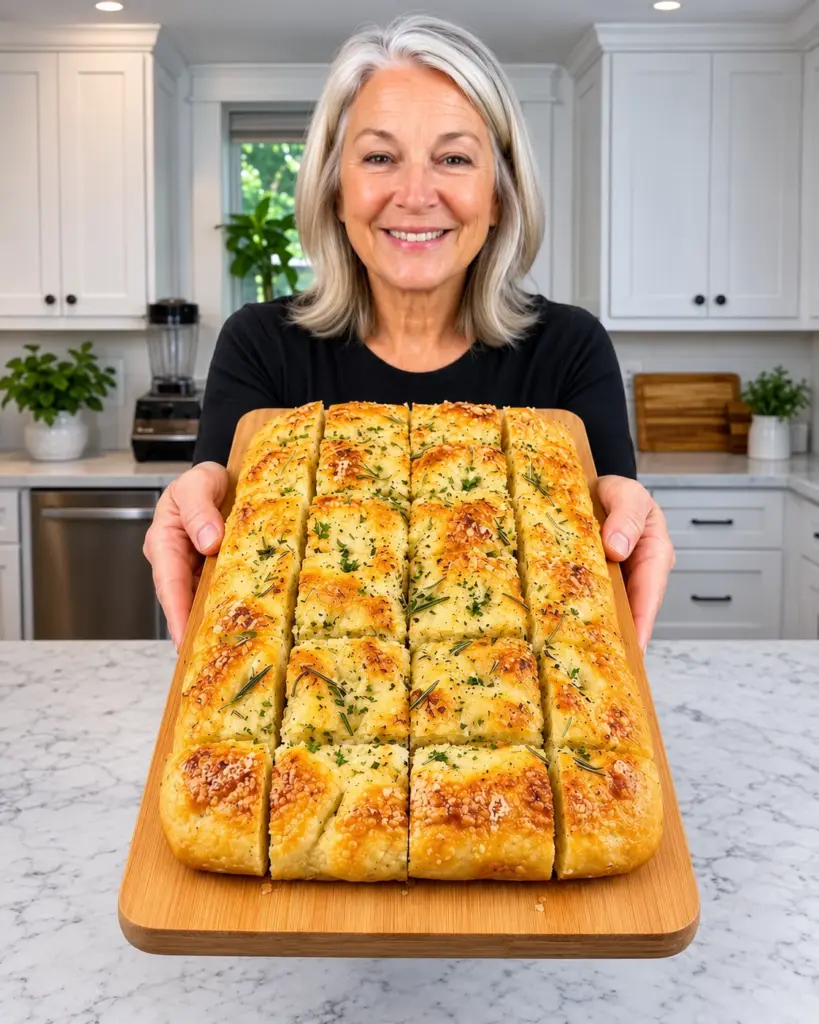
The reference photograph shows a rectangular focaccia slab cut into tidy bite-size portions, with a golden, dimpled surface and visible herb flecks. This recipe follows that idea: bake the dough as one sheet in a well-oiled rectangular pan, cool it briefly, then cut it into pieces. The pieces work as a snack, bread basket addition, or companion to soup and salad. There is no need to shape individual rolls, which keeps preparation simple.
Why You’ll Love This Recipe
The dough uses common pantry ingredients and comes together in one bowl. A spoon or spatula does the mixing, and the rise requires very little attention. The dough’s high moisture creates an open crumb when it has enough time to puff and a hot oven to set. A generous coating of olive oil helps the bottom and edges brown while keeping the center tender.
Parmesan brings a salty, nutty flavor to every bite. Rosemary supplies a distinctive aroma, parsley gives a fresh finish, and minced garlic adds savory depth. The toppings can be prepared while the dough rests, then pressed lightly into the dimples so they do not all slide off during baking. Cutting after baking keeps the interior soft and gives you neat, shareable portions without handling sticky raw dough repeatedly.
Ingredients
For the Dough
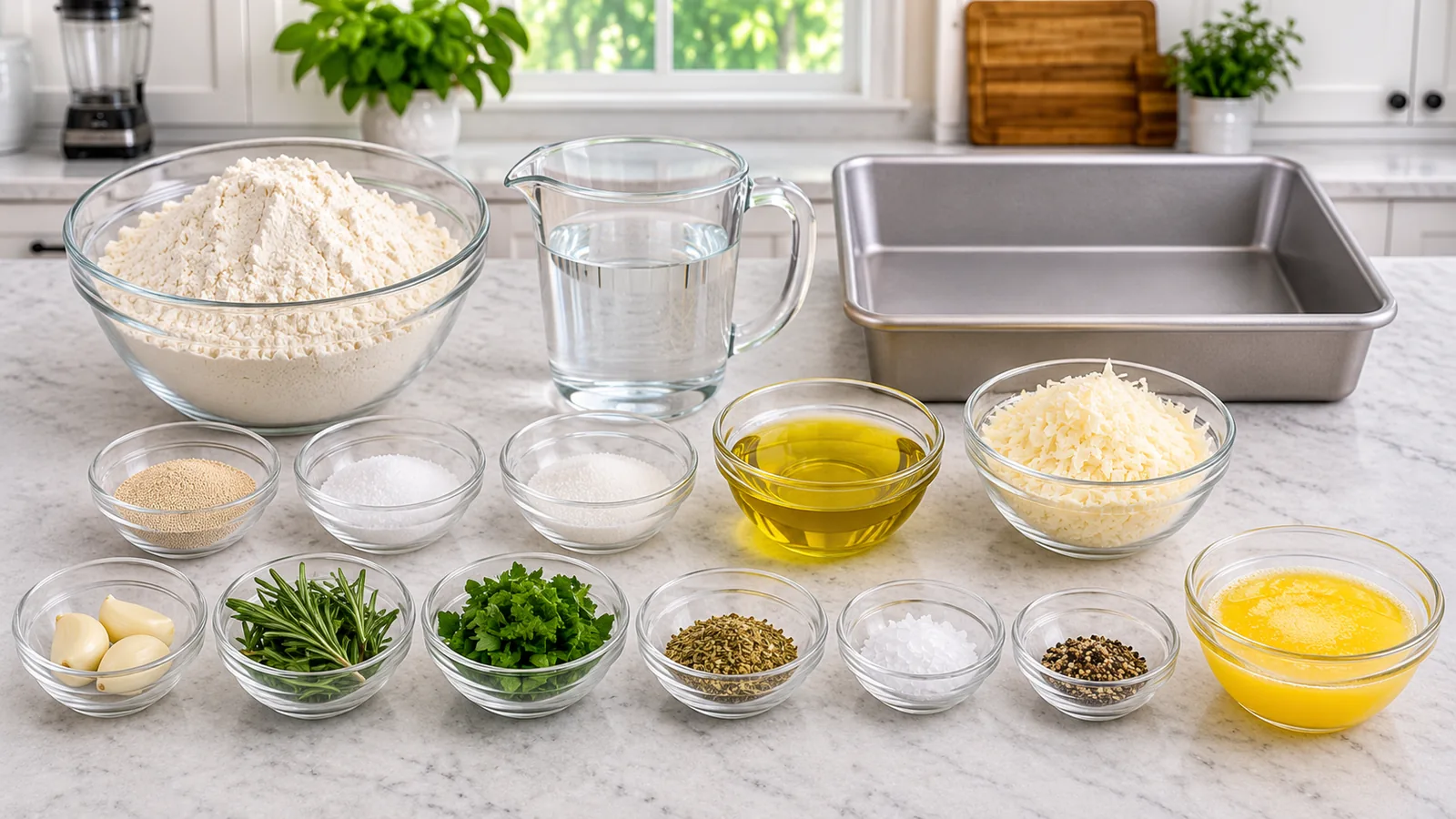
- 4 cups all-purpose flour or bread flour — Either flour works. Bread flour usually gives a slightly chewier structure, while all-purpose flour makes a softer bite. Measure without packing the cup.
- 2 cups warm water — Warm, not hot, water helps the yeast disperse. The high water amount makes a sticky dough, which is expected for this no-knead focaccia.
- 2 tsp instant yeast — Instant yeast can be mixed directly into the dry flour. Check its freshness if the dough does not rise within the suggested window.
- 2 tsp fine sea salt — Seasons the dough itself, not merely the top. Fine salt disperses readily during mixing.
- 1 tsp granulated sugar — Gives the yeast a modest early boost without making the bread sweet.
- 1/4 cup extra virgin olive oil — Mix into the dough for tenderness. Additional oil in the topping and pan helps create the familiar focaccia crust.
Optional Additions
- 1 tsp garlic powder for extra flavor — Mix into the flour for garlic flavor throughout the crumb.
- 1 tsp dried Italian seasoning — A convenient way to add a background herb note to the dough.
- 1/2 tsp dried oregano — Use for a stronger Mediterranean-style aroma.
- 1/4 cup shredded mozzarella cheese for extra cheesiness — Fold into the dough or sprinkle on just before baking; it produces soft melted pockets.
- 1 tbsp honey for a golden crust — Stir into the water if using. It adds a little sweetness and encourages browning.
- 1/2 tsp onion powder — Distributes a gentle onion flavor without adding wet onion pieces.
For the Parmesan Herb Topping
- 3 tbsp extra virgin olive oil — Spread over the risen dough and into its dimples for a glossy surface and crisp edges.
- 1/2 cup freshly grated Parmesan cheese — Grate finely so it distributes evenly and browns in small savory patches.
- 3 cloves garlic, finely minced — Small pieces disperse well; avoid large chunks that may brown too deeply.
- 2 tbsp fresh rosemary, chopped — Chop the leaves finely so each bite gets rosemary without woody pieces.
- 1 tbsp fresh parsley, finely chopped — Adds a fresh green note; a little can be reserved for after baking.
- 1 tsp dried Italian herbs — Sprinkle lightly so they season the entire pan without clumping.
- 1/2 tsp flaky sea salt — Use on the surface for a delicate salty crunch, bearing in mind that Parmesan is already salty.
- 1/4 tsp freshly ground black pepper — A small amount adds warmth without overpowering the herbs.
- 2 tbsp melted butter for brushing — Brush on the warm baked focaccia, particularly the cut edges, for a soft and buttery finish.
Ingredient Notes and Substitutions
This dough is much wetter than a kneaded sandwich loaf. Resist adding flour just to make it easy to handle. Mix until no dry flour remains, cover the bowl, and let time develop the structure. If the flour is especially absorbent, the dough may look a little firmer, but it should still be sticky and spreadable. Oil your hands rather than dusting them heavily when moving it into the pan.
All-purpose flour and bread flour are both listed. Bread flour often produces a chewier edge; all-purpose flour can be more tender. Freshly grated Parmesan melts and browns differently from shelf-stable powder, so use freshly grated cheese for the photographed finish. The garlic should be finely minced to spread across the surface. If the top darkens too fast, move the pan down a rack or loosely tent for the final minutes.
The optional additions are not all necessary. Choose a few that suit your meal. Garlic powder and onion powder season the crumb; mozzarella makes soft cheese pockets; honey changes browning slightly. These adjustments do not replace the listed main topping. For an especially crisp bottom, oil a metal pan thoroughly and let the oven preheat completely before baking.
Instructions — Detailed Preparation
Step 1: Mix the no-knead dough
In a large bowl whisk 4 cups all-purpose flour or bread flour with 2 tsp instant yeast, 2 tsp fine sea salt, and 1 tsp granulated sugar. Pour in 2 cups warm water and 1/4 cup extra virgin olive oil. Stir with a sturdy spoon or spatula until no dry flour remains. The mixture should be sticky and loose; do not try to knead it into a firm ball.
Step 2: Add optional dough flavors
If desired, stir in 1 tsp garlic powder for extra flavor, 1 tsp dried Italian seasoning, 1/2 tsp dried oregano, 1/4 cup shredded mozzarella cheese for extra cheesiness, 1 tbsp honey for a golden crust, or 1/2 tsp onion powder. Add honey with the warm water and fold mozzarella in at the end. Choose only the additions you want and avoid adding extra flour to compensate for the sticky texture.
Step 3: Let the dough rise
Cover the bowl and leave it in a draft-free place until puffy and roughly doubled, about 1 1/2 to 2 hours. A warmer kitchen may move faster, while a cool kitchen takes longer. Look for bubbles on the surface and along the sides of the bowl. This rise is doing the work that kneading would otherwise help accomplish.
Step 4: Prepare the pan and second rise
Coat a 9-by-13-inch metal pan generously with olive oil, taking a little from the 3 tbsp topping olive oil if convenient. Scrape the dough into the pan and use oiled fingertips to ease it toward the corners. Cover and rest 25 to 35 minutes until it looks airy again. Preheat the oven to 425°F (220°C) during this rest.
Step 5: Dimple and top
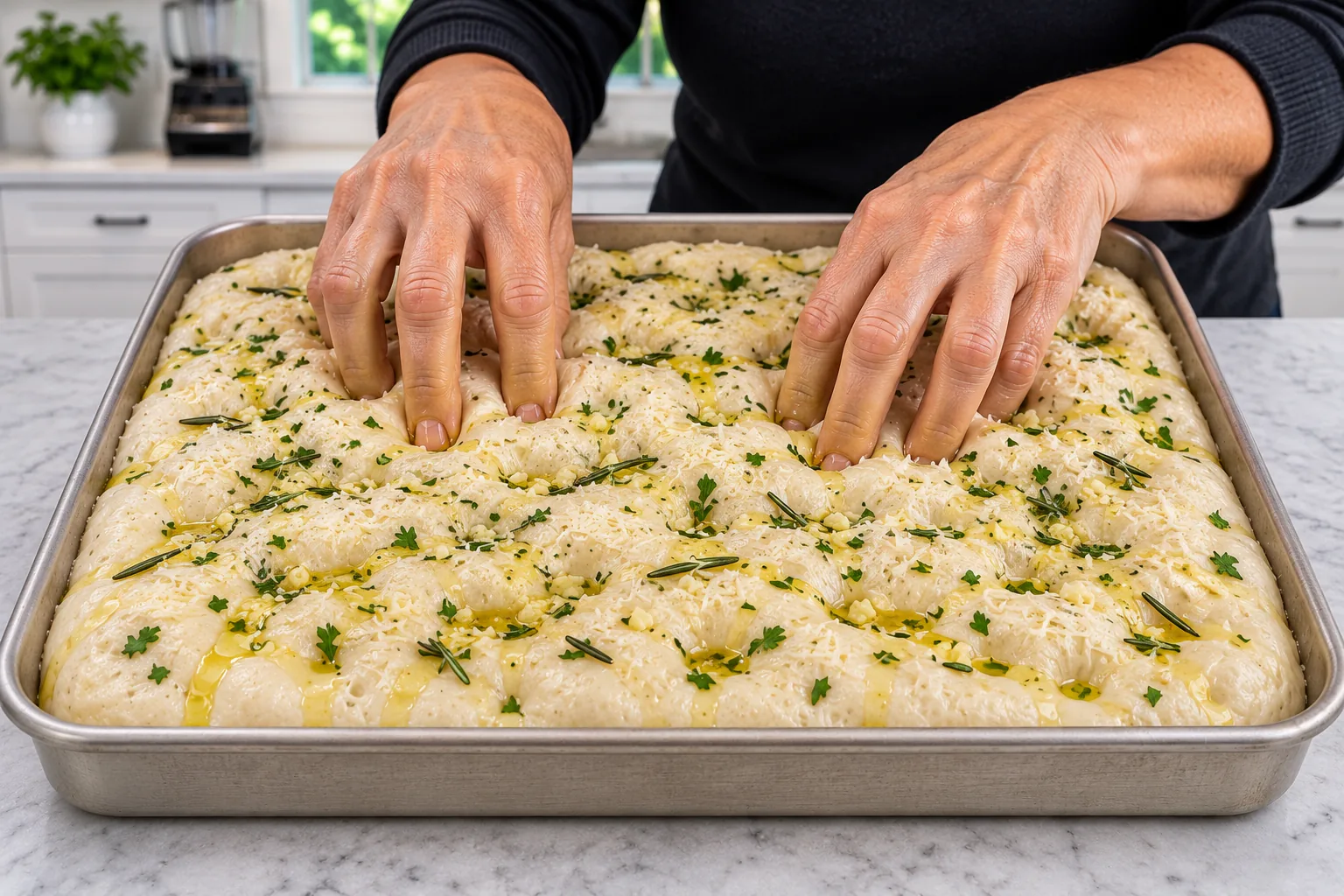
Drizzle the remaining 3 tbsp extra virgin olive oil over the risen dough and press your fingertips down to form deep dimples without tearing it. Evenly scatter 1/2 cup freshly grated Parmesan cheese, 3 cloves garlic finely minced, 2 tbsp fresh rosemary chopped, 1 tbsp fresh parsley finely chopped, 1 tsp dried Italian herbs, 1/2 tsp flaky sea salt, and 1/4 tsp freshly ground black pepper. Keep garlic and cheese in a light layer rather than thick piles.
Step 6: Bake the focaccia
Bake at 425°F (220°C) for about 22 to 28 minutes, until the surface is deeply golden and the center is set. Rotate the pan once if the oven browns unevenly. The bottom should be golden rather than pale; carefully lift one edge with a spatula to check. If the top colors before the middle is done, tent it loosely with foil for the last few minutes.
Step 7: Brush and cut into bites
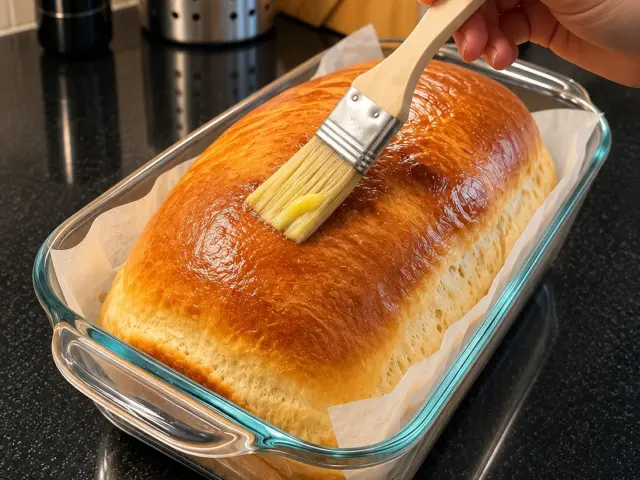
Let the focaccia cool in the pan for 5 to 10 minutes, then lift it onto a rack or board. Brush the warm surface with 2 tbsp melted butter for brushing. Allow a few more minutes for the crumb to settle, then use a sharp knife or pizza cutter to divide the slab into about 24 bite-size pieces. Serve warm while the edges are crisp and the centers are soft.
Expert Tips
- Use a large bowl; the dough needs room to expand without sticking to the cover.
- Keep the dough wet. Adding enough flour to make a tidy ball changes the characteristic focaccia texture.
- Oil the pan generously, especially the corners, for a browned bottom and easy release.
- Let the dough puff again in the pan before dimpling. Dimpling immediately after transfer can flatten it.
- Chop rosemary and garlic finely so the topping spreads across all the bite-size portions.
- Preheat the oven fully to 425°F. A hot start helps lift the airy dough and brown the edges.
- Cut after baking and a short rest; cutting sticky raw dough into pieces would deflate it and complicate handling.
Common Mistakes
Adding too much flour because the dough looks sticky is the most important error to avoid. This is a high-hydration dough. Use oil on your hands and spatula, and give it time to rise. If the dough is dry and firm, it may bake into dense bread rather than an airy focaccia.
Rushing the second rise can also lead to a flat pan. After transfer, wait for the dough to relax and puff before dimpling. Press decisively but do not shred the dough. An oven that has not fully heated may leave the bottom pale and the middle gummy even if the Parmesan browns.
Too much garlic in one spot can burn, while a thick mound of cheese can brown before the bread is cooked. Spread the listed topping evenly. Do not brush the melted butter on raw dough; it is intended as a finishing brush after baking. Cutting immediately out of the oven can compress the crumb, so give it a short rest first.
Serving Ideas
Pile the warm Parmesan herb focaccia bites on a board as in the reference image. Their small size makes them easy to serve with tomato soup, a green salad, roasted vegetables, or a simple pasta dinner. They can also sit beside a dip, although the garlic-herb topping is flavorful enough to eat plain.
For an appetizer, place the bites in a shallow basket with a cloth underneath and serve soon after cutting. The soft centers contrast with the golden edges. If serving later, warm them briefly and brush with a little of the melted butter already listed for finishing. Count on about 24 pieces from a 9-by-13-inch pan, depending on how large you cut them.
Storage and Freezing
Cool the focaccia completely before storing. Keep pieces in an airtight container at room temperature for up to 2 days, or refrigerate for up to 4 days. Reheat in a 350°F (175°C) oven for 5 to 8 minutes to restore a lightly crisp exterior. A microwave warms them but softens the crust.
For freezing, arrange cooled bites in a single layer until firm, then transfer to an airtight freezer bag with parchment between layers. Freeze for up to 2 months. Reheat from frozen in a 350°F oven until hot throughout. Avoid sealing warm pieces in plastic; trapped steam makes the Parmesan crust damp.
FAQ
Can I use all-purpose flour instead of bread flour?
Yes. Both are listed. Bread flour gives a slightly chewier crumb, while all-purpose flour often makes a softer bite.
Why is my dough so sticky?
The two cups of water make a deliberately wet focaccia dough. Stir it, let it rise, and handle it with oiled fingers rather than adding a large amount of flour.
Can I make the dough ahead?
Yes. After mixing, cover it and refrigerate overnight, then allow it to warm and rise visibly before transferring to the pan. Watch the dough rather than relying only on a fixed time.
Should I cut the focaccia before baking?
No. Bake one rectangular slab, rest it briefly, then cut into bite-size pieces. This preserves the airy structure and matches the serving style in the photo.
How do I keep the garlic from burning?
Mince it finely, distribute it evenly, and tent the pan loosely if the topping colors before the center is baked.
Conclusion
No-Knead Parmesan Herb Focaccia Bites deliver the flavor of garlic, rosemary, parsley, olive oil, and Parmesan in an easy, shareable format. Keep the dough wet, give it two rises, bake in a hot and well-oiled pan, then brush with melted butter and cut after a short rest. The result is a golden tray of savory bites with a soft interior and crisp edges.
Print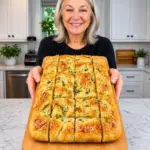
No-Knead Parmesan Herb Focaccia Bites
- Prep Time: 20 minutes
- Cook Time: 25 minutes
- Total Time: 3 hours 15 minutes
- Yield: 24 bites 1x
- Category: Sourdough
- Method: Baking
Description
Airy no-knead focaccia baked with Parmesan, garlic, rosemary, and parsley, then cut into shareable bites.
Ingredients
- 4 cups all-purpose flour or bread flour
- 2 cups warm water
- 2 tsp instant yeast
- 2 tsp fine sea salt
- 1 tsp granulated sugar
- 1/4 cup extra virgin olive oil
- 1 tsp garlic powder for extra flavor
- 1 tsp dried Italian seasoning
- 1/2 tsp dried oregano
- 1/4 cup shredded mozzarella cheese for extra cheesiness
- 1 tbsp honey for a golden crust
- 1/2 tsp onion powder
- 3 tbsp extra virgin olive oil
- 1/2 cup freshly grated Parmesan cheese
- 3 cloves garlic, finely minced
- 2 tbsp fresh rosemary, chopped
- 1 tbsp fresh parsley, finely chopped
- 1 tsp dried Italian herbs
- 1/2 tsp flaky sea salt
- 1/4 tsp freshly ground black pepper
- 2 tbsp melted butter for brushing
Instructions
Step 1 In a large bowl whisk 4 cups all-purpose flour or bread flour with 2 tsp instant yeast, 2 tsp fine sea salt, and 1 tsp granulated sugar. Pour in 2 cups warm water and 1/4 cup extra virgin olive oil. Stir with a sturdy spoon or spatula until no dry flour remains. The mixture should be sticky and loose; do not try to knead it into a firm ball.
Step 2 If desired, stir in 1 tsp garlic powder for extra flavor, 1 tsp dried Italian seasoning, 1/2 tsp dried oregano, 1/4 cup shredded mozzarella cheese for extra cheesiness, 1 tbsp honey for a golden crust, or 1/2 tsp onion powder. Add honey with the warm water and fold mozzarella in at the end. Choose only the additions you want and avoid adding extra flour to compensate for the sticky texture.
Step 3 Cover the bowl and leave it in a draft-free place until puffy and roughly doubled, about 1 1/2 to 2 hours. A warmer kitchen may move faster, while a cool kitchen takes longer. Look for bubbles on the surface and along the sides of the bowl. This rise is doing the work that kneading would otherwise help accomplish.
Step 4 Coat a 9-by-13-inch metal pan generously with olive oil, taking a little from the 3 tbsp topping olive oil if convenient. Scrape the dough into the pan and use oiled fingertips to ease it toward the corners. Cover and rest 25 to 35 minutes until it looks airy again. Preheat the oven to 425°F (220°C) during this rest.
Step 5 Drizzle the remaining 3 tbsp extra virgin olive oil over the risen dough and press your fingertips down to form deep dimples without tearing it. Evenly scatter 1/2 cup freshly grated Parmesan cheese, 3 cloves garlic finely minced, 2 tbsp fresh rosemary chopped, 1 tbsp fresh parsley finely chopped, 1 tsp dried Italian herbs, 1/2 tsp flaky sea salt, and 1/4 tsp freshly ground black pepper. Keep garlic and cheese in a light layer rather than thick piles.
Step 6 Bake at 425°F (220°C) for about 22 to 28 minutes, until the surface is deeply golden and the center is set. Rotate the pan once if the oven browns unevenly. The bottom should be golden rather than pale; carefully lift one edge with a spatula to check. If the top colors before the middle is done, tent it loosely with foil for the last few minutes.
Step 7 Let the focaccia cool in the pan for 5 to 10 minutes, then lift it onto a rack or board. Brush the warm surface with 2 tbsp melted butter for brushing. Allow a few more minutes for the crumb to settle, then use a sharp knife or pizza cutter to divide the slab into about 24 bite-size pieces. Serve warm while the edges are crisp and the centers are soft.
Notes
Use exactly three distinct WebP images; reuse the featured media ID for the Tasty card. Cool the focaccia completely before storing. Keep pieces in an airtight container at room temperature for up to 2 days, or refrigerate for up to 4 days. Reheat in a 350°F (175°C) oven for 5 to 8 minutes to restore a lightly crisp exterior. A microwave warms them but softens the crust. For freezing, arrange cooled bites in a single layer until firm, then transfer to an airtight freezer bag with parchment between layers. Freeze for up to 2 months. Reheat from frozen in a 350°F oven until hot throughout. Avoid sealing warm pieces in plastic; trapped steam makes the Parmesan crust damp.