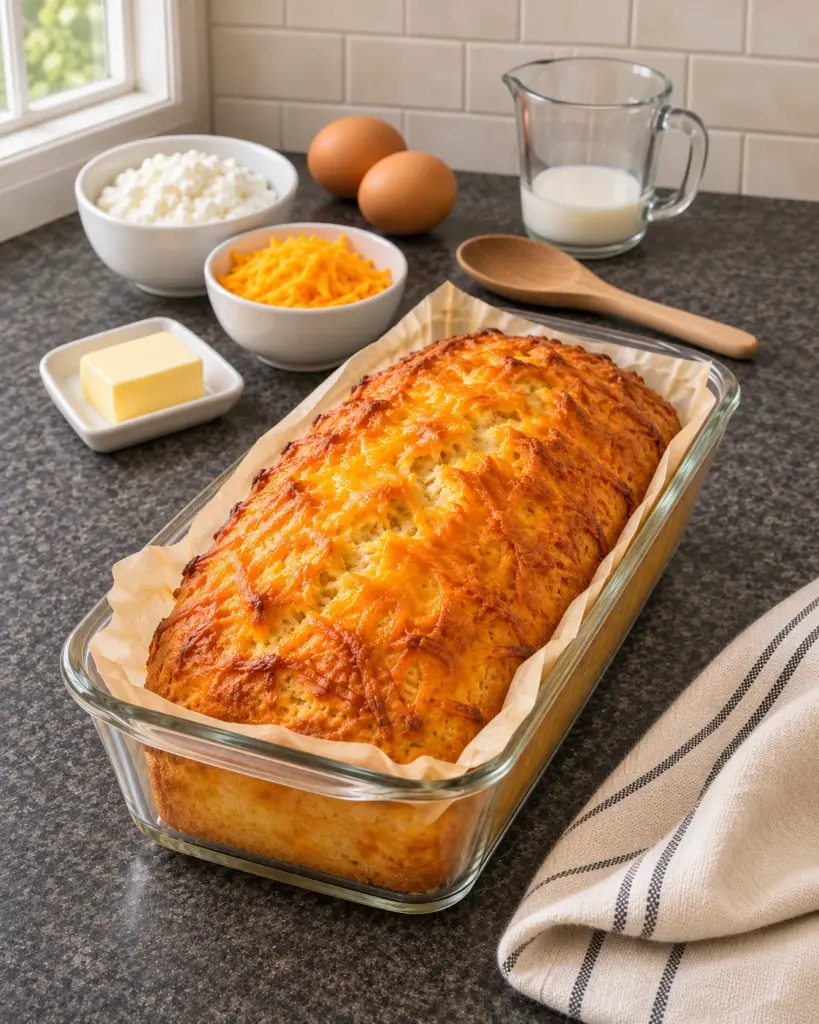
Easy Cottage Cheese Cheddar Bread is a savory quick loaf with a soft, substantial crumb and a golden layer of melted sharp cheddar. Cottage cheese, eggs, a little milk, and melted butter give the batter moisture and richness. Baking powder and baking soda lift the loaf in the oven, so there is no yeast, kneading, or rising time to plan around.
This is the kind of bread to slice alongside soup, toast for breakfast, or serve warm with a simple salad. The cheddar goes both inside the batter and on top, giving each slice cheese flavor and the loaf its deeply golden crust. The method uses one 9-by-5-inch loaf pan and familiar ingredients, with optional garlic, onion, chives, or red pepper flakes if you want a more seasoned version.
Why You’ll Love This Cottage Cheese Cheddar Bread
The recipe is a quick bread, which means the batter is mixed and baked immediately after the dry and wet ingredients come together. You do not need a mixer or bread-making experience. Cottage cheese adds little soft pockets to the crumb; sharp cheddar provides the main savory flavor. The topping looks impressive but takes only a moment to scatter over the batter.
The loaf is also practical for make-ahead meals. Let it cool fully for neat slices, then store it for the next day’s breakfast or lunch. Toasting a slice refreshes the edges and softens the cheese. Because it is a rich, savory loaf rather than a light yeast sandwich bread, a medium-thick slice holds together best.
Ingredients for Easy Cottage Cheese Cheddar Bread
For the bread
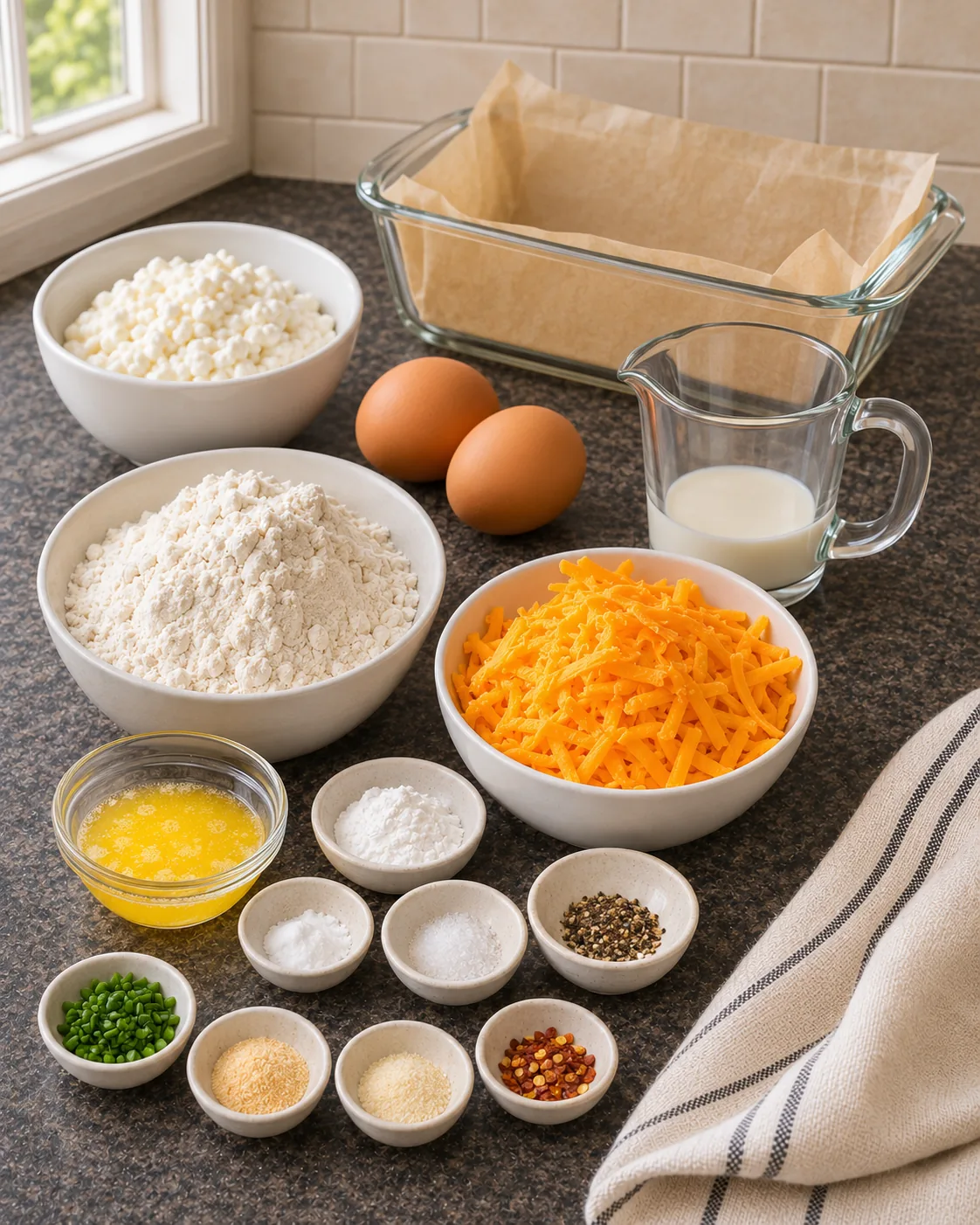
- 1 cup full-fat or 2% cottage cheese
- 2 large eggs, room temperature
- 2 tablespoons unsalted butter, melted and cooled slightly
- 2 tablespoons whole milk
- 2 cups all-purpose flour, spooned and leveled
- 1 tablespoon baking powder
- ½ teaspoon baking soda
- ¾ teaspoon fine salt
- ¼ teaspoon cracked black pepper
- 1½ cups freshly shredded sharp cheddar, divided
For the pan
- Butter or neutral oil for greasing
- Parchment paper
Optional additions
- ½ teaspoon garlic powder
- ½ teaspoon onion powder
- 1 tablespoon chopped fresh chives
- ¼ teaspoon crushed red pepper flakes
Choose full-fat or 2% cottage cheese according to what you have. The curds give the bread its characteristic texture, so there is no need to blend them smooth. Room-temperature eggs combine more easily with the dairy and melted butter. Let the butter cool slightly before adding it so it does not cook the eggs in the bowl.
Freshly shredded sharp cheddar melts smoothly and gives the top a good color. Measure 1½ cups total, then set aside ½ cup for the crust and fold the remaining 1 cup into the batter. Pre-shredded cheese can work in a pinch, but its anti-caking coating may make the top less evenly melted. Sharp cheddar has a stronger flavor that stands up to the mild cottage cheese.
What Makes This a Quick Bread?
There is no sourdough starter or yeast in this recipe. The tablespoon of baking powder and half teaspoon of baking soda provide the lift. Once the wet and dry mixtures are combined, bake the batter promptly so the leavening can do its work in the oven. The texture is closer to a savory muffin in loaf form than to a stretchy sandwich bread.
That difference matters when mixing. A yeast dough benefits from kneading; this batter does not. Stir only until the flour has disappeared and a few small lumps remain. Working it hard after the flour goes in can make the finished loaf firm or tough. The mixture should be thick enough to mound in the pan, not pour like a thin cake batter.
Equipment and Pan Preparation
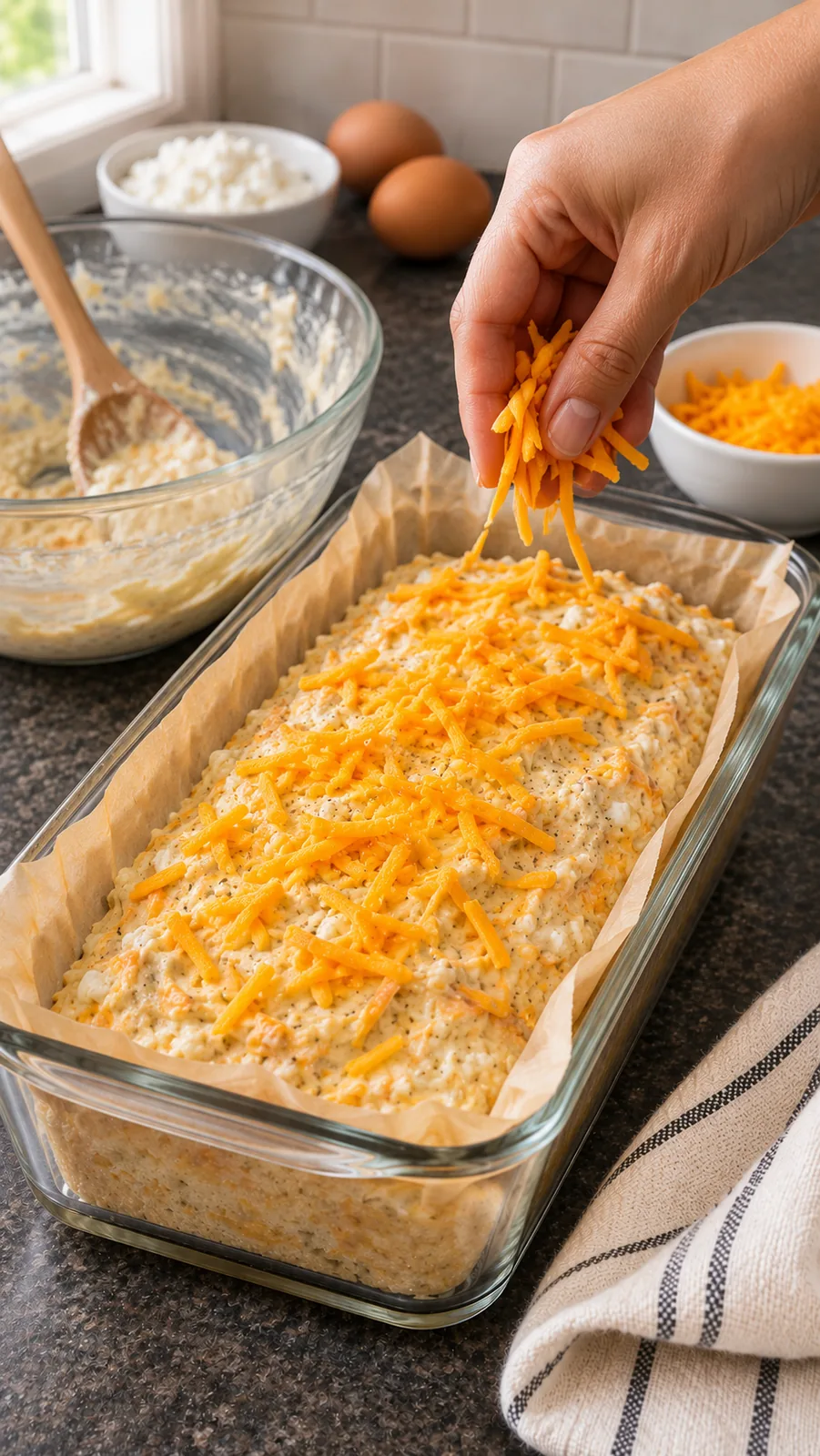
Use a 9-by-5-inch loaf pan, two mixing bowls, a whisk, a spatula, a cooling rack, and a sheet of parchment paper. A clear glass pan like the one in the photo works, as does a standard metal loaf pan. Baking times can vary with pan material and the accuracy of your oven, so judge doneness by the center of the loaf as well as the clock.
Lightly grease the pan with butter or neutral oil, then line it with parchment so there is an overhang on the long sides. The overhang lets you lift the hot loaf out after its initial rest without tearing the cheese-topped crust. Grease the parchment lightly if your pan tends to stick. Set the prepared pan aside before mixing the batter.
Instructions: How to Make Cottage Cheese Cheddar Bread
1. Heat the oven and mix the dry ingredients
Preheat the oven to 350°F (175°C) and position a rack in the center. Grease and line a 9-by-5-inch loaf pan. In a medium bowl, whisk the 2 cups all-purpose flour, spooned and leveled, with 1 tablespoon baking powder, ½ teaspoon baking soda, ¾ teaspoon fine salt, and ¼ teaspoon cracked black pepper. If using optional ½ teaspoon garlic powder, ½ teaspoon onion powder, or ¼ teaspoon crushed red pepper flakes, whisk them into this bowl too.
2. Combine the wet ingredients
In a large bowl, whisk together 1 cup full-fat or 2% cottage cheese, 2 large eggs at room temperature, 2 tablespoons unsalted butter that has been melted and cooled slightly, and 2 tablespoons whole milk. Mix until the eggs are incorporated. The cottage cheese curds will remain visible; that is expected and gives the bread its tender, textured crumb.
3. Make the batter and fill the pan
Add the dry ingredients to the wet bowl and fold gently with a spatula just until no dry flour remains. Fold in 1 cup of the 1½ cups freshly shredded sharp cheddar, divided; reserve the remaining ½ cup for the top. If you chose the optional 1 tablespoon chopped fresh chives, fold it in now. Spoon the thick batter into the prepared pan and spread it toward the corners without pressing it down. Scatter the reserved cheddar evenly over the surface.
4. Bake until the center is done
Bake at 350°F (175°C) for 50 to 60 minutes. The loaf should be risen, deeply golden on top, and set in the middle. A skewer inserted into the center should come out without wet batter; a few moist crumbs and melted cheese are fine. If you use an instant-read thermometer, aim for about 200°F to 205°F (93°C to 96°C) in the center of the bread, avoiding a pocket of melted cheese. If the cheddar crust browns too quickly, tent the pan loosely with foil for the last 15 to 20 minutes.
5. Cool before slicing
Rest the loaf in its pan for 15 minutes. Lift it out using the parchment overhang and place it on a wire rack. Let it cool for at least another 45 minutes before slicing for clean pieces. Warm slices are delicious, but cutting immediately can compress the still-steaming center and make it seem underbaked. This recipe yields one loaf, about 10 to 12 slices.
How to Tell When the Loaf Is Fully Baked
A dark cheese top is not enough on its own to prove the center is ready. The batter is moist from the cottage cheese and cheddar, so the middle takes longer than the surface. Look for a rounded top with a dry-looking crack, sides that have set, and a skewer without streaks of raw batter. The melted cheese may cling to the skewer, so distinguish an orange cheesy smear from pale uncooked batter.
If the top is well browned but the center still needs time, a loose foil tent lets the inside continue baking while limiting further browning. The loaf may take a few extra minutes in a glass pan or if the cottage cheese has a high moisture content. Check again every 5 minutes rather than pulling it too early. Cooling on a rack is part of the process: trapped steam can make the bottom damp if the bread remains in the pan too long.
Tips for a Tender Cheddar Bread
Measure the flour carefully. Spoon it into the measuring cup and level it, or use a kitchen scale if you have one. Scooping directly from a packed flour bag can add too much, producing a heavy loaf. Mix the dry ingredients thoroughly before they meet the wet ingredients so the baking powder, soda, salt, and pepper distribute evenly without extra stirring later.
Use the eggs at room temperature and let the melted butter cool until just warm. This helps the wet mixture combine without clumps of set butter. The batter will not be perfectly smooth because of the cottage cheese curds and shredded cheddar. Resist the urge to beat it smooth after adding flour; small lumps are normal.
Reserve the ½ cup cheddar topping instead of mixing all 1½ cups into the batter. That final layer creates the golden crust in the photo and makes the bread look appetizing before it is sliced. Sprinkle it evenly so one patch does not brown much faster than the rest. Let the bread sit after baking to give the crumb time to set.
Optional Flavor Variations
For a garlic-cheddar version, add the optional garlic powder to the flour mixture. Onion powder gives a gentle savory background. Chopped fresh chives add green flecks and a mild onion flavor without changing the bread’s basic texture. Crushed red pepper flakes add a modest heat. Use any one of these or combine a couple, but keep the base ingredient amounts the same.
If you want a milder loaf for breakfast, make the basic cheddar version with just the listed salt and black pepper. The cottage cheese and cheddar provide plenty of savory character. Avoid adding a large amount of wet vegetables without adjusting the formula, because extra moisture can leave the center gummy or extend the bake time.
Serving Ideas
Slice the cooled loaf and serve it with tomato soup, vegetable soup, chili, or a leafy salad. For breakfast, toast a slice and top it with a fried egg. The bread can also be served plain, with a little butter, while the cheddar crust is still fragrant. Medium-thick slices are easier to lift and toast than very thin ones.
Because the loaf is savory, it can replace biscuits beside a weeknight dinner. Cut it into small squares for a brunch board or serve it with a bowl of soup for a simple lunch. If you are transporting the bread, let it cool fully before wrapping so steam does not soften the crust.
Storage and Reheating
Once completely cool, wrap the loaf tightly or store slices in an airtight container in the refrigerator for up to 4 days. The dairy and cheese make refrigeration the practical choice for leftovers. Place parchment between slices if you want to take out one at a time. For longer storage, freeze well-wrapped slices for up to 2 months and thaw in the refrigerator or toast from frozen.
Reheat a slice in a toaster oven or a 325°F (165°C) oven until warmed through. A skillet over low heat also gives the cut sides a pleasant crisp edge. Avoid heating the whole loaf repeatedly; slice only what you need. Let refrigerated bread sit briefly at room temperature before serving if you prefer a softer crumb.
Easy Cottage Cheese Cheddar Bread FAQ
Does this bread taste strongly of cottage cheese?
No. Cottage cheese mainly adds moisture and tender pockets to the crumb. Sharp cheddar supplies the dominant flavor, with salt and black pepper balancing the loaf.
Can I use 2% cottage cheese instead of full-fat?
Yes. The recipe allows either full-fat or 2% cottage cheese. Keep the amount at 1 cup and check the loaf’s center before taking it out of the oven, since cottage cheese brands vary in moisture.
Can I use pre-shredded cheddar?
It can work, but freshly shredded cheddar usually melts more evenly through the batter and over the top. Measure 1½ cups total and reserve ½ cup for the crust.
Why is the center of my loaf gummy?
The bread may need more baking time or more cooling time. Test the center for wet batter and, if available, check for a temperature around 200°F to 205°F. Then cool on a rack before slicing. Overmixing the flour can also make the texture heavier.
Do I need yeast or sourdough starter?
No. Baking powder and baking soda raise this quick bread. Mix the batter gently and bake it soon after combining the wet and dry ingredients.
Conclusion
Easy Cottage Cheese Cheddar Bread delivers a golden cheesy crust and a moist savory crumb with straightforward mixing. Use a lined loaf pan, fold the batter gently, reserve cheddar for the top, and bake until the center is fully set. Let the loaf cool before slicing, then enjoy it with soup, breakfast eggs, or a simple meal.
Print
Easy Cottage Cheese Cheddar Bread
- Prep Time: 20 minutes
- Cook Time: 60 minutes
- Total Time: 2 hours 20 minutes, including cooling
- Yield: 12 slices 1x
- Category: Sourdough
- Method: Baking
Description
One savory cottage cheese and cheddar quick-bread loaf with a golden, cheese-topped crust and soft crumb.
Ingredients
- 1 cup full-fat or 2% cottage cheese
- 2 large eggs, room temperature
- 2 tablespoons unsalted butter, melted and cooled slightly
- 2 tablespoons whole milk
- 2 cups all-purpose flour, spooned and leveled
- 1 tablespoon baking powder
- ½ teaspoon baking soda
- ¾ teaspoon fine salt
- ¼ teaspoon cracked black pepper
- 1½ cups freshly shredded sharp cheddar, divided
- Butter or neutral oil for greasing
- Parchment paper
- ½ teaspoon garlic powder, optional
- ½ teaspoon onion powder, optional
- 1 tablespoon chopped fresh chives, optional
- ¼ teaspoon crushed red pepper flakes, optional
Instructions
Step 1 Preheat oven to 350°F (175°C). Grease a 9-by-5-inch loaf pan with butter or neutral oil for greasing, then line with parchment paper, leaving an overhang on the long sides.
Step 2 In a medium bowl, whisk 2 cups all-purpose flour, spooned and leveled, with 1 tablespoon baking powder, ½ teaspoon baking soda, ¾ teaspoon fine salt, and ¼ teaspoon cracked black pepper. If using, whisk in the optional ½ teaspoon garlic powder, ½ teaspoon onion powder, and ¼ teaspoon crushed red pepper flakes.
Step 3 In a large bowl, whisk 1 cup full-fat or 2% cottage cheese with 2 large eggs, room temperature, 2 tablespoons unsalted butter, melted and cooled slightly, and 2 tablespoons whole milk until the eggs are incorporated. The cottage cheese curds can remain visible.
Step 4 Fold dry mixture into wet mixture just until no dry flour remains. Fold in 1 cup of the 1½ cups freshly shredded sharp cheddar, divided, reserving ½ cup for the top. If desired, fold in the optional 1 tablespoon chopped fresh chives. Spread the thick batter in the prepared pan and scatter the reserved cheddar over it.
Step 5 Bake at 350°F (175°C) for 50 to 60 minutes, until a central skewer has no wet batter and the loaf reaches about 200°F to 205°F (93°C to 96°C) in the center. Tent loosely with foil if the cheese browns too quickly. Rest in the pan for 15 minutes, then lift out with parchment and cool on a rack for at least 45 minutes before slicing.
Notes
Use freshly shredded sharp cheddar and reserve ½ cup for the top. Fold the batter only until the flour disappears to avoid a tough loaf. Check the center for wet batter and aim for about 200°F to 205°F. Let the loaf cool on a rack before slicing for a set crumb.