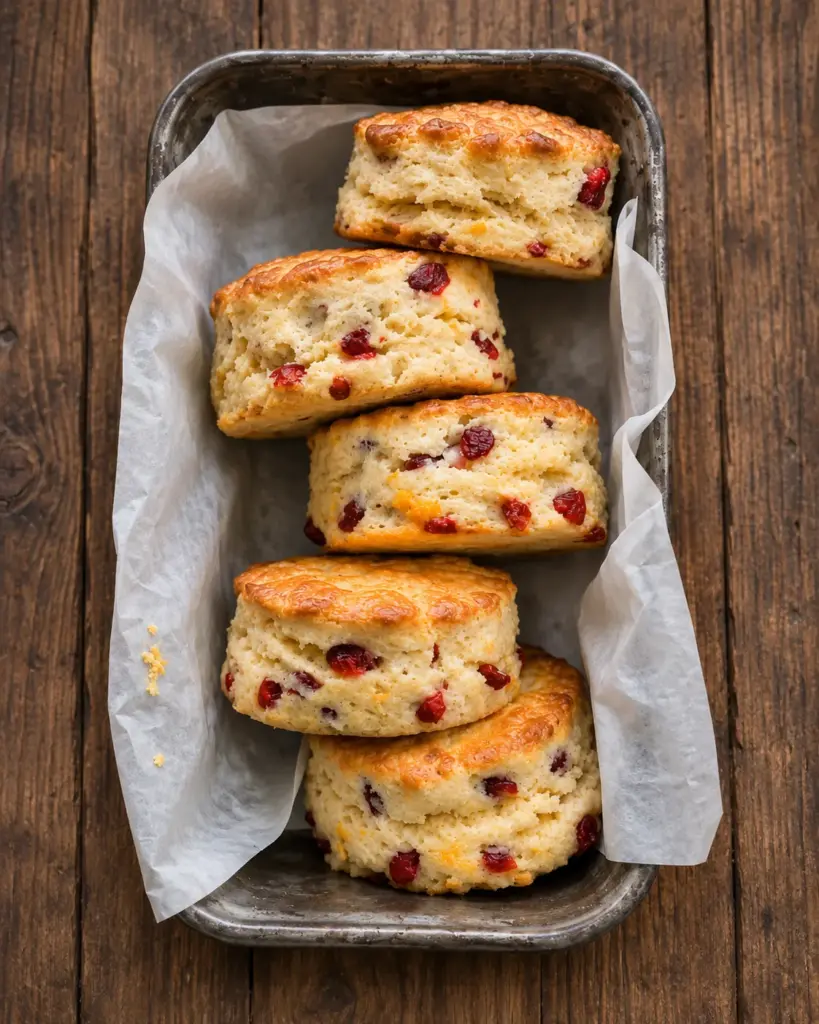
These easy homemade cranberry orange scones have tender, buttery centers, golden tops, and bright little pockets of dried cranberry. Fresh orange zest and juice give the dough a fragrant citrus flavor without making it taste sharp. The reference photograph shows thick, rustic scones with visible red fruit and a soft, layered middle, nestled in a parchment-lined metal pan. This recipe follows that hearty bakery-style appearance while keeping the process manageable at home.
You need no yeast or sourdough starter for the dough. Baking powder lifts the scones, cold cubed butter creates a delicate crumb, and heavy cream adds richness. An egg helps the pieces hold their shape. The finished scones can be left with their sparkling sugar tops or drizzled with an optional orange glaze after cooling. Both finishes use the same cranberry-orange base.
The most useful technique is to keep everything cool and handle the dough gently. Rub or cut the butter into the dry ingredients until the mixture looks like coarse crumbs with some pea-sized pieces. Add the cream mixture just until a shaggy dough comes together, fold in the cranberries, shape a thick slab, and cut it into portions. A short chill before baking helps the edges stay tall and defined.
Why You’ll Love This Recipe
The flavor is balanced. Dried cranberries bring tangy sweetness, while orange zest contributes aroma and orange juice rounds out the fruit flavor. Half a cup of butter and three-quarters of a cup of heavy cream make the crumb soft and rich, but the scones still have the slightly craggy edges that make a homemade batch appealing.
The dough comes together in one bowl and can be cut into squares or rectangles, like the scones in the reference photo. There is no rolling pin or intricate shaping. A few folds give the center layers, and a brief spell in the refrigerator limits spreading. The result works for breakfast, brunch, an afternoon cup of tea, or a holiday pastry tray.
You can choose the finish. Brushing with heavy cream and sprinkling coarse sugar before baking gives a simple golden top. The optional orange glaze adds a sweeter bakery touch once the scones cool. Optional white chocolate, cinnamon, nuts, or a small amount of yogurt can change the flavor without replacing the core recipe.
Ingredients
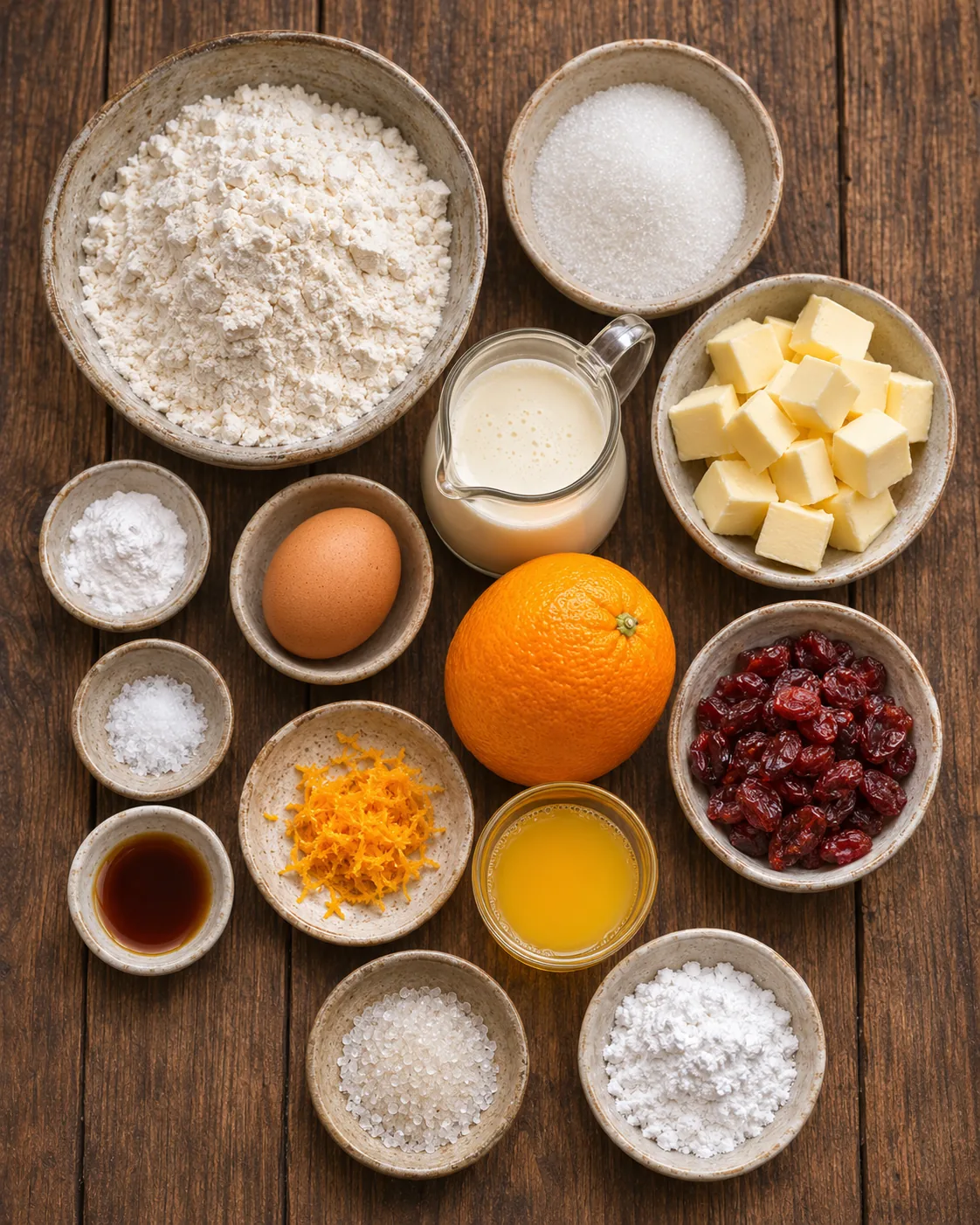
Measure the ingredients before starting, and keep the butter and cream cold. The notes beside each item explain what it does in the scone dough.
For the Scones
- 2½ cups all-purpose flour: Spoon it into the measuring cup and level it. Extra flour from packing the cup can make the scones dry.
- ½ cup granulated sugar: Sweetens the dough without covering up the cranberry and orange flavors.
- ½ cup cold unsalted butter, cubed: Cold pieces create tender pockets and a layered texture as they melt in the oven.
- ¾ cup heavy cream: Adds moisture and richness. Keep it chilled until mixing.
- 1 large egg: Helps bind the dough and supports a tender, structured crumb.
- 2½ teaspoons baking powder: Provides the main lift, since this is a quick bread dough.
- ½ teaspoon fine sea salt: Balances the sweetness and sharpens the orange flavor.
- 1 teaspoon vanilla extract: Gives the citrus and cream a mellow background note.
- 1 tablespoon fresh orange zest: The colored outer peel contains the orange’s most fragrant oils; avoid the bitter white pith.
- 2 tablespoons fresh orange juice: Adds citrus flavor and a little extra moisture to the dough.
- ¾ cup dried cranberries: Scatter red fruit through every portion. If the fruit is clumped, separate it before folding it in.
For the Golden Topping
- 2 tablespoons heavy cream for brushing: Paint a thin layer over the unbaked tops to encourage browning.
- 1 tablespoon coarse sparkling sugar: Adds crunch and glints of sweetness; it can be omitted for a less sweet finish.
- 1 teaspoon fresh orange zest: Sprinkle lightly over the tops for a fresh citrus aroma.
Optional Orange Glaze
- 1 cup powdered sugar: Forms a smooth, sweet glaze when mixed with juice.
- 2 tablespoons fresh orange juice: Thin the glaze gradually to a drizzleable consistency.
- ½ teaspoon vanilla extract: Softens the sweetness of the glaze.
- 1 teaspoon finely grated orange zest: Makes the orange flavor visible and fragrant in the finish.
Ingredient Notes and Substitutions
All-purpose flour gives these scones a tender middle. Measure by spooning flour into the cup rather than digging the cup into the bag. If you have a scale, roughly 300 to 315 grams is a useful range for 2½ cups, depending on how you measure. The dough should be soft and slightly tacky, not wet enough to pour. Add only a light dusting of flour to the board if it sticks.
Unsalted butter lets you control the salt level. Cube it, then return it to the refrigerator while measuring the other ingredients. If the butter has softened, chill the cubed pieces again. Cold heavy cream matters for the same reason: it keeps the butter in visible pieces and slows the dough from becoming greasy. Do not replace all of the cream with thin milk without expecting a different, less rich texture.
Use the zest of a washed fresh orange before juicing it. A fine grater takes off the colored layer without much white pith. The recipe uses one tablespoon of zest and two tablespoons of juice in the dough, plus a separate teaspoon of zest for the top and another teaspoon in the optional glaze. Zest amount varies by fruit, so having two oranges nearby is helpful. The juice in the dough is measured; adding a large extra squeeze may make the dough sticky.
Dried cranberries are less watery than fresh cranberries and distribute evenly through this thick dough. Separate any clumps and fold them in gently. If they feel very dry, a brief soak in warm water followed by thorough draining and patting dry can soften them, but do not add wet fruit to the dough. The optional quarter cup of white chocolate chips makes a sweeter version. A quarter cup of chopped pecans or walnuts adds crunch; fold them in at the same time as the cranberries.
For another flavor variation, add the optional half teaspoon of ground cinnamon or quarter teaspoon of almond extract. Two tablespoons of plain Greek yogurt can add moisture, though the dough may need a little extra flour for handling. One tablespoon of honey increases sweetness and browning; stir it into the wet ingredients. These are optional changes, so start with the base recipe if you want the clearest cranberry-orange flavor.
Instructions: How to Make Cranberry Orange Scones
1. Prepare the pan and oven
Line a baking sheet or shallow metal pan with parchment paper. Leave enough space between the scones for air to circulate. Preheat the oven to 400°F (200°C). Put the half cup of cubed unsalted butter back in the refrigerator while you prepare the other ingredients. A cold start helps the scones rise with clear, tender layers.
2. Combine the dry ingredients
In a large bowl, whisk together the 2½ cups of all-purpose flour, ½ cup of granulated sugar, 2½ teaspoons of baking powder, and ½ teaspoon of fine sea salt. Distribute the baking powder evenly so one side of a scone does not rise more than the other. If using the optional ½ teaspoon ground cinnamon, whisk it in now.
3. Cut in the cold butter
Add the ½ cup of cold, cubed unsalted butter to the flour mixture. Use a pastry cutter, two forks, or your fingertips to work it into the dry ingredients until you see coarse crumbs and some pea-sized butter pieces. Stop before it becomes a smooth paste. Those small pieces of butter are what make the baked crumb tender rather than dense.
4. Mix the cream, egg, and orange
In a separate bowl, whisk the ¾ cup of cold heavy cream with 1 large egg, 1 teaspoon vanilla extract, 1 tablespoon fresh orange zest, and 2 tablespoons fresh orange juice. If using the optional ¼ teaspoon almond extract or 1 tablespoon honey, whisk it into this wet mixture. If using the optional 2 tablespoons plain Greek yogurt, add it here as well.
5. Form a shaggy dough
Pour the wet ingredients into the flour-butter mixture. Stir with a fork or spatula just until most of the flour is moistened. Fold in the ¾ cup of dried cranberries. If using the optional ¼ cup white chocolate chips or ¼ cup chopped pecans or walnuts, add them now. The dough may look rough; that is normal. If dry pockets remain, press them together with your hands rather than stirring repeatedly. Overmixing develops gluten and makes scones tough.
6. Shape and chill
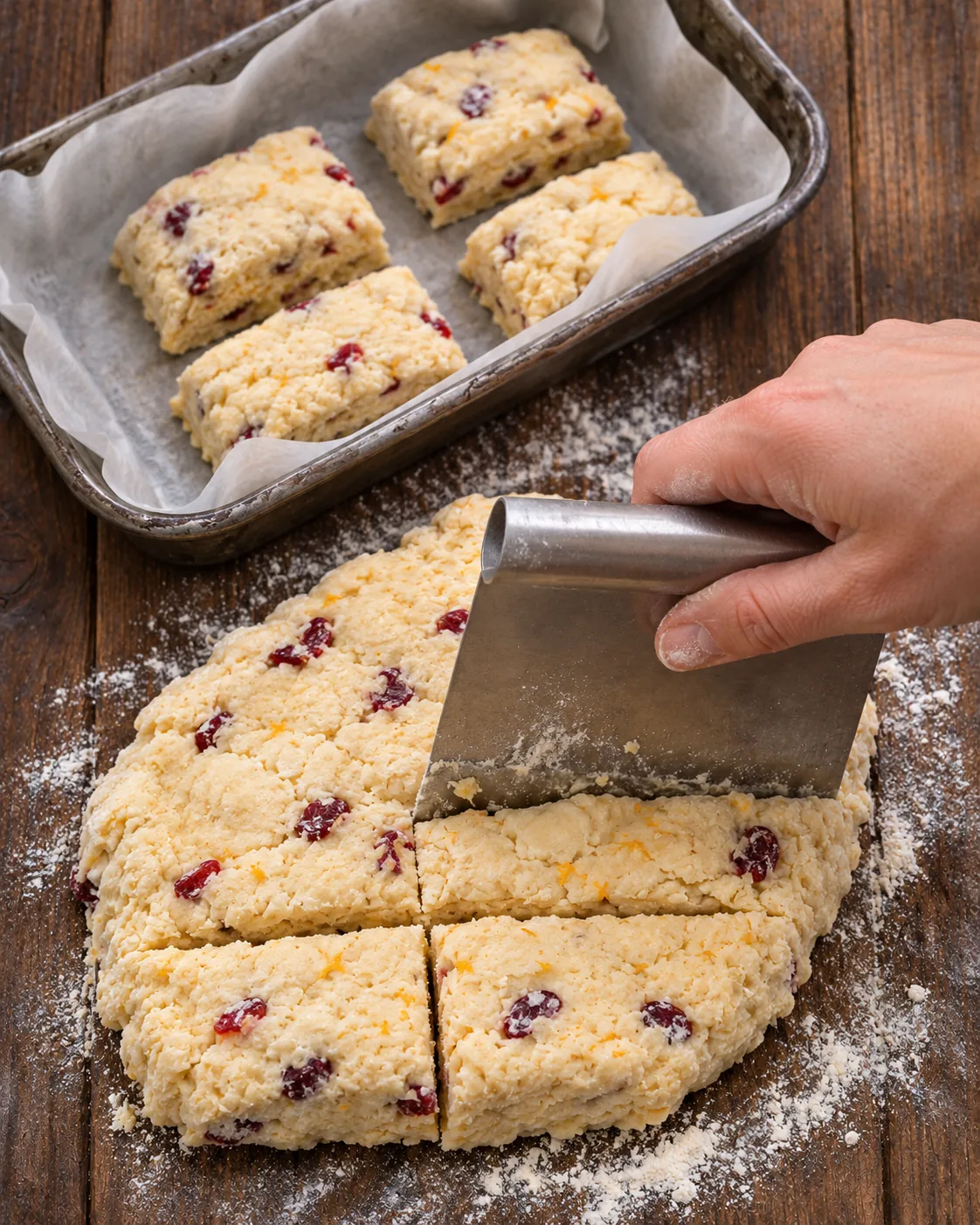
Turn the dough onto a lightly floured work surface. Pat it into a thick rectangle about 1 inch high. For extra layers, fold it in half once and gently pat it back into a rectangle. Cut into 8 roughly equal squares or rectangles with a bench scraper or sharp knife. Transfer the pieces to the parchment-lined pan with a little space between them. Refrigerate for 15 minutes while the oven finishes heating. If the dough becomes very warm or soft, chill a little longer.
7. Brush and bake
Brush the tops lightly with the 2 tablespoons of heavy cream reserved for brushing. Scatter the 1 tablespoon of coarse sparkling sugar and 1 teaspoon of fresh orange zest over the tops. Bake at 400°F (200°C) for 18 to 22 minutes, until the tops are deep golden and the centers are set. Baking time varies with thickness and pan material. A scone should feel firm at the edges, with no wet dough in the middle when broken open.
8. Cool and optionally glaze
Let the scones rest on the pan for 5 minutes, then move them to a wire rack. To make the optional orange glaze, whisk 1 cup powdered sugar with 2 tablespoons fresh orange juice, ½ teaspoon vanilla extract, and 1 teaspoon finely grated orange zest. Add a few drops more juice only if necessary for a thick drizzle. Wait until the scones are cool or just barely warm before drizzling, or the glaze will melt straight off.
Expert Tips for Tender, Tall Scones
Keep the butter in pieces. If you can still spot small pale flecks in the shaped dough, you are on the right track. Warm hands or a hot kitchen can soften it quickly, so work efficiently and use the refrigerator when needed. The 15-minute chill after shaping is especially useful for a rich dough with both butter and cream.
Press the dough together gently instead of kneading it like bread. Scone dough is meant to be rough. One fold can create a little layering, but repeated folding makes the crumb chewy. Cut straight down with a sharp edge; do not twist a cutter, which can pinch the sides and restrict rise. The pieces in the reference are thick and rustic rather than perfectly uniform.
Use visual doneness cues along with the clock. At 400°F, the tops should have a rich gold color and the sides should appear dry and set. If the tops brown before the center is done, loosely lay foil over the pan for the last few minutes. Letting the scones cool briefly before moving them prevents the tender centers from breaking apart.
Common Mistakes
Too much flour: Scooping directly from the bag can pack flour into the cup and dry the dough. Spoon and level it. Warm butter: Soft butter blends completely into the flour and produces a flatter, less layered scone. Chill the cubes and the cut pieces. Too much mixing: Stir only until the dough holds together; some roughness is desirable.
Wet add-ins: Dried cranberries should be dry when folded in. If you soak them, drain and pat them thoroughly. Overcrowding the pan: The pieces need room for even browning. Glazing while hot: A warm scone can absorb or melt the orange glaze, hiding the neat drizzle. Let it cool first.
Serving Ideas
Serve these cranberry orange scones slightly warm with coffee, tea, or a glass of milk. Their citrus aroma is especially inviting at breakfast or brunch. A little softened butter can be offered on the side, though the scones are rich enough to eat plain. For a holiday tray, arrange the scones in a parchment-lined pan or on a simple wooden board and keep any optional glaze light enough to let the cranberries show.
If you make a sweeter dessert-style version, add the optional white chocolate chips and orange glaze. For a more restrained morning pastry, use the coarse sugar topping alone. Either way, the fruit and orange zest should remain the main flavors.
Storage and Freezing
Cool the scones completely before storing. Keep them in an airtight container at room temperature for up to 2 days, or refrigerate for up to 5 days. Place parchment between layers if they are glazed. Reheat an unglazed scone in a 300°F (150°C) oven for about 5 to 7 minutes, or warm it briefly in the microwave. The oven better restores the outer texture.
To freeze baked scones, wrap each fully cooled piece well and place the wrapped pieces in a freezer-safe bag for up to 2 months. Thaw at room temperature, then warm before serving. For the best appearance, freeze them without glaze and add the fresh orange glaze after thawing. You can also freeze shaped unbaked pieces on a tray, then bag them once firm. Bake from frozen at 400°F, adding a few minutes to the baking time and checking the center carefully.
FAQ: Frequently Asked Questions
Do cranberry orange scones need sourdough starter?
No. This is a baking-powder scone recipe, so it does not need a starter, yeast, or rising time. The brief chill is for shape and texture, not fermentation.
Can I make the dough the night before?
Yes. Cut the dough into portions, cover the pan tightly, and refrigerate overnight. Bake the cold pieces the next day. The baking powder starts reacting once wet, so for the strongest lift, baking sooner is ideal; overnight chilling still works if you need to plan ahead.
Can I use fresh cranberries?
The supplied recipe is built around dried cranberries. Fresh berries contain more water and are more tart, so they may change the texture and flavor. If you experiment, chop them and expect a different result; dried cranberries are the reliable choice for the pictured look.
Why did my scones spread?
Butter that became warm during mixing or a dough that was too wet can cause spreading. Keep the butter and cream cold, measure the orange juice, and chill the cut pieces before baking. Use a fully preheated 400°F oven.
Should I add the orange glaze before baking?
No. Brush the unbaked tops with heavy cream and add coarse sugar and zest before baking. Mix the powdered-sugar orange glaze separately and drizzle it only after the baked scones cool.
Conclusion
Easy Homemade Cranberry Orange Scones bring together cold butter, cream, bright fresh orange, and dried cranberries in a simple dough. Mix gently, cut thick portions, chill briefly, and bake until golden. Finish with sparkling sugar or an optional orange glaze, then enjoy the tender centers and crisp edges while they are fresh.
Print
Easy Homemade Cranberry Orange Scones
- Prep Time: 25 minutes
- Cook Time: 22 minutes
- Total Time: 62 minutes
- Yield: 8 scones 1x
- Category: Sourdough
- Method: Baking
Description
Tender, thick cranberry orange cream scones with golden tops and optional orange glaze.
Ingredients
- 2½ cups all-purpose flour
- ½ cup granulated sugar
- ½ cup cold unsalted butter, cubed
- ¾ cup heavy cream
- 1 large egg
- 2½ tsp baking powder
- ½ tsp fine sea salt
- 1 tsp vanilla extract
- 1 tbsp fresh orange zest
- 2 tbsp fresh orange juice
- ¾ cup dried cranberries
- Optional: ¼ cup white chocolate chips
- Optional: ½ tsp ground cinnamon
- Optional: ¼ tsp almond extract
- Optional: 2 tbsp plain Greek yogurt
- Optional: ¼ cup chopped pecans or walnuts
- Optional: 1 tbsp honey
- 2 tbsp heavy cream for brushing
- 1 tbsp coarse sparkling sugar
- 1 tsp fresh orange zest
- 1 cup powdered sugar
- 2 tbsp fresh orange juice
- ½ tsp vanilla extract for optional glaze
- 1 tsp finely grated orange zest for optional glaze
Instructions
Step 1 Preheat the oven to 400 F (200 C). Line a metal baking sheet with parchment paper. Keep the ½ cup cold unsalted butter, cubed, and the ¾ cup heavy cream chilled until needed.
Step 2 Whisk 2½ cups all-purpose flour, ½ cup granulated sugar, 2½ tsp baking powder, and ½ tsp fine sea salt in a large bowl. If using the optional ½ tsp ground cinnamon, whisk it in now.
Step 3 Cut the ½ cup cold unsalted butter, cubed, into the dry mixture until coarse crumbs and pea-sized butter pieces remain.
Step 4 Whisk the ¾ cup heavy cream with 1 large egg, 1 tsp vanilla extract, 1 tbsp fresh orange zest, and 2 tbsp fresh orange juice. If desired, add the optional ¼ tsp almond extract, 2 tbsp plain Greek yogurt, or 1 tbsp honey to this wet mixture.
Step 5 Add wet ingredients to dry and stir only until a shaggy dough forms. Fold in ¾ cup dried cranberries. If desired, also fold in the optional ¼ cup white chocolate chips or ¼ cup chopped pecans or walnuts.
Step 6 Pat the dough into a thick rectangle about 1 inch high, fold once for layers, then cut into 8 squares or rectangles. Arrange on parchment and refrigerate the cut scones for 15 minutes to keep the butter cold.
Step 7 Brush the tops with the separate 2 tbsp heavy cream for brushing. Sprinkle with 1 tbsp coarse sparkling sugar and 1 tsp fresh orange zest. Bake at 400 F (200 C) for 18 to 22 minutes until deep golden and set in the center. Cool on the pan for 5 minutes, then transfer to a rack.
Step 8 For the optional glaze, whisk 1 cup powdered sugar, 2 tbsp fresh orange juice, ½ tsp vanilla extract, and 1 tsp finely grated orange zest. Drizzle over cooled scones. Let the glaze set for 10 minutes before serving.
Notes
Keep butter and cream cold. Mix just until the dough holds together. Chill cut scones for 15 minutes before baking.