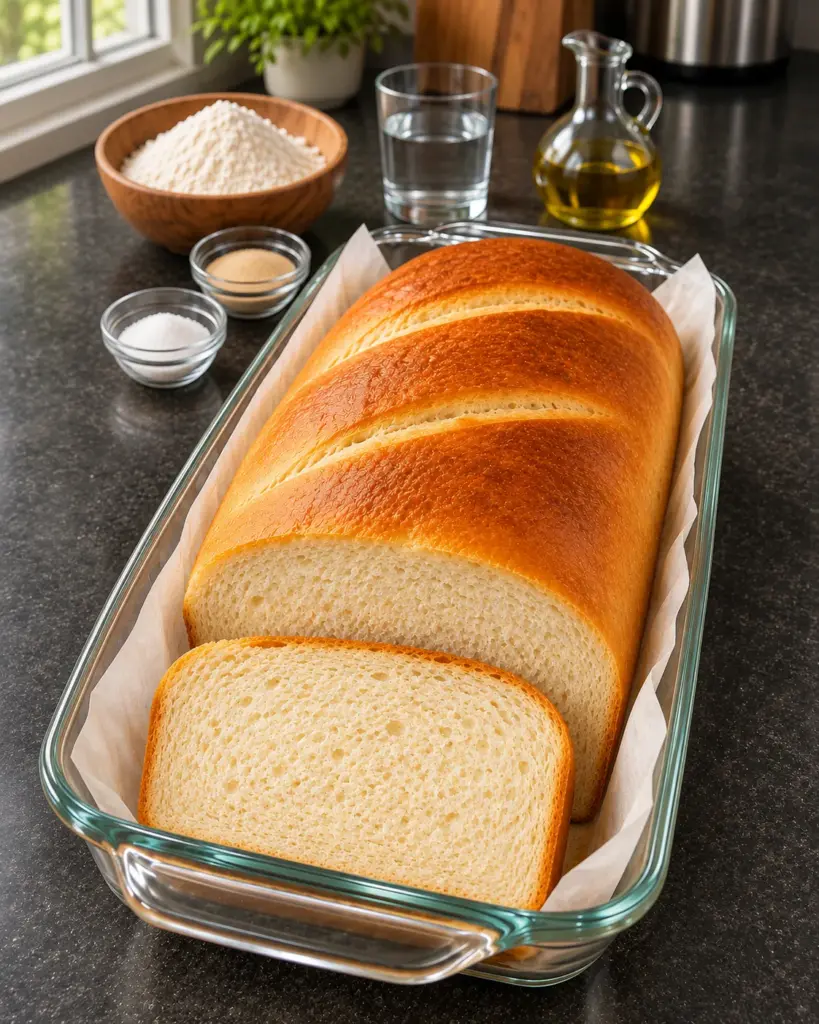
One soft homemade loaf can make the week’s sandwiches feel better. This no-knead olive oil sandwich bread uses flour, water, yeast, sugar, salt, and olive oil to produce a golden crust and a tender, sliceable crumb. There are no eggs or butter in the dough, and you do not need a stand mixer or a long session at the counter kneading.
The dough is intentionally moist. You stir it together, give it two brief folds during the first rise, and let time build its structure. After a second rise in the loaf pan, it bakes into a tall bread that works for toast, grilled sandwiches, or thick slices with jam. The full loaf needs time to cool before slicing; that waiting is what helps the crumb set rather than turn gummy.
Why You’ll Love This No-Knead Olive Oil Sandwich Bread
The ingredient list is short and familiar. Olive oil adds tenderness and a subtle savory note without butter, while a little sugar supports the yeast and balances the flavor. The method asks for only a few minutes of hands-on work. A wet dough may look less tidy than kneaded bread at first, but the rest periods and gentle folds make it easier to handle.
Bread flour produces a slightly chewier, taller loaf. All-purpose flour works as well and gives a softer bite. Either way, the finished bread has a regular crumb suited to sandwiches. The recipe makes one 9 × 5 inch loaf, approximately 12 slices depending on thickness.
Ingredients for No-Knead Olive Oil Sandwich Bread
For the Dough
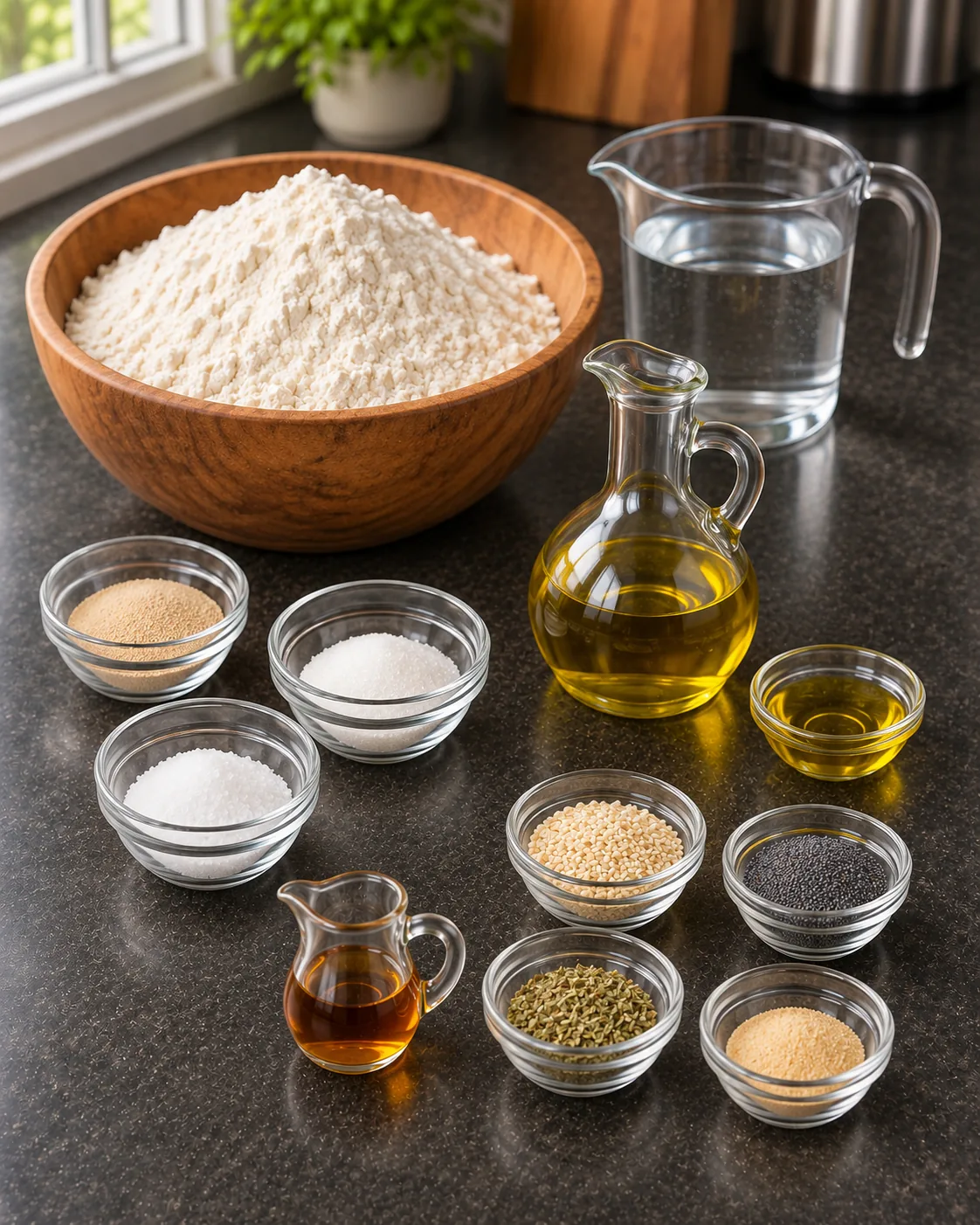
- 4 cups bread flour or all-purpose flour, spooned and leveled: Flour gives the loaf its structure. Spoon it into the measuring cup and level it rather than packing it down; if you use a scale, expect roughly 480–500 g depending on the flour.
- 1¾ cups warm water, approximately 105–110°F (40–43°C): Warm water wakes up the yeast and makes a soft, high-moisture dough. It should feel warm, not hot, to the touch.
- 2¼ teaspoons instant yeast: Instant yeast can be mixed directly with the dry ingredients. The dough still needs time to rise; watch its volume rather than relying only on the clock.
- 2 tablespoons granulated sugar: Adds a mild sweetness and supports browning. It does not make the loaf taste like dessert bread.
- 1½ teaspoons fine sea salt: Balances flavor and helps the dough hold its shape. Measure the salt accurately so the bread is not bland or overly salty.
- 2 tablespoons olive oil: Mixed into the dough for a tender crumb and gentle olive oil flavor.
For Finishing
- 1 tablespoon olive oil: Brush the warm baked loaf for a soft, glossy crust. If you use seeds, take about 1 teaspoon from this amount to brush on before baking and use the rest after baking.
Optional Additions
- 1 tablespoon sesame or poppy seeds: Sprinkle over the lightly oiled surface before baking for a seeded loaf.
- 1 teaspoon dried Italian seasoning: Stir into the flour for a savory herb version.
- ½ teaspoon garlic powder: Mix with the dry ingredients if you want a mild garlic note.
- 2 tablespoons maple syrup instead of the granulated sugar: Make this a one-for-one volume swap, not an addition. The dough may feel just slightly softer.
What “No-Knead” Means Here
No-knead bread still needs gluten to develop. Instead of kneading until the dough becomes smooth, this recipe uses water, time, and two short sets of folds. The folds are simply a way to bring the dough’s edges toward its center. They take seconds and do not require you to press or work the dough on a floured surface.
The dough will be sticky and loose after mixing. Resist the urge to add extra flour until it looks like a stiff kneadable ball. Too much flour can make the loaf dry and dense. A lightly oiled hand or damp fingers will let you fold and transfer the dough without changing the ingredient balance.
Equipment and Pan Notes
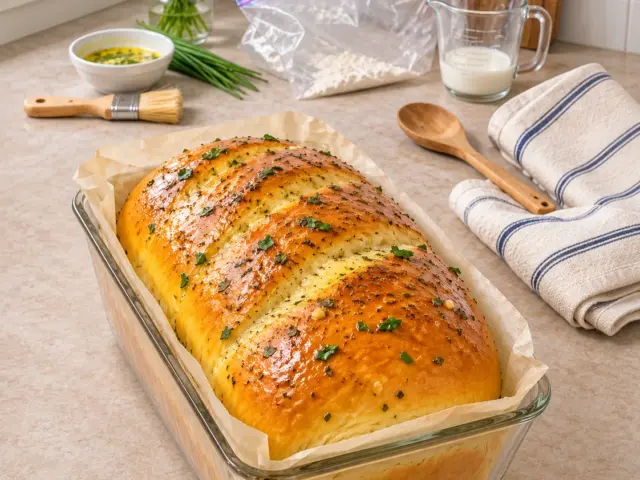
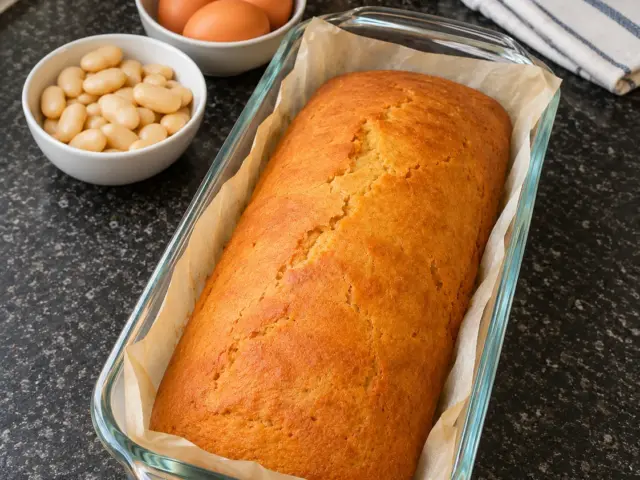
Use a large mixing bowl, sturdy spoon or spatula, clean towel or loose cover, and a 9 × 5 inch loaf pan. A parchment sling makes it easy to lift the bread from the pan after baking. A clear glass loaf pan like the one in the photo works; a metal pan is also suitable. Because pans vary, use the bread’s color and internal temperature along with the time as your doneness checks.
Keep the loaf pan at room temperature while the dough proofs. If you use a glass pan, avoid sudden temperature changes: do not put a refrigerated glass pan straight into a hot oven or set a hot pan on a wet, cold surface. Place the baked pan on a dry rack or towel before removing the loaf.
Instructions: How to Make No-Knead Olive Oil Sandwich Bread
- Combine the dry ingredients. In a large bowl, stir together 4 cups bread flour or all-purpose flour, 2¼ teaspoons instant yeast, 2 tablespoons granulated sugar, and 1½ teaspoons fine sea salt. If using 1 teaspoon dried Italian seasoning or ½ teaspoon garlic powder, stir it in now. For the maple version, omit the granulated sugar and add 2 tablespoons maple syrup with the liquids.
- Mix the wet dough. Pour in 1¾ cups warm water at approximately 105–110°F (40–43°C) and 2 tablespoons olive oil. Stir thoroughly until no dry pockets of flour remain. The dough should be soft and sticky, more like a thick, rough mass than a smooth ball. Scrape down the bowl, cover, and rest for 20 minutes.
- Fold twice, without kneading. Lightly wet or oil your hand. Lift one edge of the dough and fold it toward the center; turn the bowl and repeat on all four sides. Cover and rest 20 minutes, then repeat the same quick set of four folds. Do not add flour just to make the surface dry.
- Finish the first rise. Cover the bowl and let the dough rise in a warm, draft-free spot until noticeably puffy and roughly doubled, usually another 30 to 60 minutes after the second fold. Room temperature changes the timing. Look for bubbles and an expanded dough rather than a fixed number of minutes.
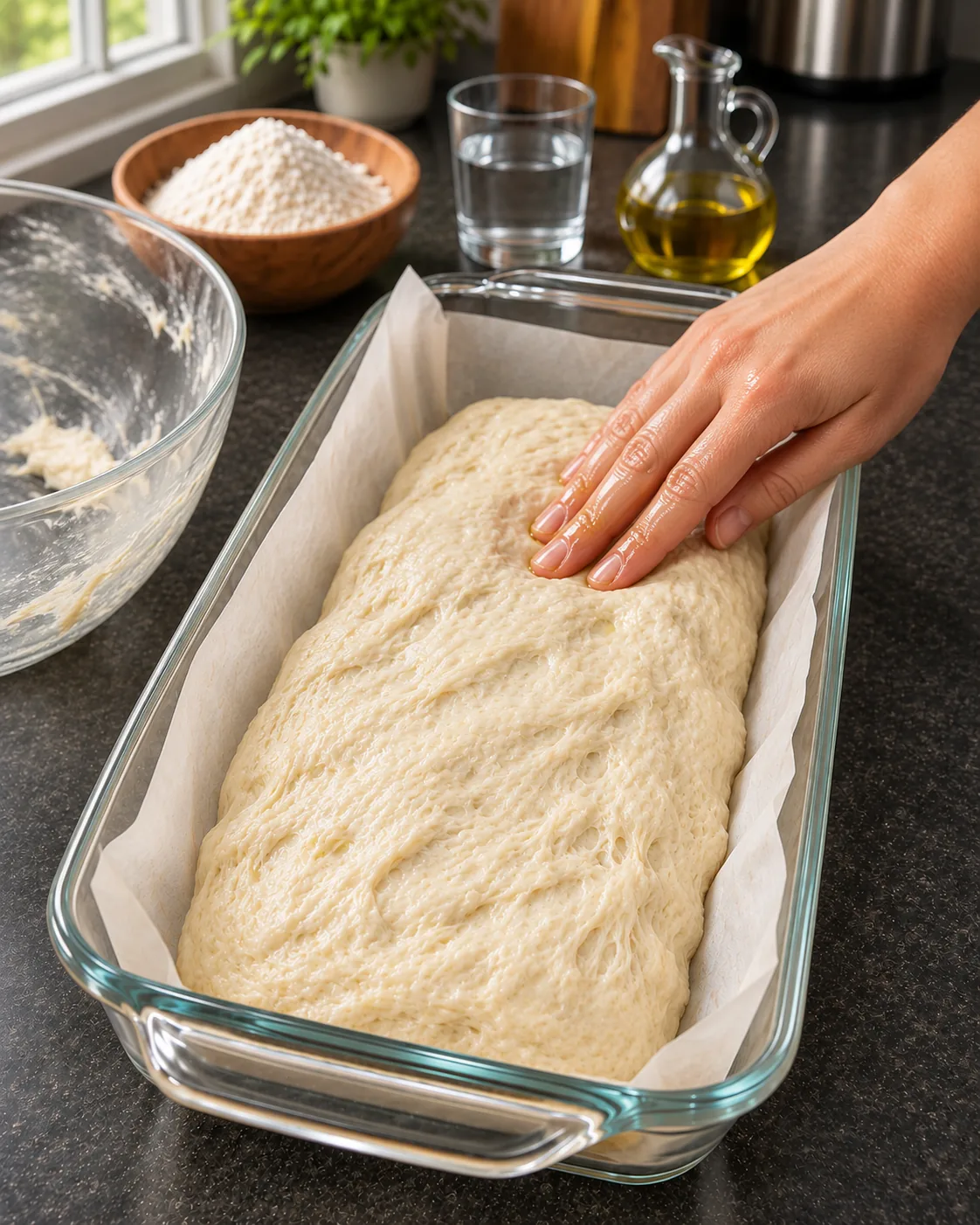
- Move to the pan. Line a 9 × 5 inch loaf pan with parchment, leaving handles on the long sides. With lightly oiled fingers, gently fold the risen dough into a rough log and transfer it seam-side down into the pan. Smooth the top lightly without pressing out all its air. The dough may still feel soft.
- Proof again. Cover the pan loosely and let the dough rise for about 45 to 75 minutes, until it looks light and crowns about 1 inch above the rim. Begin preheating the oven to 375°F (190°C) during the last 20 minutes. Avoid overproofing: if the dough begins to sag, bake it promptly.
- Add optional seeds. If using 1 tablespoon sesame or poppy seeds, brush the dough gently with about 1 teaspoon from the 1 tablespoon olive oil reserved for finishing and scatter the seeds evenly. If you prefer an unseeded loaf, save all the finishing oil until after baking. A shallow score across the top is optional; make it with a sharp blade just before the pan enters the oven.
- Bake. Bake on the center rack for about 40 to 45 minutes, until deeply golden and the center reads about 200–205°F (93–96°C) on an instant-read thermometer. If the top browns too quickly, tent it loosely with foil for the final part of baking. Do not rely on color alone when using a glass pan.
- Brush and cool. Set the pan on a dry rack, lift the loaf out using the parchment, and brush the warm crust with the remaining 1 tablespoon olive oil, or the amount left after seeding. Cool on the rack for at least 1 hour, preferably until completely cool, before cutting into sandwich slices.
How to Tell When the Dough Is Ready
After the first mix, the dough looks shaggy and clings to the bowl. Twenty minutes later, it is easier to lift for a fold. After two sets of folds, it should have a little more body, though it will not feel like a kneaded dough. At the end of the first rise, bubbles are visible and the dough is roughly twice its original size.
During the pan rise, look for a rounded crown about an inch above the pan rim. A light touch may leave an indentation that returns slowly. If the dough springs back immediately, give it more time. If it collapses or looks wrinkled and fragile, it has gone too far; bake it promptly. These visual cues are more dependable than a single rise time because kitchens vary in warmth.
Expert Tips for a Soft, Sliceable Loaf
Measure flour gently. Scooping directly from the bag can pack extra flour into the cup. Spoon and level, or weigh the flour if you prefer consistency. The dough is supposed to be wet enough to feel sticky.
Use warm, not hot, water. Water around 105–110°F is warm enough for this method. Very hot water can damage yeast. If you do not have a thermometer, it should feel comfortably warm on your finger.
Fold with oiled or wet fingers. A few seconds of folding strengthens the dough without a kneading step. Work gently so the dough retains the air developed during rising.
Do not rush the pan rise. If the loaf goes into the oven too soon, it may bake up short with a dense strip near the bottom. Wait for a visibly airy crown, but do not let it spill far over the sides of the pan.
Check the center temperature. A rich golden crust can appear before the middle is baked through, especially with a thick loaf in a glass pan. A probe reading around 200–205°F helps prevent a damp center.
Cool before slicing. Steam continues to move through the crumb after the loaf leaves the oven. Cutting immediately can make even properly baked bread seem gummy. An hour on a rack is the minimum; a fully cool loaf gives the neatest sandwich slices.
Common Mistakes to Avoid
Adding lots of extra flour: The high-moisture dough is the point of this recipe. Use damp or lightly oiled hands, not a dusting of flour at every step, to keep the crumb soft.
Confusing instant and active dry yeast: Instant yeast can be stirred straight into the flour. If you only have active dry yeast, proof it in some of the measured warm water according to its package directions and expect the rise to take a little longer.
Judging proofing only by the clock: A cold kitchen can slow the dough, and a very warm one can speed it up. Watch for doubling in the bowl and a puffy crown in the pan.
Using a pan that is too small: A standard 9 × 5 inch pan gives the loaf room to rise. A smaller pan may overflow. If your pan has unusually low sides, watch the second rise closely and do not let the dough spill over.
Slicing hot bread: The loaf may smell irresistible, but cooling allows its structure to finish setting. Use a serrated bread knife once it is cool.
Ways to Serve This Bread
Slice the loaf for everyday sandwiches with vegetables, cheese, or your favorite spread. It also toasts nicely because olive oil gives the crumb tenderness without making it crumbly. Cut thicker slices for toast at breakfast, or use day-old pieces for French toast if the toppings suit your meal. A seeded or herb version works especially well with savory fillings.
If you plan to pack lunches, cool the loaf completely and slice it all at once. Place parchment between portions before freezing, so you can pull out only the slices you need. Toast frozen slices directly, or thaw them in a closed bag for sandwiches.
Storage and Freezing
Room temperature: Once fully cooled, keep the loaf in an airtight bag or bread box at room temperature for about 2 to 3 days. Avoid refrigerating ordinary bread if possible, because the crumb tends to stale faster in the fridge.
Freeze: Slice the fully cooled loaf, wrap it well, and freeze for up to 2 months. Separate slices with parchment or freeze a few at a time in small bags. Thaw at room temperature in its wrapper or toast from frozen.
Refresh: If the crust softens during storage, warm slices in a toaster. For a whole loaf, a brief warm oven can revive the crust, though it may become crisper than when freshly brushed with oil. Keep the bread wrapped after it cools again.
FAQ: No-Knead Olive Oil Sandwich Bread
Can I use all-purpose flour instead of bread flour?
Yes. Use the same 4 cups, spooned and leveled. The dough may feel a little looser and the loaf may be slightly softer with all-purpose flour, but the rest and folds still help it hold together.
Is this bread really made without eggs or butter?
Yes. The basic dough contains flour, warm water, instant yeast, granulated sugar, salt, and olive oil, plus olive oil to finish. The listed optional additions also contain no eggs or butter as ingredients; check packaged additions if you have a specific dietary restriction.
Can I replace the sugar with maple syrup?
Yes. Replace the 2 tablespoons granulated sugar with 2 tablespoons maple syrup. Add the syrup with the warm water and olive oil. Do not use both sweeteners unless you intentionally want a sweeter loaf.
Why is my dough sticky?
The recipe uses 1¾ cups water with 4 cups flour to create a moist dough. Stickiness is expected. Resting and folding strengthen it without kneading; use wet or oiled fingers to handle it.
How do I know when the loaf is baked?
The top should be deeply golden and the center should read about 200–205°F on an instant-read thermometer. Let the loaf cool for at least an hour before judging its crumb.
Can I make the dough ahead?
You can cover the mixed dough and refrigerate it after the initial folds for an overnight rise. Let it warm until visibly puffy before transferring it to the pan; timing will vary. For the simplest, most predictable loaf, follow the same-day rise described above.
Conclusion: An Everyday Loaf with Minimal Hands-On Work
This no-knead olive oil sandwich bread gives you a golden loaf with a soft crumb using a short ingredient list and simple folds. Keep the dough moist, let each rise develop fully, bake until the center is done, and cool before slicing. It is an easy egg-free, butter-free bread to keep on hand for sandwiches and toast.
Print
No-Knead Olive Oil Sandwich Bread (No Eggs or Butter)
- Prep Time: 25 minutes
- Cook Time: 45 minutes
- Total Time: About 4 hours 15 minutes, including rising and cooling
- Yield: 12 slices 1x
- Category: Sourdough
- Method: Baking
Description
One tender, golden 9 × 5 inch sandwich loaf with a sliceable crumb, made from a moist no-knead dough and finished with olive oil.
Ingredients
- 4 cups bread flour or all-purpose flour, spooned and leveled
- 1¾ cups warm water, approximately 105–110°F (40–43°C)
- 2¼ teaspoons instant yeast
- 2 tablespoons granulated sugar
- 1½ teaspoons fine sea salt
- 2 tablespoons olive oil, for the dough
- 1 tablespoon olive oil, for finishing
- 1 tablespoon sesame or poppy seeds, optional
- 1 teaspoon dried Italian seasoning, optional
- ½ teaspoon garlic powder, optional
- 2 tablespoons maple syrup, optional
Instructions
Step 1 Stir together 4 cups bread flour or all-purpose flour, spooned and leveled, 2¼ teaspoons instant yeast, 2 tablespoons granulated sugar, and 1½ teaspoons fine sea salt. If using 1 teaspoon dried Italian seasoning or ½ teaspoon garlic powder, add them now. For the maple version, omit the granulated sugar and add 2 tablespoons maple syrup with the liquids.
Step 2 Pour in 1¾ cups warm water, approximately 105–110°F (40–43°C), and 2 tablespoons olive oil for the dough. Stir until no dry flour remains. The dough will be soft and sticky. Cover and rest for 20 minutes.
Step 3 With damp or lightly oiled fingers, lift each of four edges of the dough and fold it toward the center. Cover and rest 20 minutes, then repeat one more set of four folds. No kneading or added flour is needed.
Step 4 Cover and let the dough rise until puffy and roughly doubled, usually another 30 to 60 minutes after the second fold. Line a 9 × 5 inch loaf pan with parchment. Gently fold the dough into a rough log and transfer seam-side down to the pan.
Step 5 Cover loosely and proof for about 45 to 75 minutes until the dough crowns around 1 inch above the pan rim. Preheat the oven to 375°F (190°C) during the last 20 minutes.
Step 6 If using 1 tablespoon sesame or poppy seeds, optional, brush the dough with about 1 teaspoon from the 1 tablespoon olive oil for finishing and add the seeds. Otherwise reserve all finishing oil for after baking. Bake 40 to 45 minutes until golden and the center reaches 200–205°F (93–96°C); tent with foil if browning too fast.
Step 7 Lift the loaf from the pan and brush the warm crust with the remaining finishing olive oil. Cool on a rack at least 1 hour before slicing into about 12 sandwich slices.
Notes
The dough is deliberately moist; use damp or lightly oiled fingers instead of adding extra flour. Watch for a doubled first rise and a puffy crown around 1 inch above the pan rim during the second rise. Check the baked center for 200–205°F and cool at least 1 hour before slicing.